Posted by: carogouin | January 7, 2010

how gringos spend the holidays

!

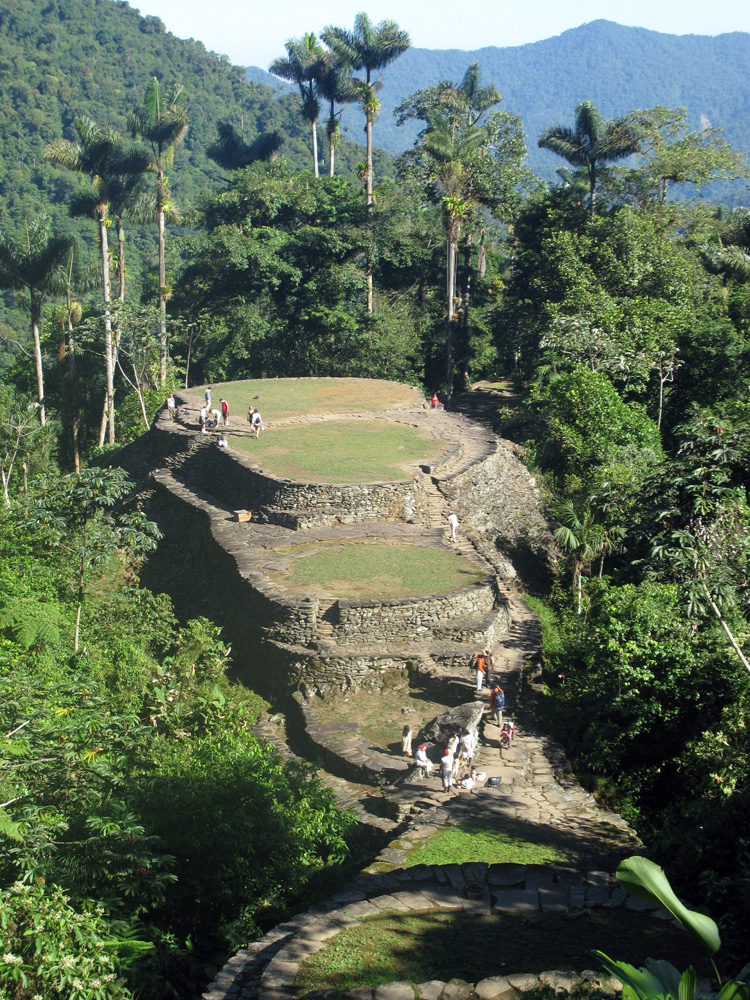
La Ciudad Perdida – discovered in 1974.

With the holidays fast approaching, we started making plans to ensure that Christmas far away from family and friends, in a tropical climate, would still feel like a real Christmas. It wasn’t so hard to do, since we were lucky to share the holidays with some newfound friends in a small and beautiful fishing village on the Caribbean coast of Colombia. From Cartagena, we headed north to the town of Taganga, where we intended to rent an apartment and spend a quiet but charming Christmas with our friends Jim, Kirsty and Aynsley. We soon discovered that a million other gringos had that same idea, so we ended up crossing paths with familiar faces everywhere, which made for a very lively holiday.
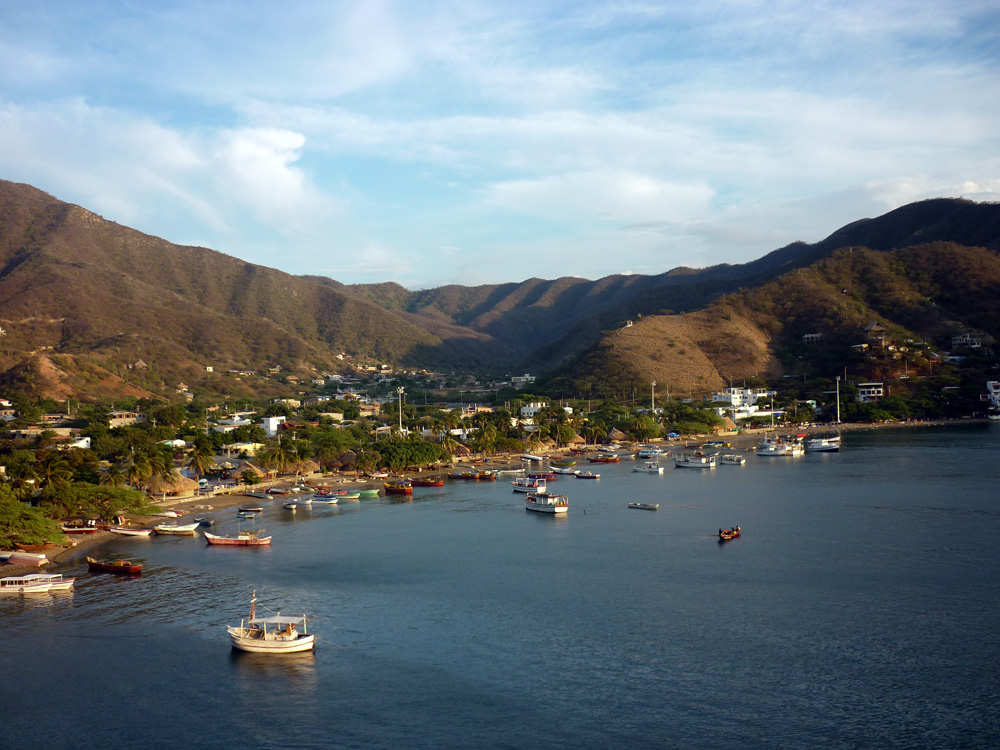
Taganga – a small fishing village where we spent Christmas. Photo by Aynsley.

The only downside was that lodging was hard to come by, and what we had imagined to be a well-kept three bedroom apartment with a full kitchen, a spacious common area and perhaps a nice vista, turned into a cramped 2-bedroom suite on the 2nd floor of “The Mirador” – the most popular bar/restaurant in Taganga with rumbas (parties) every night until 4 AM. Needless to say, we did not sleep very well, but we did get to wake up every day to a beautiful view of the beach. And on Christmas Eve, the owners reluctantly let us use their kitchen to prepare a superb Christmas dinner – steak, mashed potatoes, grilled tomatoes and onions, with boxed vino tinto (red wine) and brownies for desert. It was delicious!

Later in the evening, we all headed to the beach and continued the celebration well past midnight. At one point we were solicited to participate in an “integration” activity with the locals where we were asked to hold hands, dance around in circles and recite some Spanish chants that didn’t quite make sense. Perhaps it was a Colombian tradition, or a deceitful gesture made to embarrass the gringos. No one really knows. For Christmas the next day, we exchanged gifts, spent the day on the beach, drank mango smoothies and talked to our families on Skype. It turned out to be a delightful Christmas!
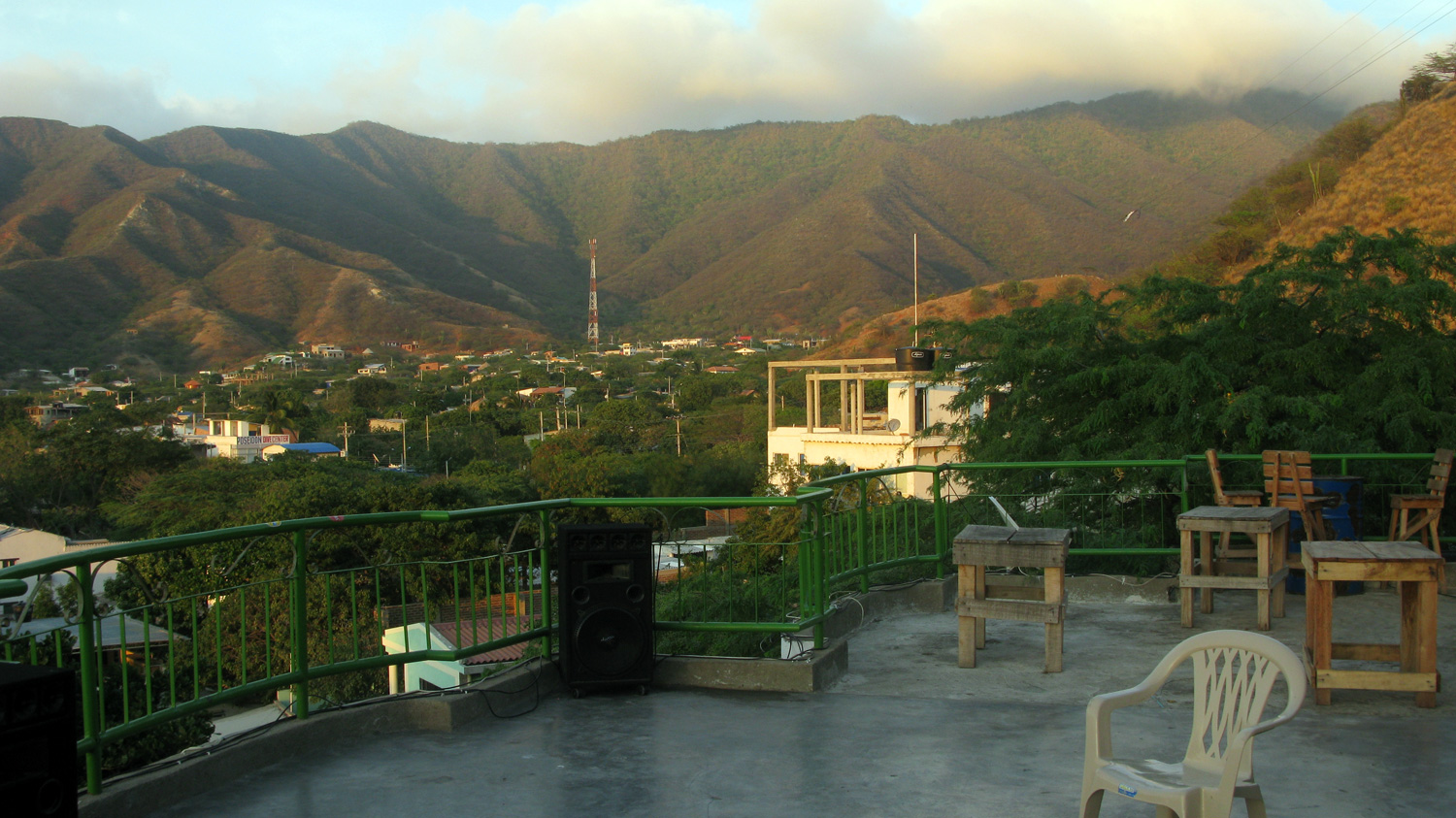
Our view from the Mirador.
!

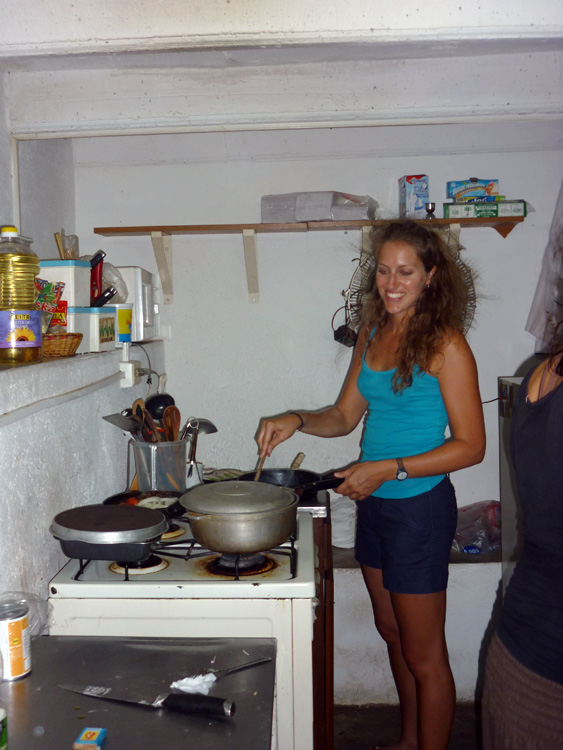
Cooking up some vegetables to go along with the steaks and mashed potatoes.
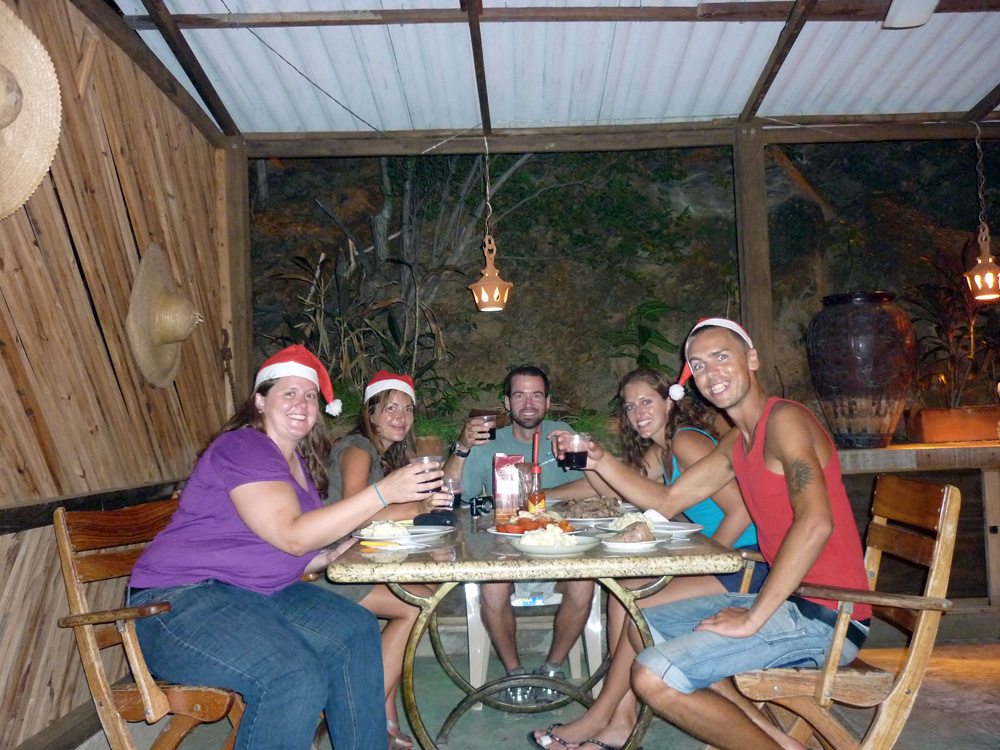
Christmas eve dinner with good friends.

Also, perhaps in the midst of the Christmas spirit, we all nervously conceded to booking a 5-day guided trek through the dense jungles of Colombia – what seemed to be a perfect, albeit untraditional, way to reign in the New Year. In fact, this was not just any trek but a journey through the undulating hills of the Sierra Nevadas, passing through indigenous villages and crossing a network of streams and rivers until we reached a secret staircase that would lead us up to the Ciudad Perdida – the Lost City, an archeological site of an ancient city dating back to 800 AD. The Lost City was only recently discovered and pillaged in 1974 by tomb raiders. This adventure seemed ripe with novelty and mysticism – a fine way to start the New Year.

So we set off on a Tuesday with only a few changes of clothing and personal items. All was to be provided for us – food, water, hammocks, blankets, etc. We could have opted for mules to carry our bags, but we clung to them happily since trekking isn’t trekking without a little weight on your shoulders. We quickly became acquainted with our group of 9, which included the 5 of us along with a Dutch couple Sarah and Harm, an Englishman David and a Colombian native Diego. Our friendly though slightly immature guide Miguel brought along his parents, whom we quickly started referring to as Mama and Papa, out of fondness when we discovered they were such good cooks! In the mornings they would make us either a plate of fresh fruit, scrambled eggs or empanadas accompanied with coffee and hot chocolate. Lunch was mostly sandwiches if we were in the middle of hiking and a hearty soup when we arrived at camp. Dinners consisted of chicken or carne (meat) in salsa with rice/lentils or pasta with juice and occasionally cookies.

We needed the fuel, since we hiked between 4 and 6 hours a day. And this was uphill and downhill and uphill and downhill again on rocky and muddy paths. Fortunately these were most always interrupted by dips in piscinas (swimming holes) and snack breaks where they served fresh pineapple or watermelon. Along the way, we ran into a number of small villages, where the native people live off the land in huts. Dressed in long, featureless white frocks and always barefoot, whole families (including small children carrying loads on their head) would pass us going up hills. It was very humbling.
!

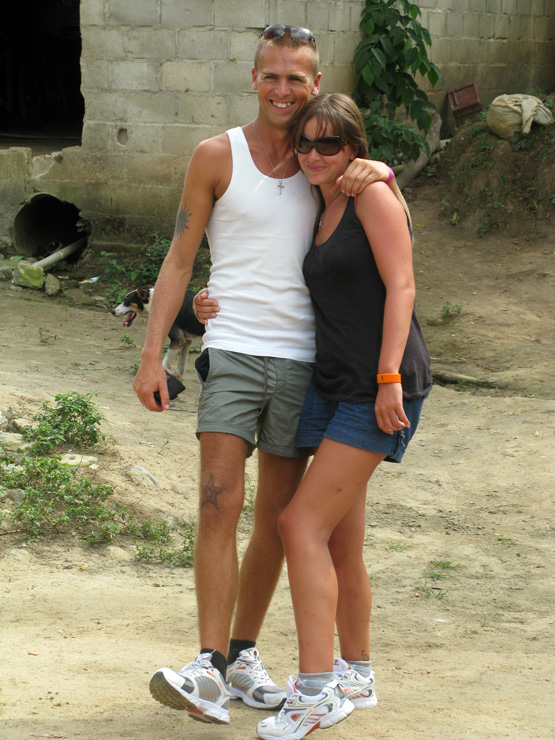
Jim and Kirsty prepared for the Lost City trek with their new ‘trainers’.
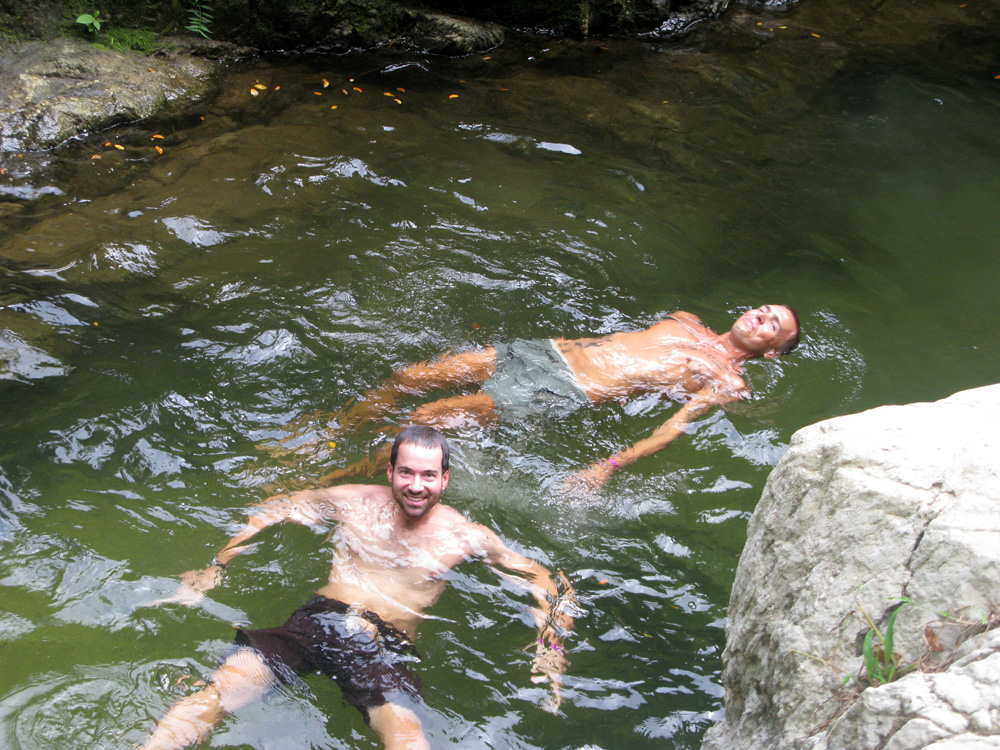
Pat and Jim taking a dip in one of the many ‘piscinas’.
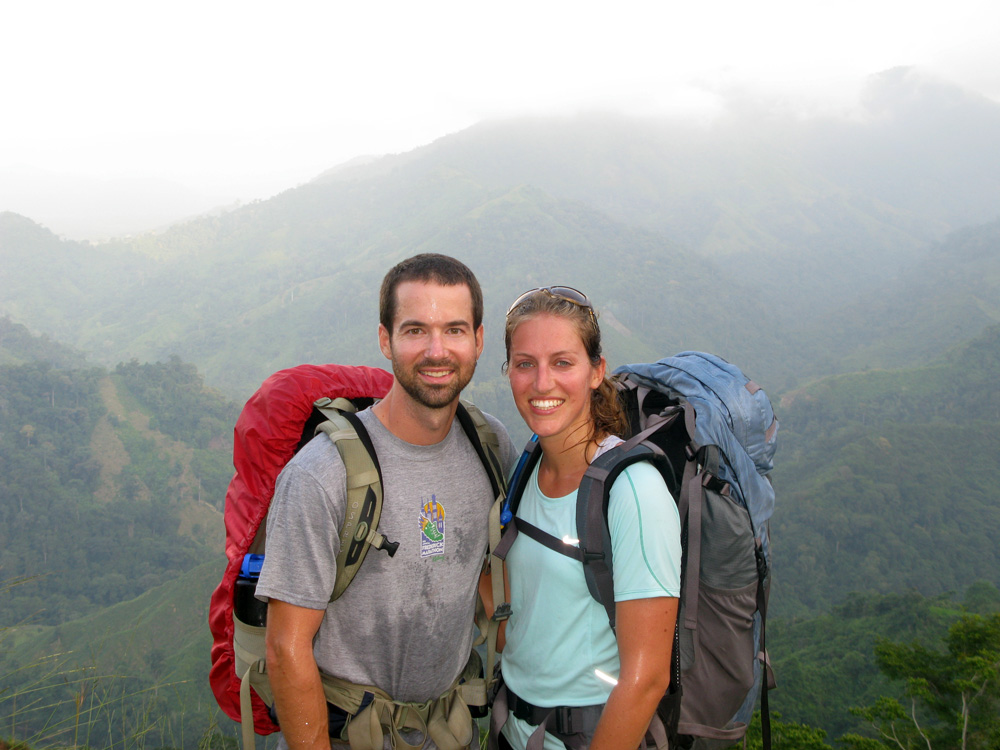
Glimmering from the sweat-pouring climb on the first day.

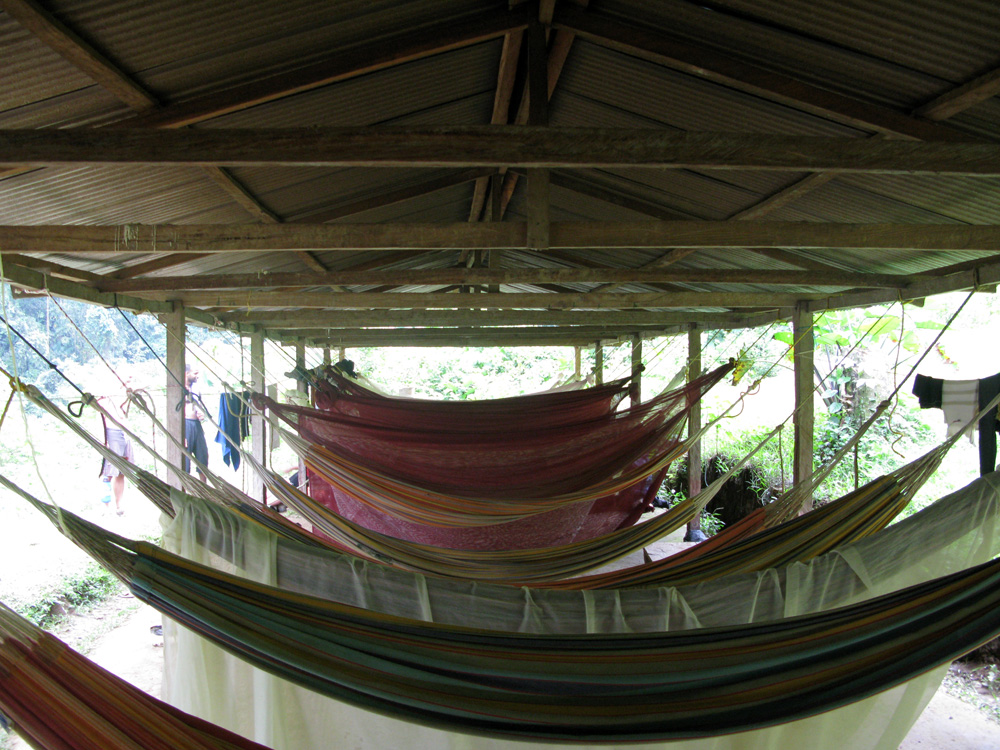
When we finally got to camp in the evenings, we would wash up in the river (or primitive showers if they had them), wind down, eat dinner and hit the sack soon after. They set up hammocks with mosquito nets for us at night, which were usually a little too close together and had quite the domino effect. If you moved, everyone else moved as well. If you switched your feet to the left, everybody to the left of you would need to do the same. The first couple of nights were a bit sleepless, but exhaustion soon took over.
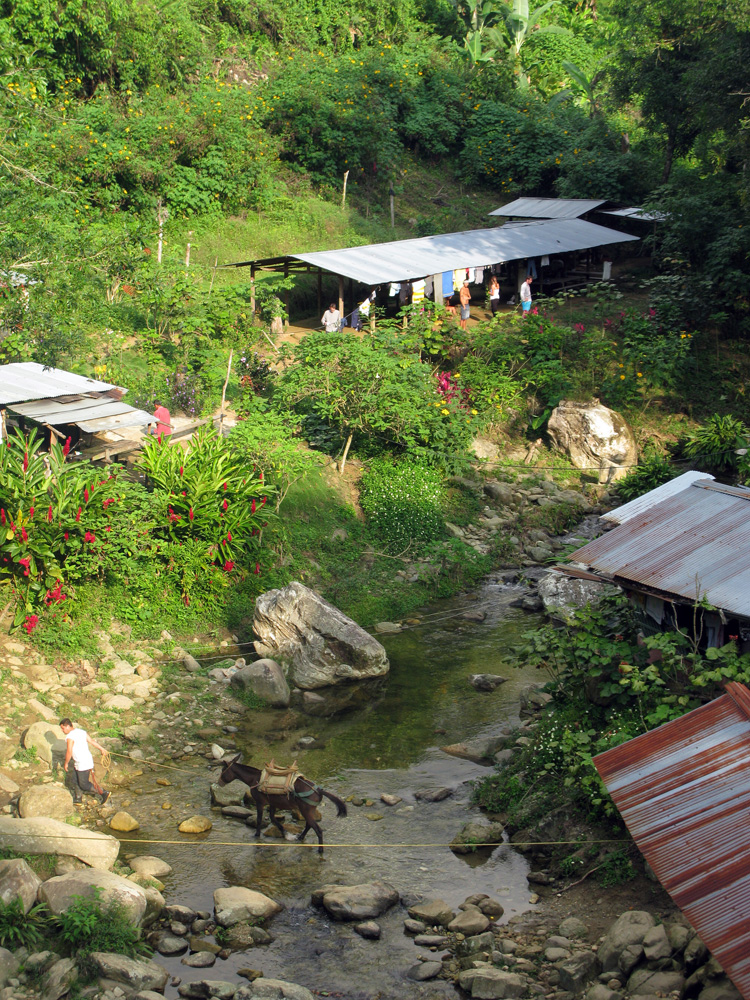
!

The village of our first camp.

Our sleeping arrangements – hammocks and mosquito nets.
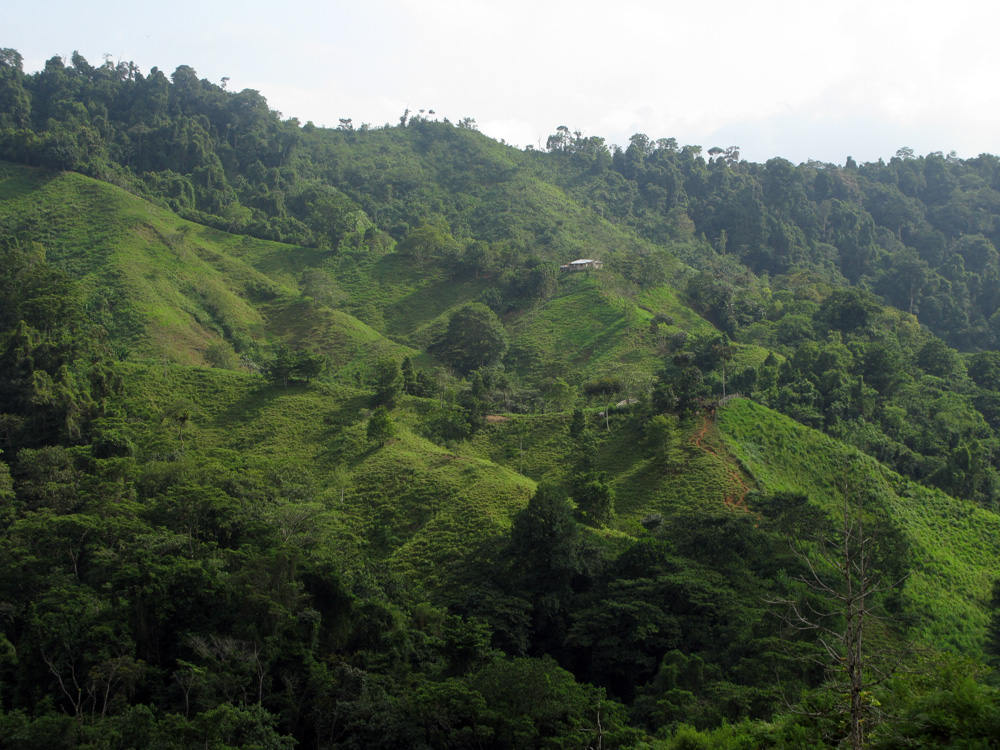
The lush hill sides of the Sierra Nevadas.
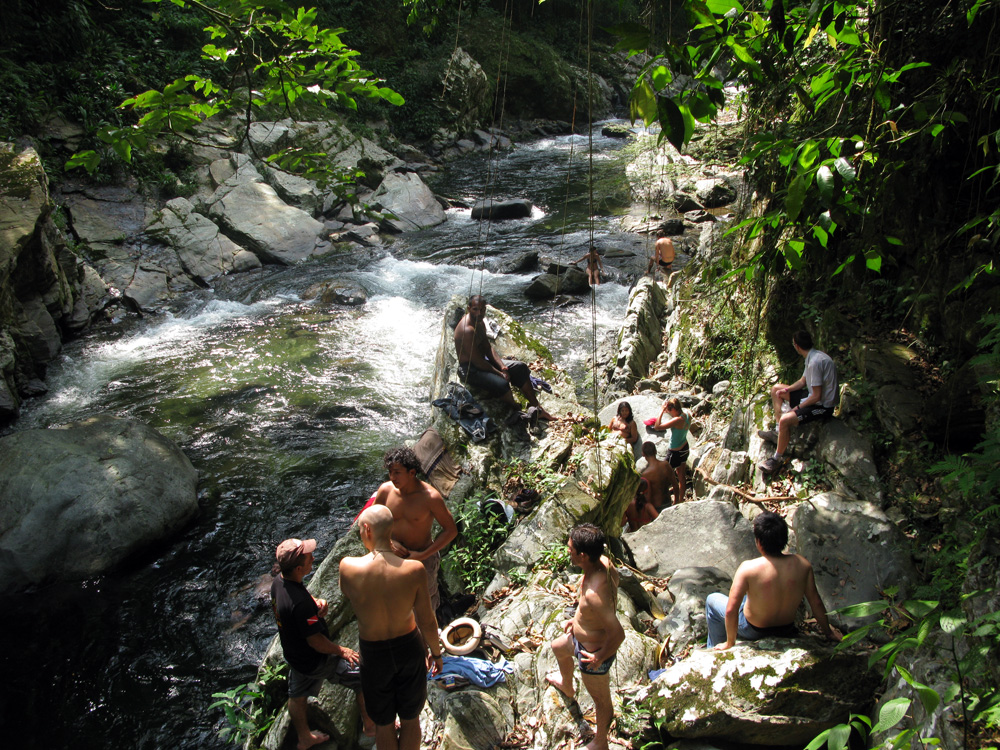
We plunged off rocks to cool off.
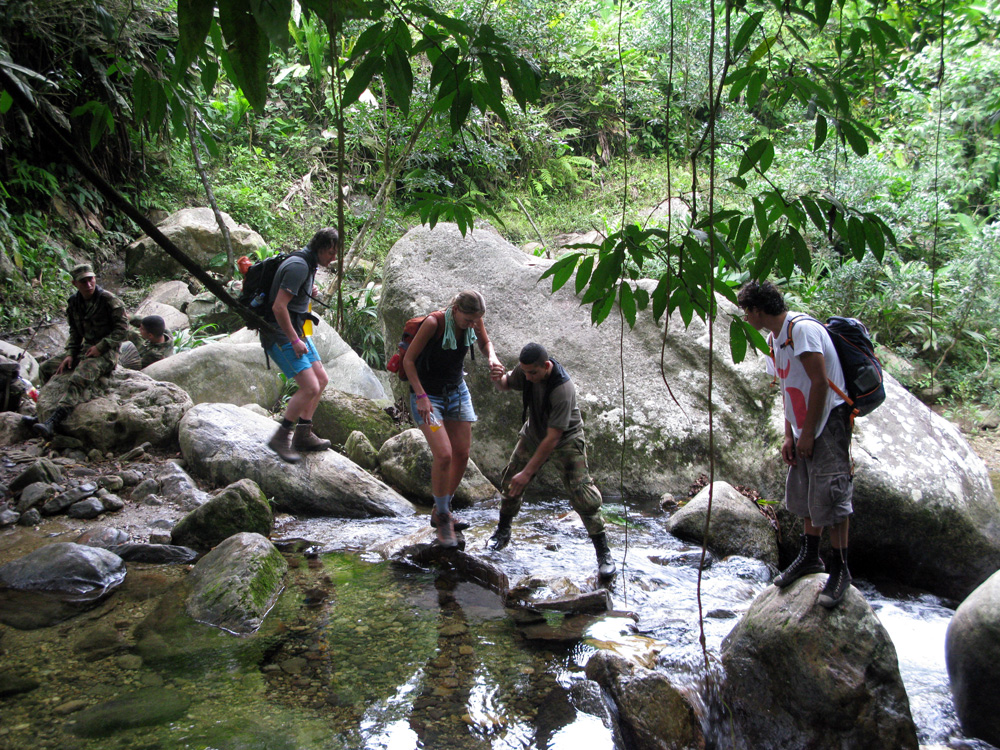
Colombian soldiers helped us cross the river.
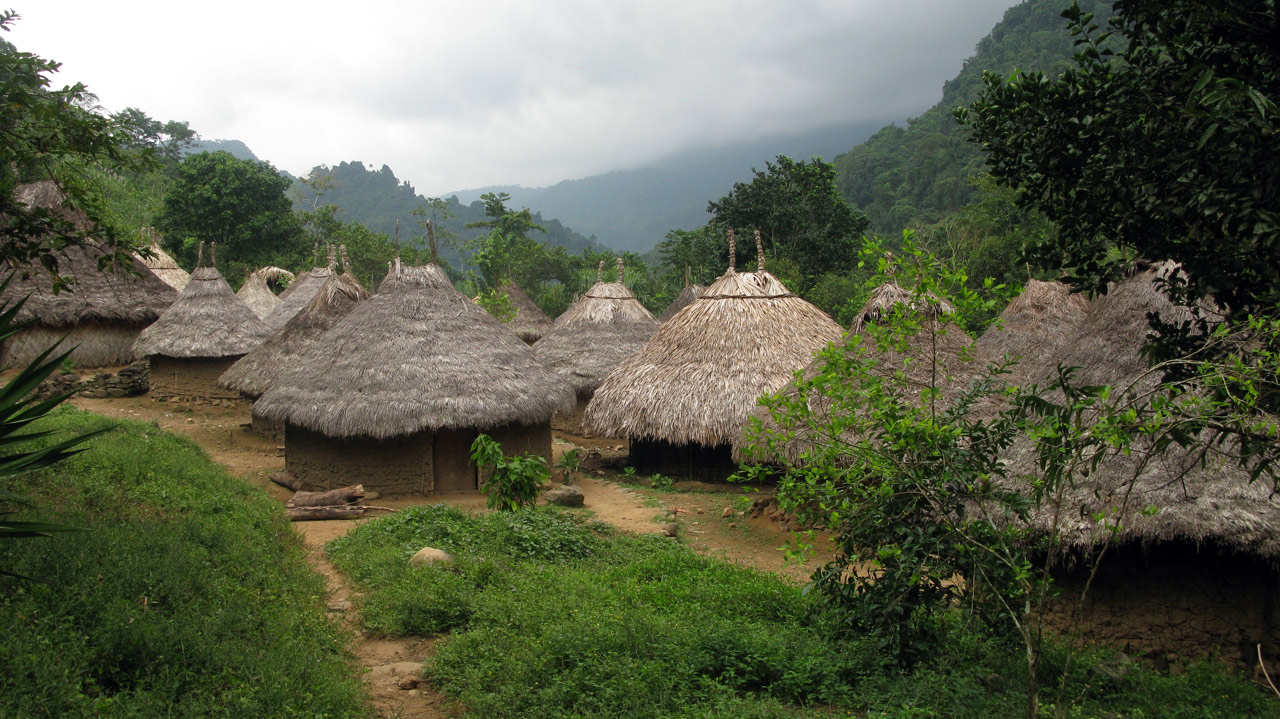
A small indigineous village tucked away in the Sierra Nevadas of Santa Marta.
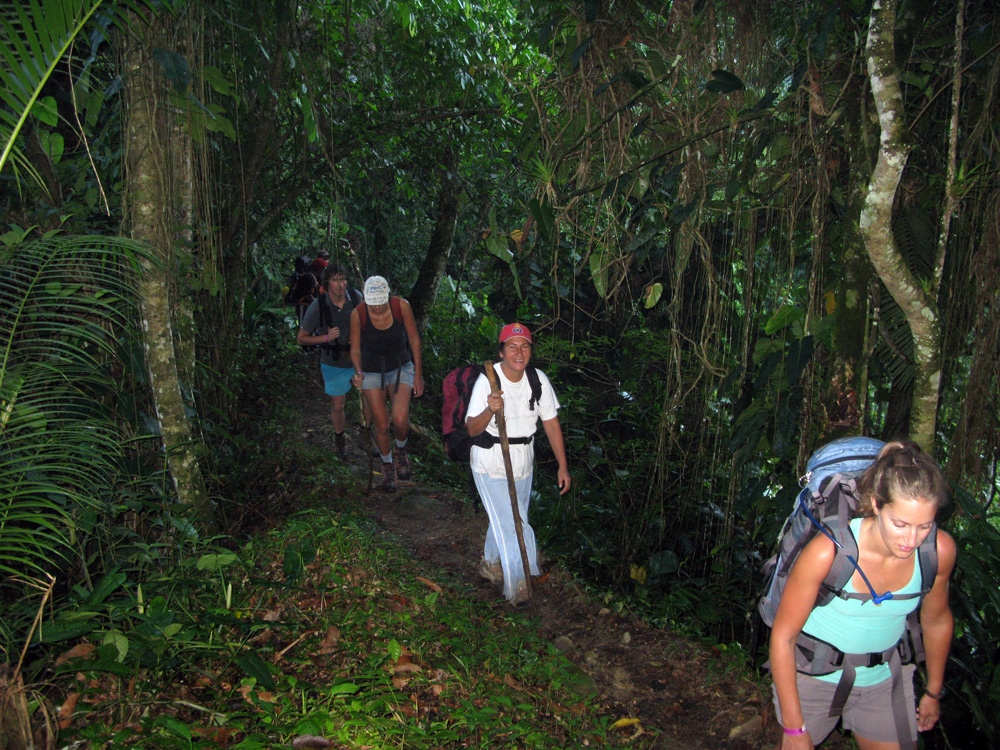
Trekking through dense jungle.
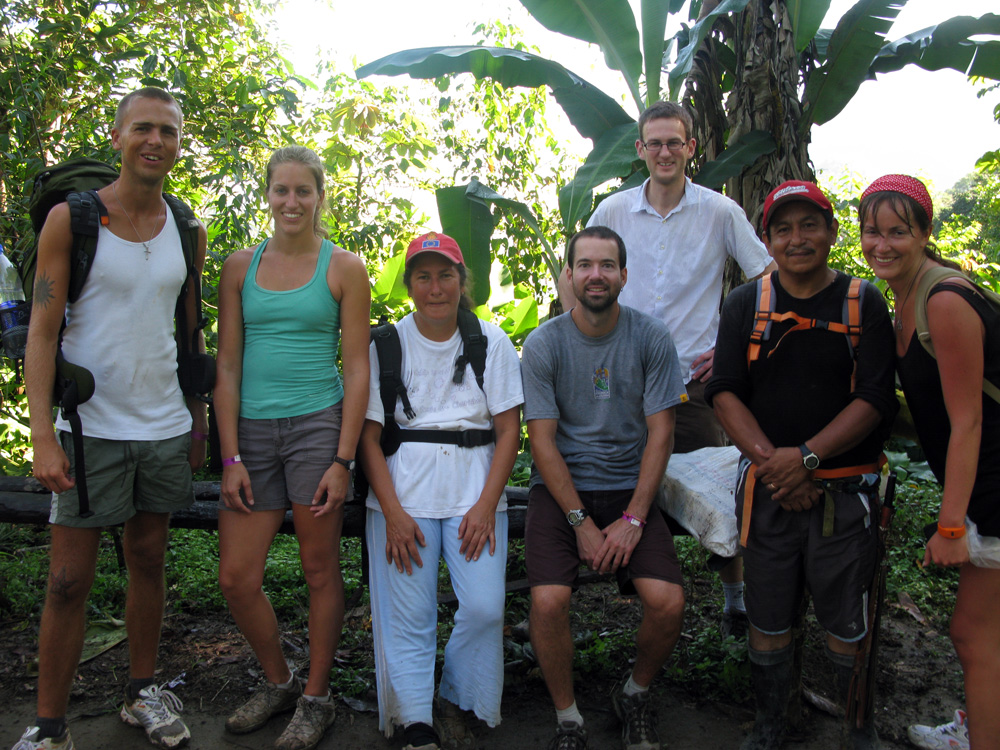
Part of our group with Mama and Papa Miguel.

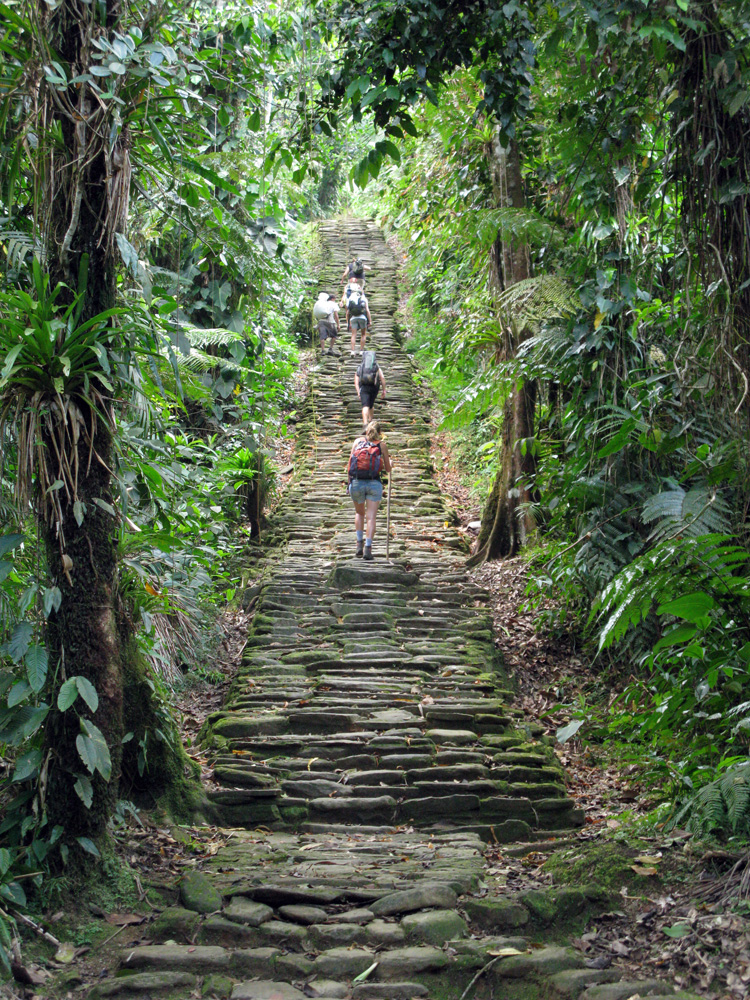
We would start our days fairly early (up at 5:30), mainly because we were determined to beat all the other groups to the next camp. And on New Year’s Eve, we hiked quickly so that we could enjoy the Lost City in a few hours of daylight. After a 6 hour trek up and down hills, scrambling over rocks and crossing the river 7 times, we finally arrived at the foot of the 2,000 steps leading up to the Lost City. That took another 30-40 minutes until we reached the top, where suddenly everything became serene and tranquil, and the day’s grind quickly faded into contemplation over a city so sacred that its people hid it from their conquerors even if that meant torture or death. We wandered through the many terraces (once houses), gazed at the spectacular views and chatted with the Colombian soldiers who guard the area for 4 months at a time.
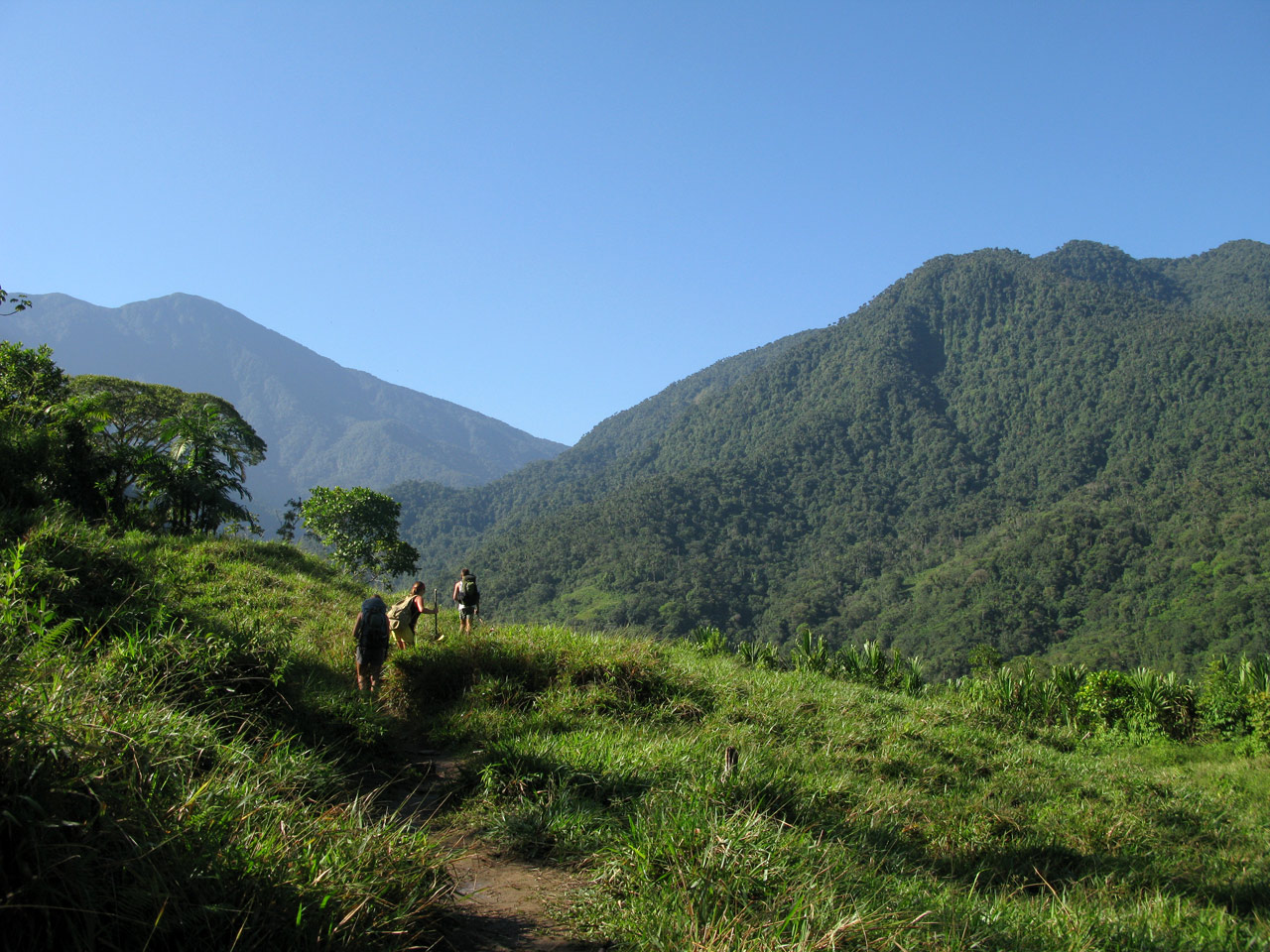
The Lost City is two climbs, one valley and 7 river crossings away!
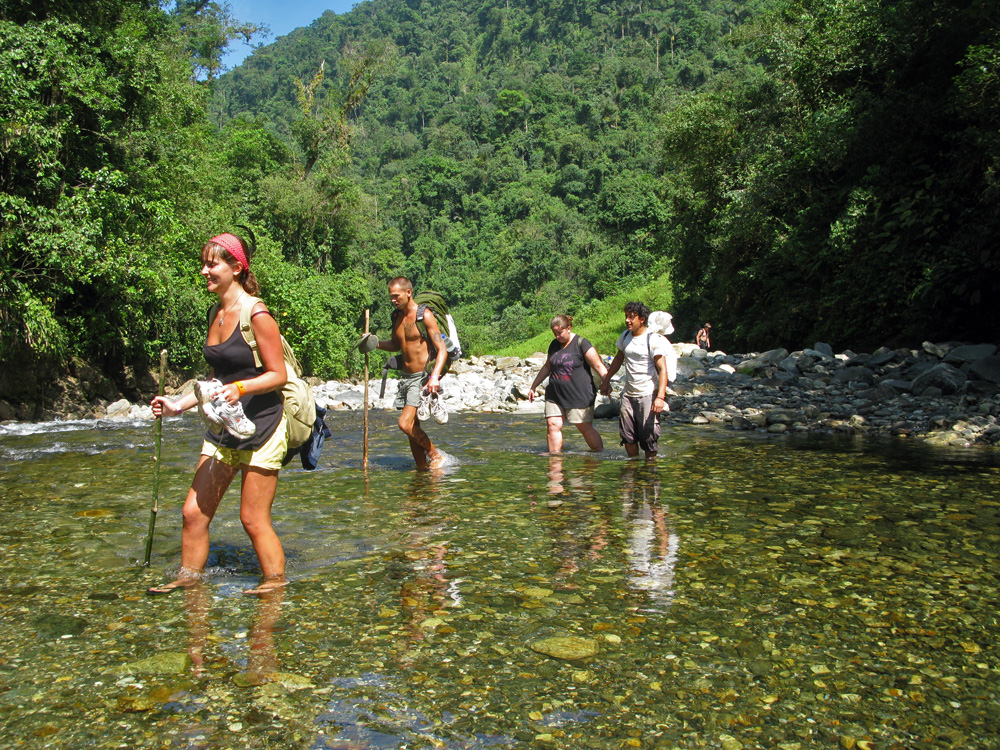
River crossing #3.
!

Climbing up the last of the 2,000 steps up to the Lost City – these are the ceremonial stairs.
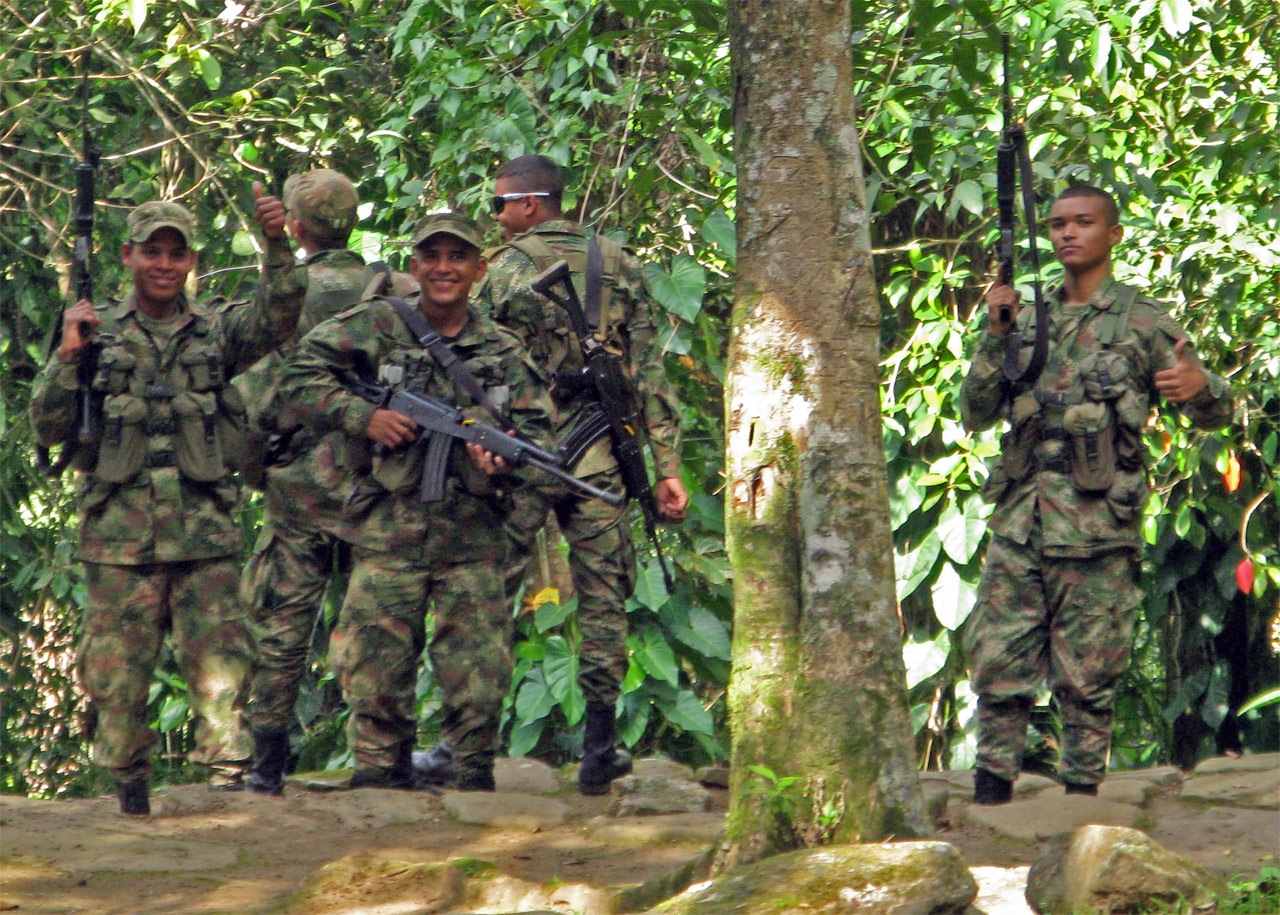
The young Colombian soldiers who guard the Lost City for 4 months at a time.
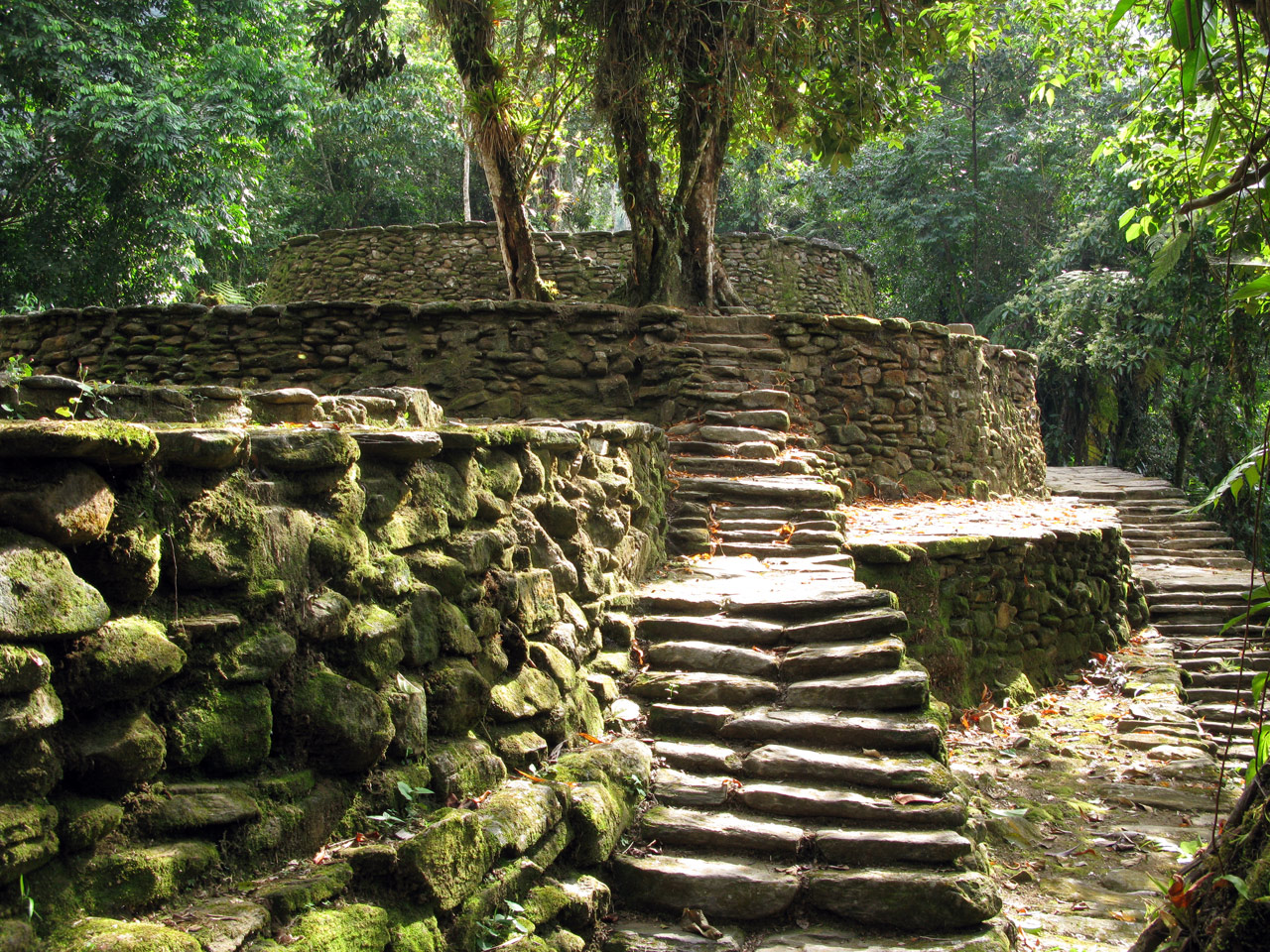
Each of the 169 terraces are the old foundations of the ancient homes.
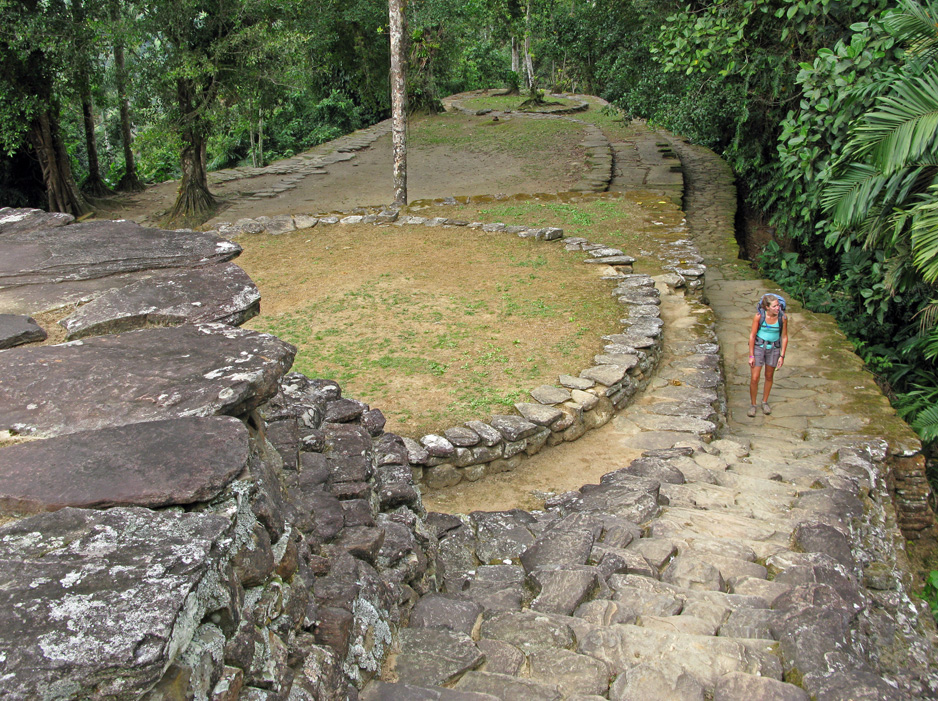
Exploring the sacred city hidden from the world for so long.
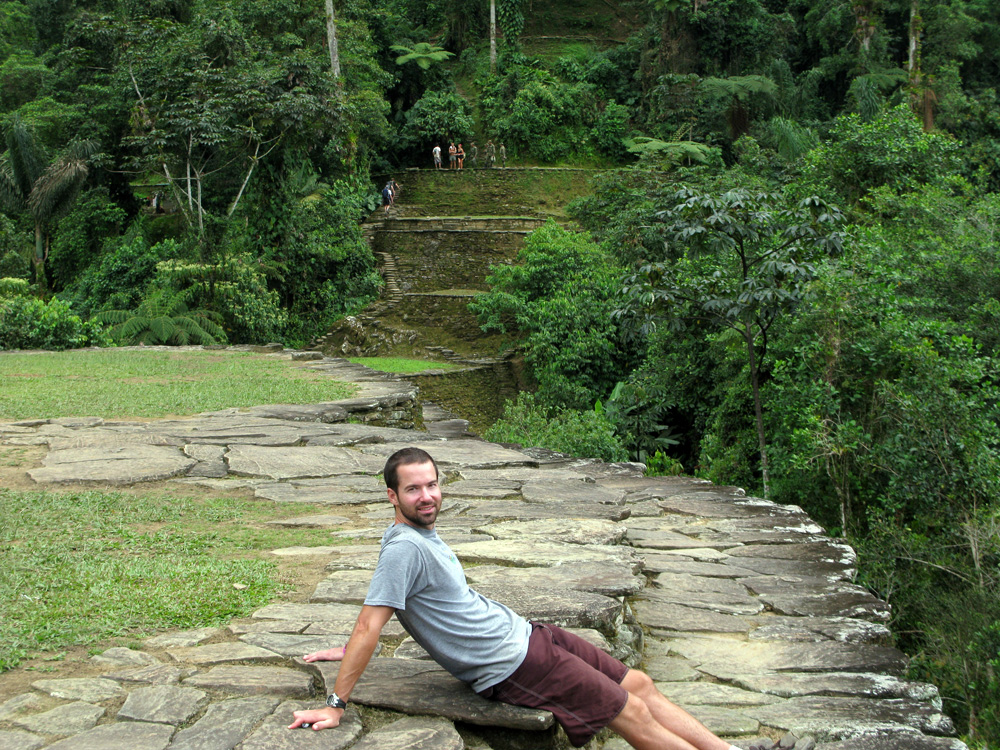
Some r&r after a 6-hour hike to the Lost City.
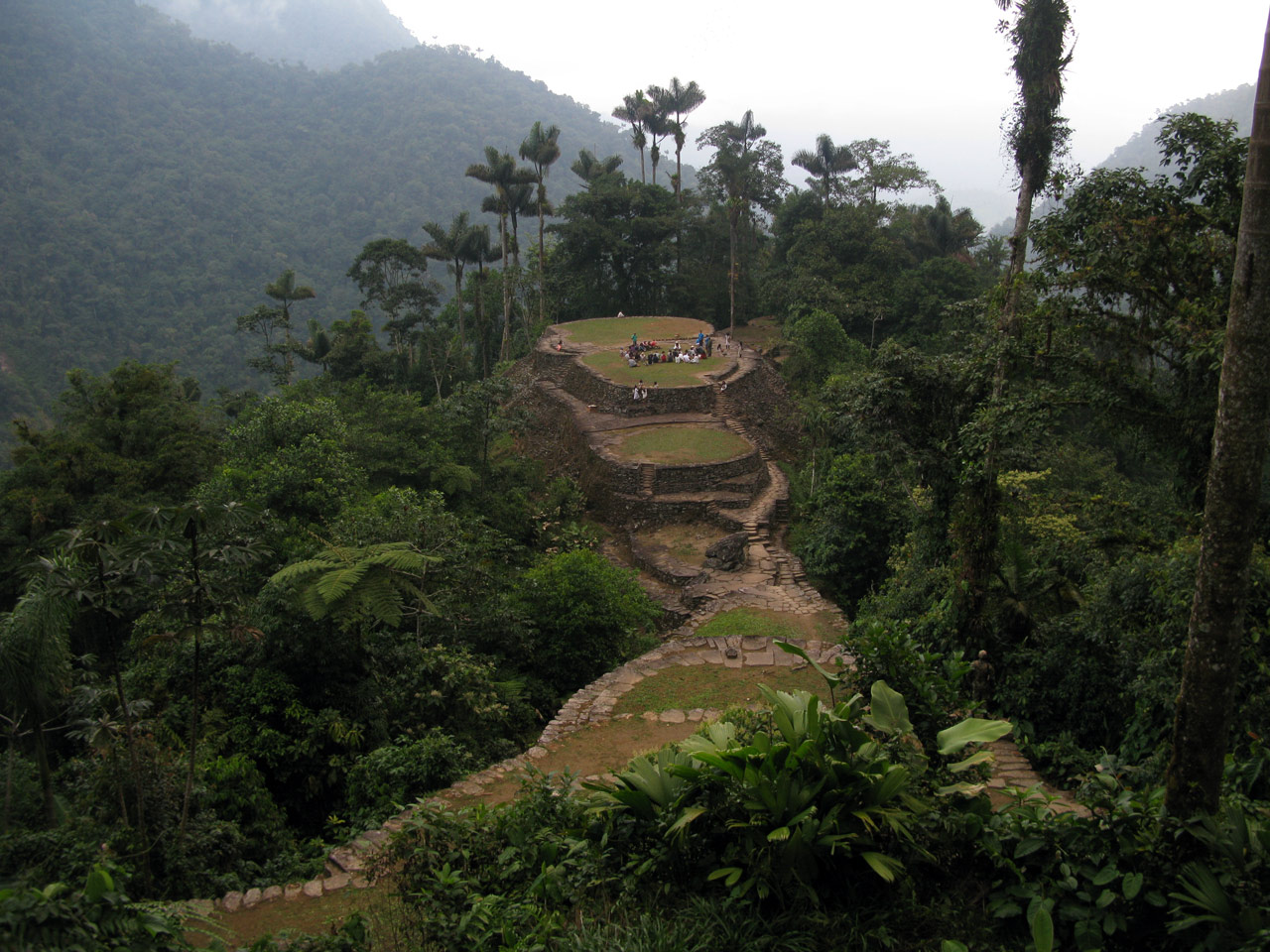
Tourists gather around the Shaman on the main terrace of the Lost City.
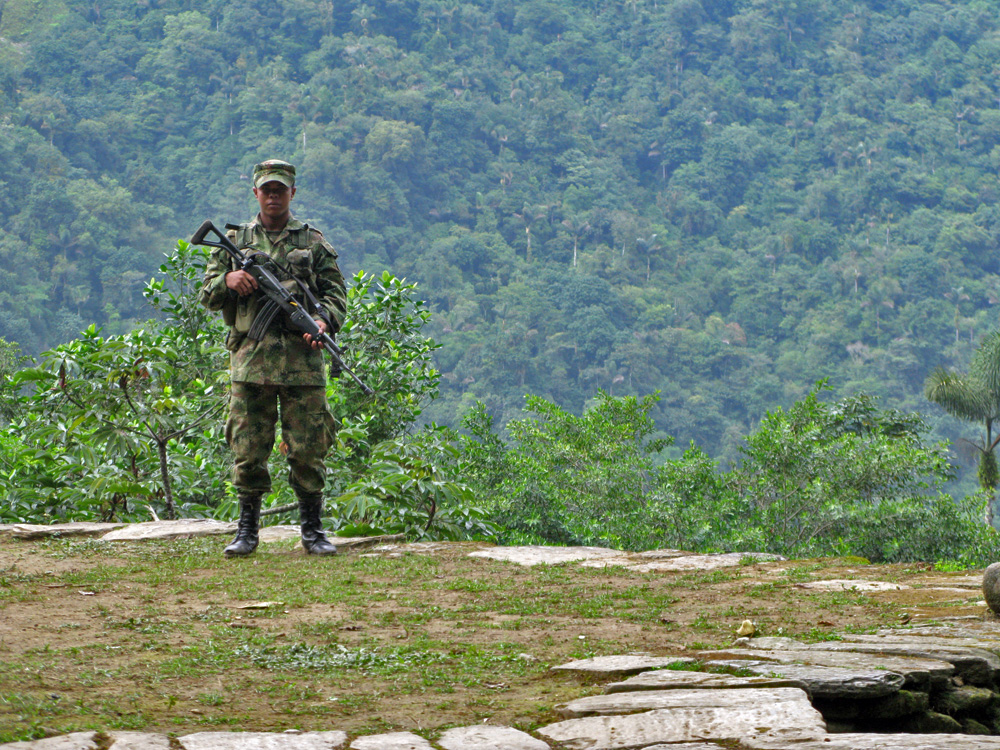
We felt safe - there were also special forces keeping an eye on the city from a distance.

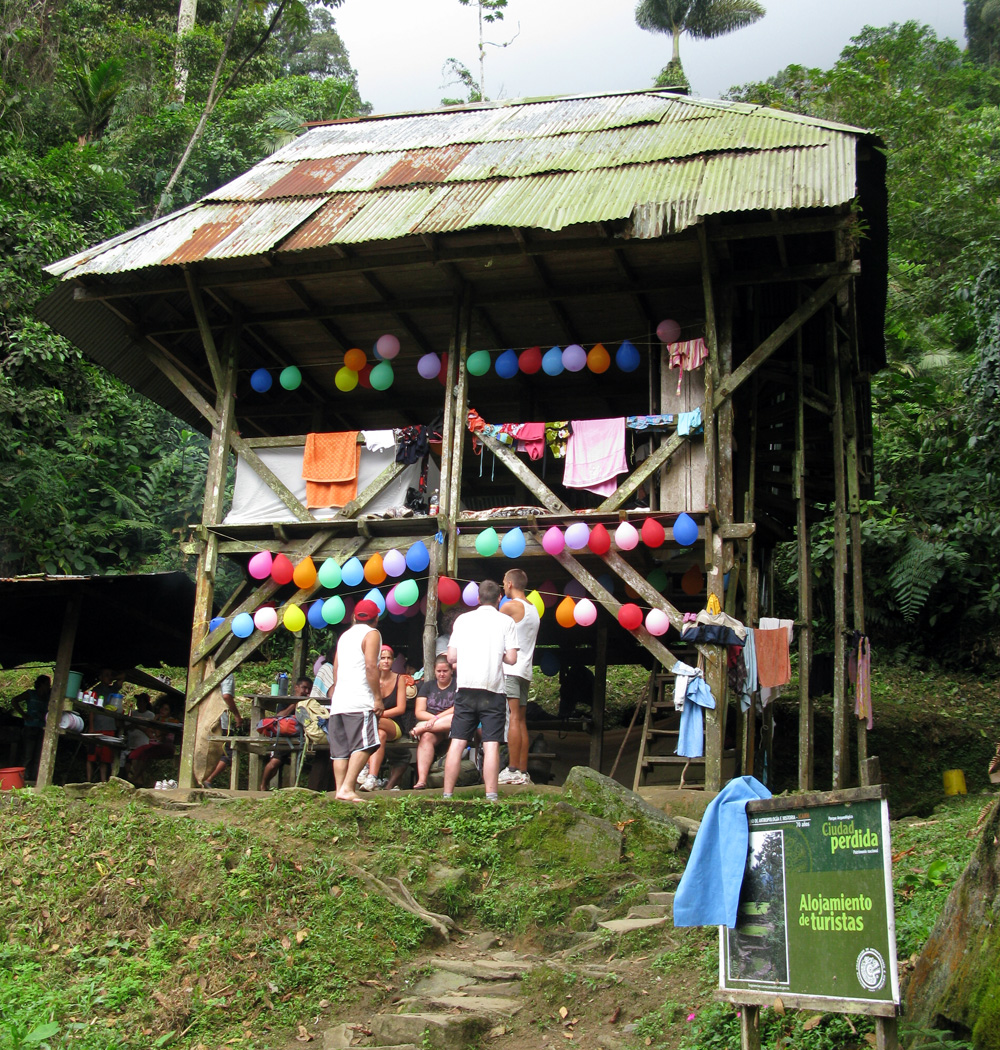
We were a bit disappointed when we got to camp, since they clearly hadn’t accounted for us and scrambled to get enough mattresses and blankets to accommodate our group. There was already a group of 25 there who was spending 2 nights, officially against the rules but not enforced, of which we suffered the consequences. We each had brought a bottle of champagne or rum and quickly started celebrating, literally, since we finished everything by 8. It was enough to cheers both the English and Dutch New Year, though not quite enough to make us forget our day’s hike and stay awake until midnight.
!

A festive camp to celebrate the new year.
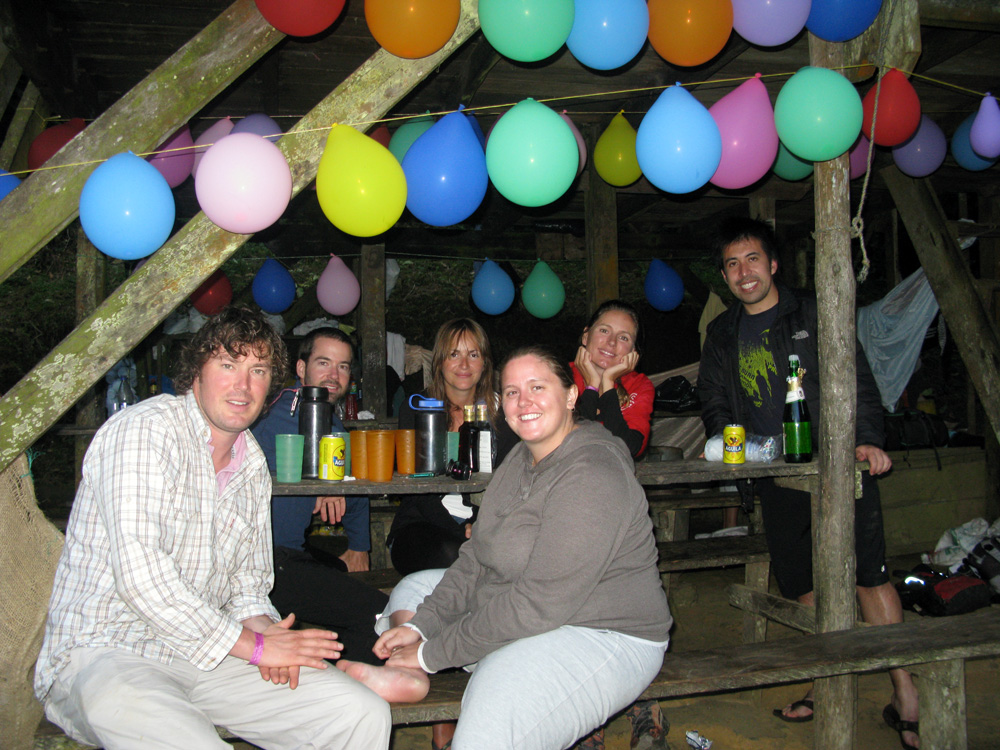
Drinking rum and punch.
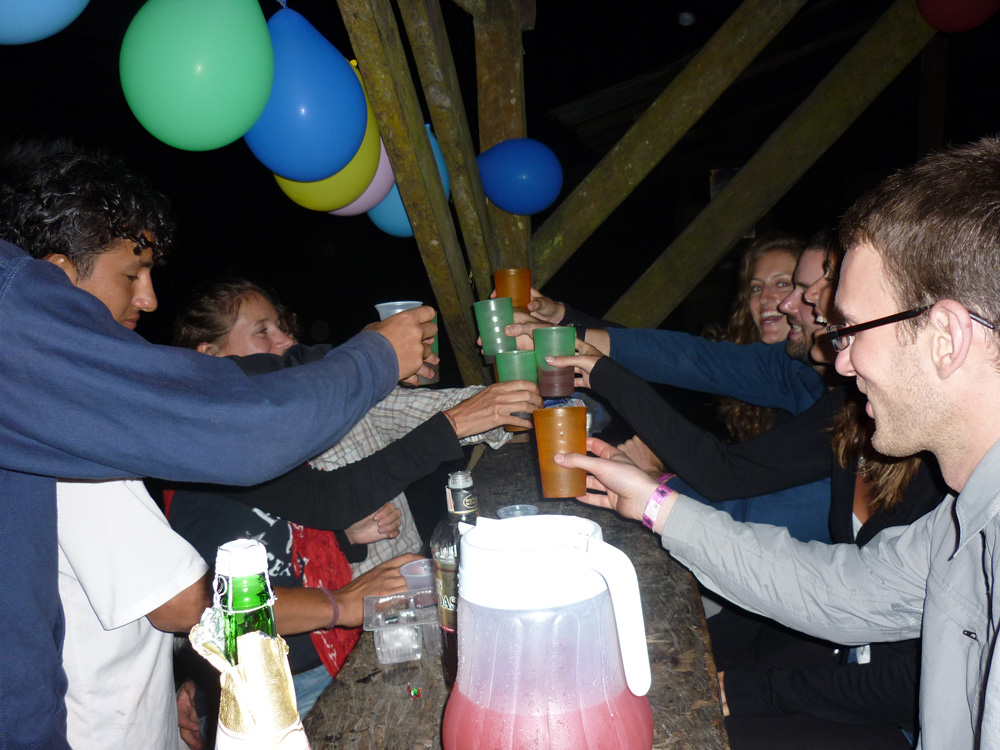
Happy new year! We didn’t make it till midnight.

In our last 2 days hiking back, we somehow managed to fit in quite some drama, both good and bad. To start off 2010, we were honored to witness the engagement of Sarah and Harm on the King’s throne of the Lost City. It was such a beautiful and fitting way to celebrate their 10th year together at the turn of a new decade. Pat was asked to photograph the event just minutes prior, which he handled gracefully.
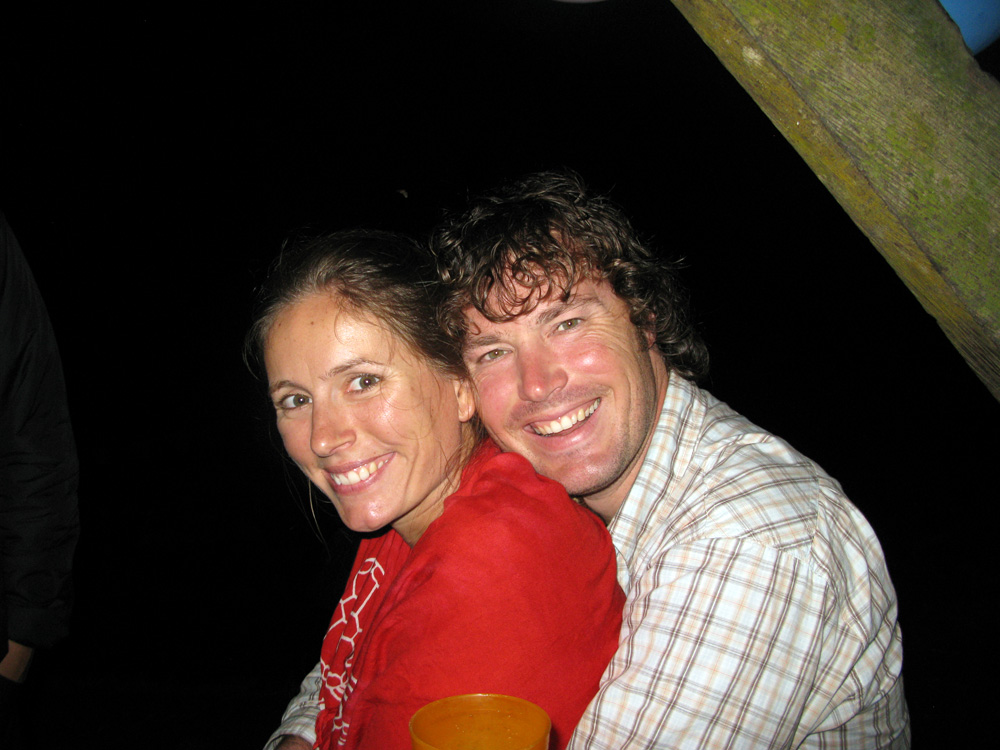
The happy couple – Sarah and Harm.
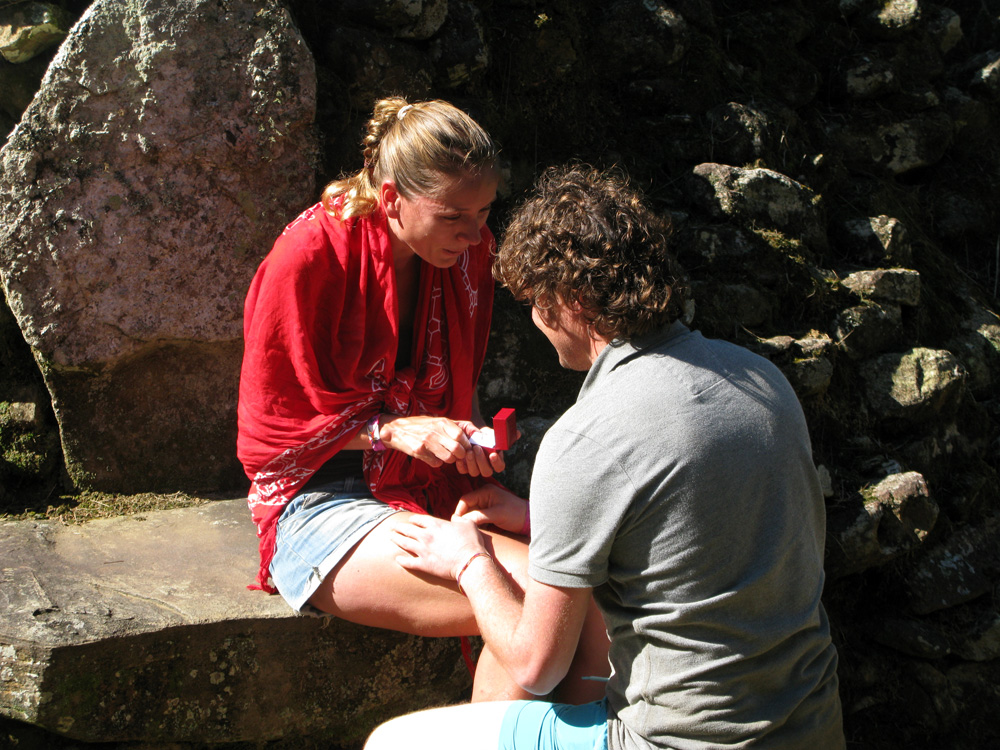
A marriage proposal marks their 3rd decade together.

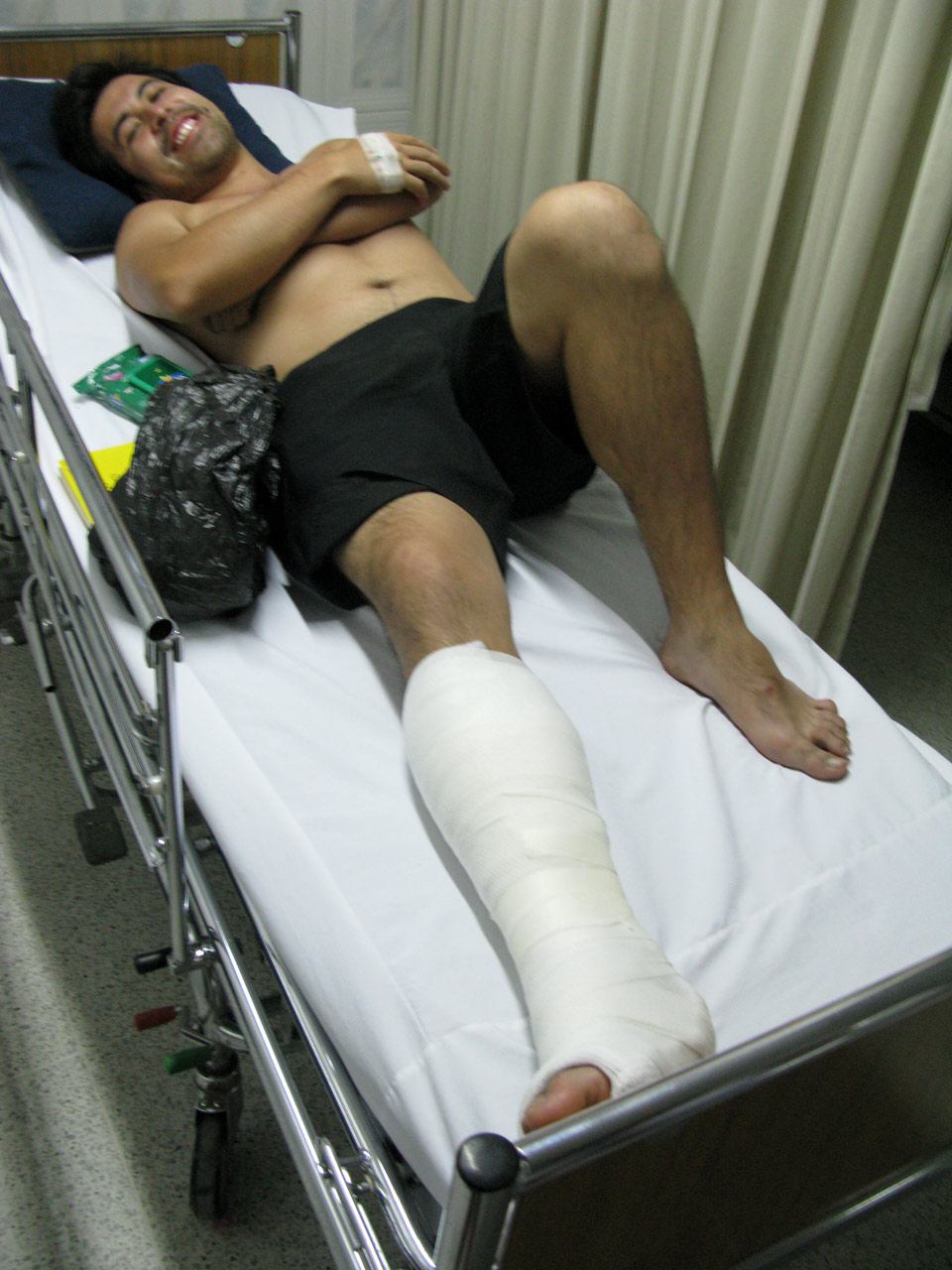
On the final day, just a few hours shy of the finish line, another member of our group Diego slipped during a river crossing and cracked his ankle enough that you could see his tibia bulging out under his skin. It was quite obvious that he could no longer walk and had to be carried out immediately. Pat’s Wilderness First Aid training came in handy when he built Diego a fine splint to immobilize the ankle as he was carried out on a hammock by a team of speedy Colombians. We were a bit disappointed at the lack of first aid training available and had to guard Diego’s ankle so that nobody would touch it, aggravate it and cause more pain and damage. Harm succeeded in scaring away the witch doctor, who wanted to put the ankle back into place, with a few forceful shouts. A wise precaution since Diego’s ankle was most definitely broken and needed 5 screws and some tendon reconstruction to put back together. Our friend is doing very well and was a champion throughout it all!
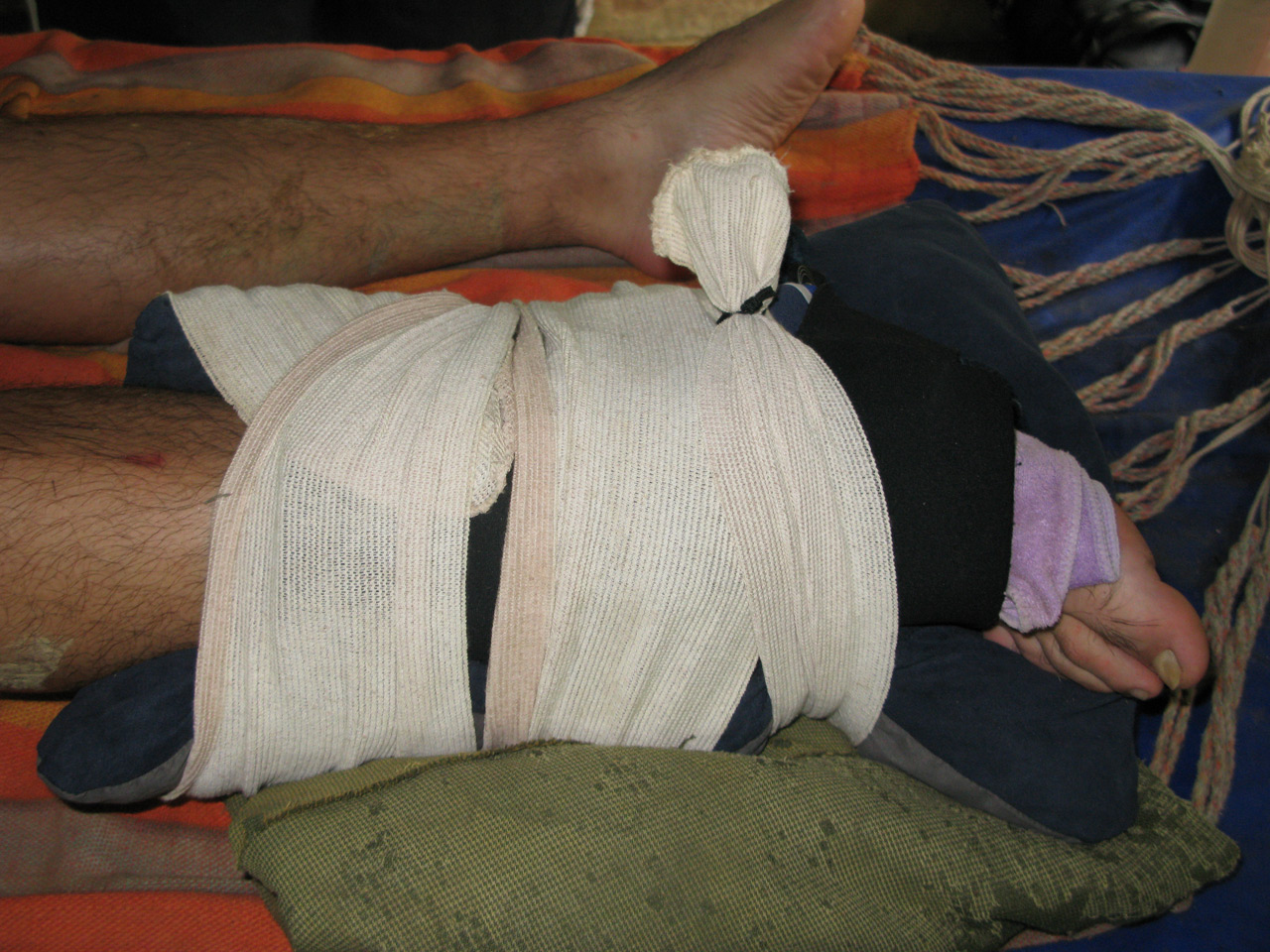
The start of Diego’s splint for his broken ankle.
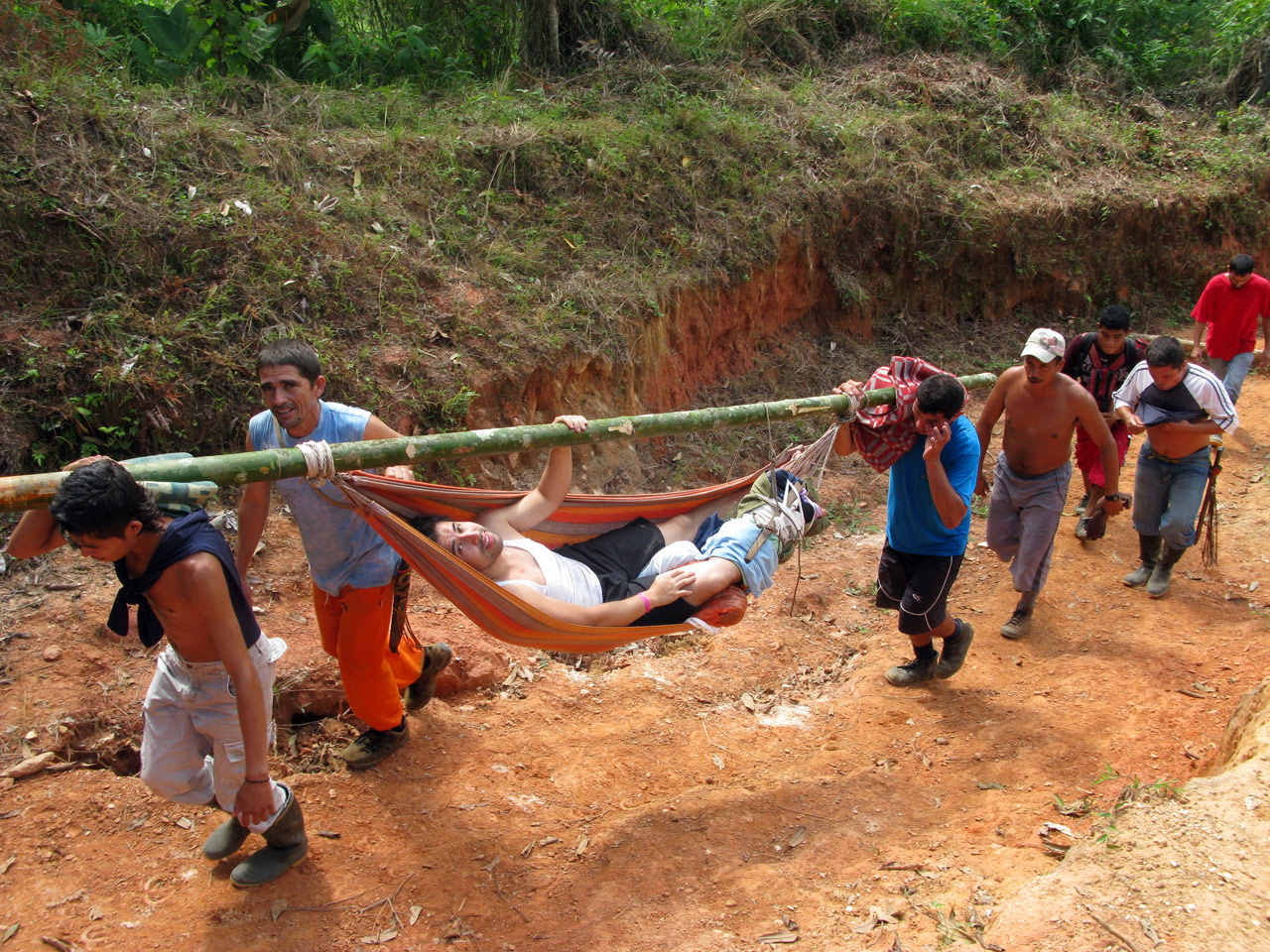
Diego’s personal porters – they ran up and down the mountains in record time.
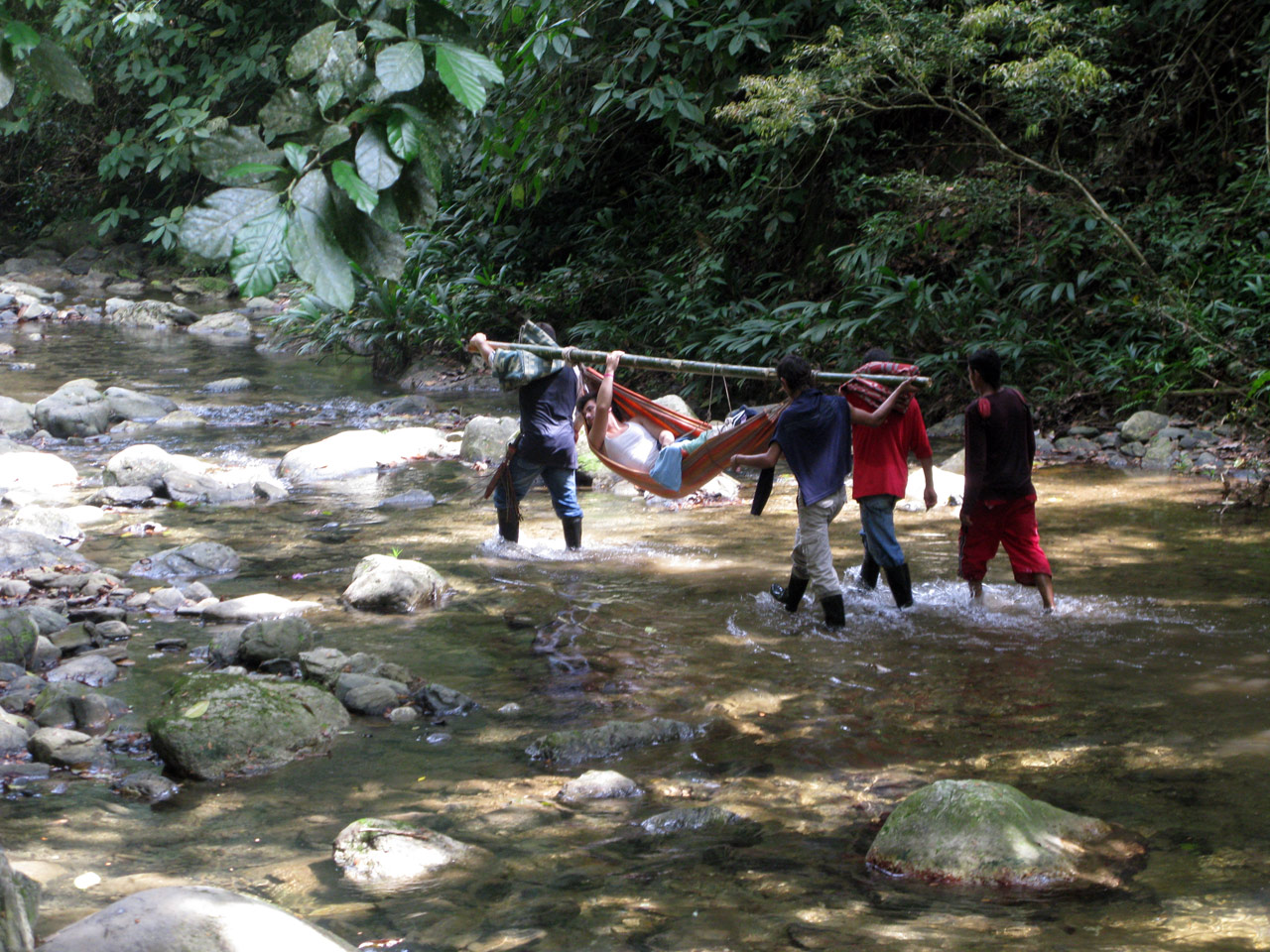
And across rivers.
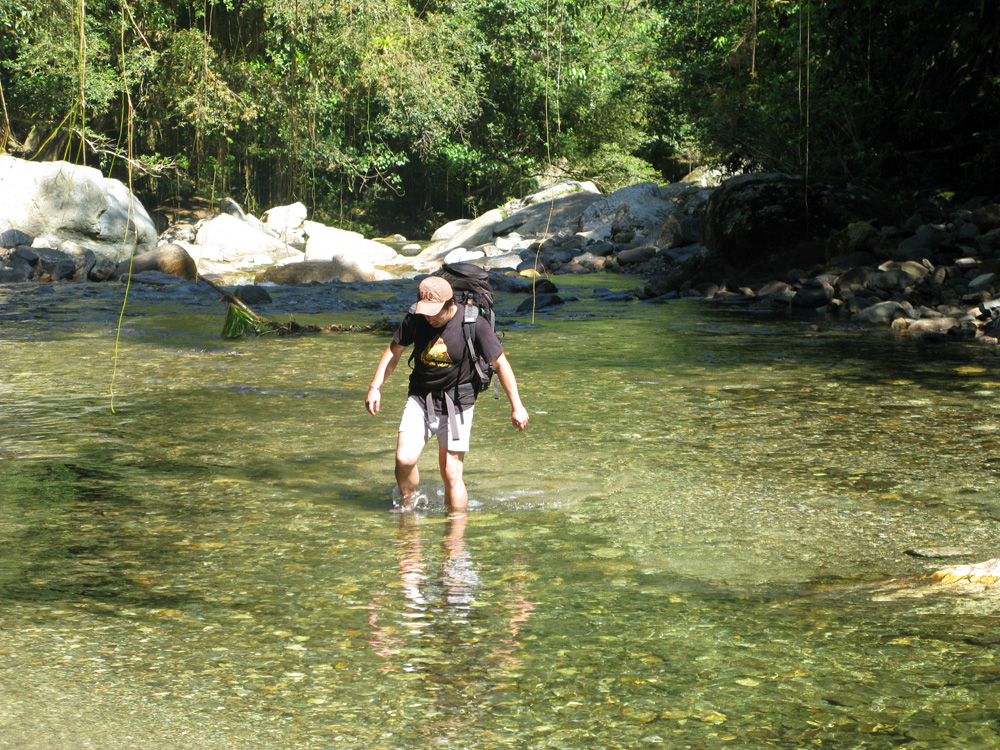
Here’s Diego safely crossing a river earlier in the trip.
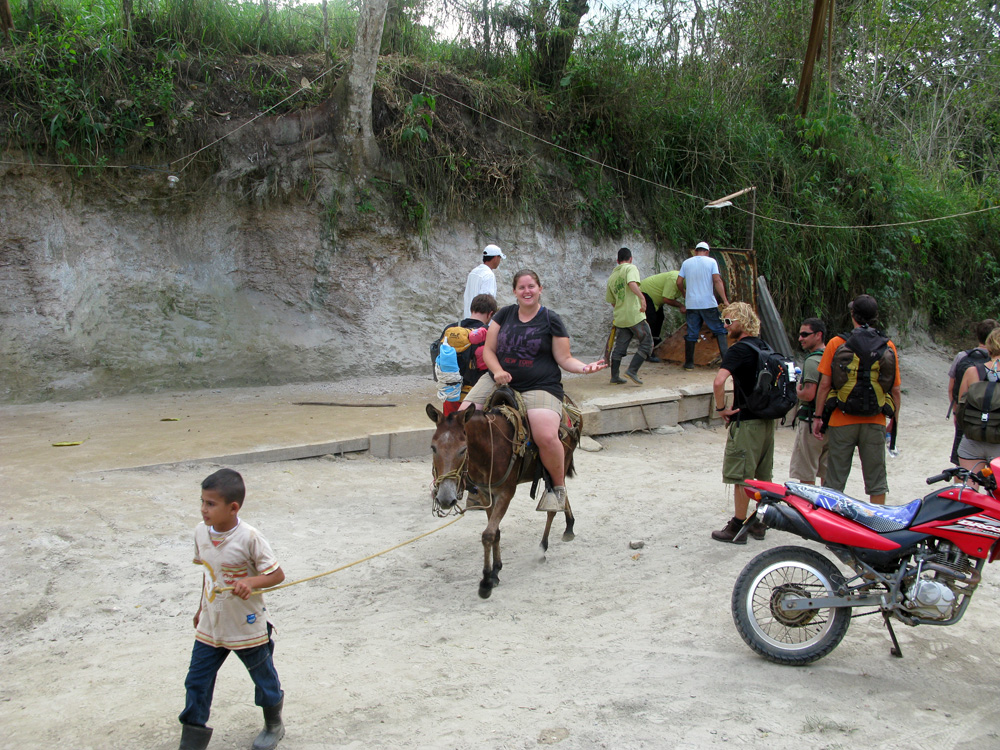
Aynsley crosses the finish line in style - her heels plagued with blisters.
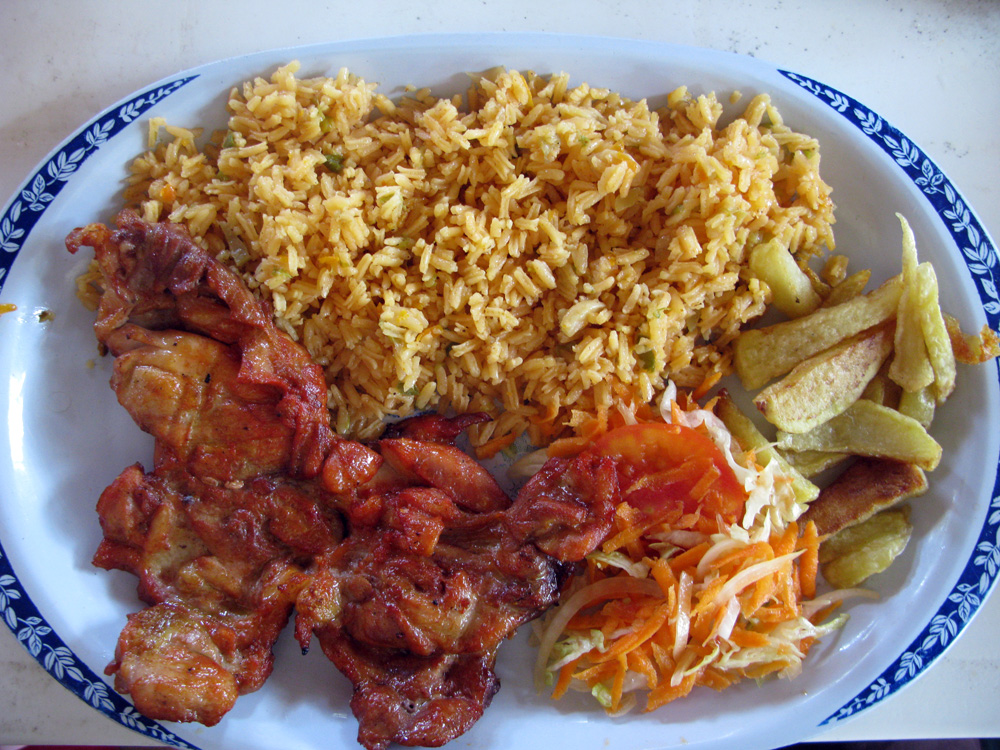
Our last lunch awaits us at the finish line.
!

Diego’s ankle back in place – awaiting surgery the next morning.

Despite the drama towards the end, we had a wonderful time and consider this trek to be a highlight of our trip so far. And of course after 5 days of grueling physical activity, there’s nothing better than taking a few days to rest, sleep in, watch a little TV, read some books and plan for the next big adventure!
Posted by: Patrick | December 23, 2009

to Colombia ‘little by little’

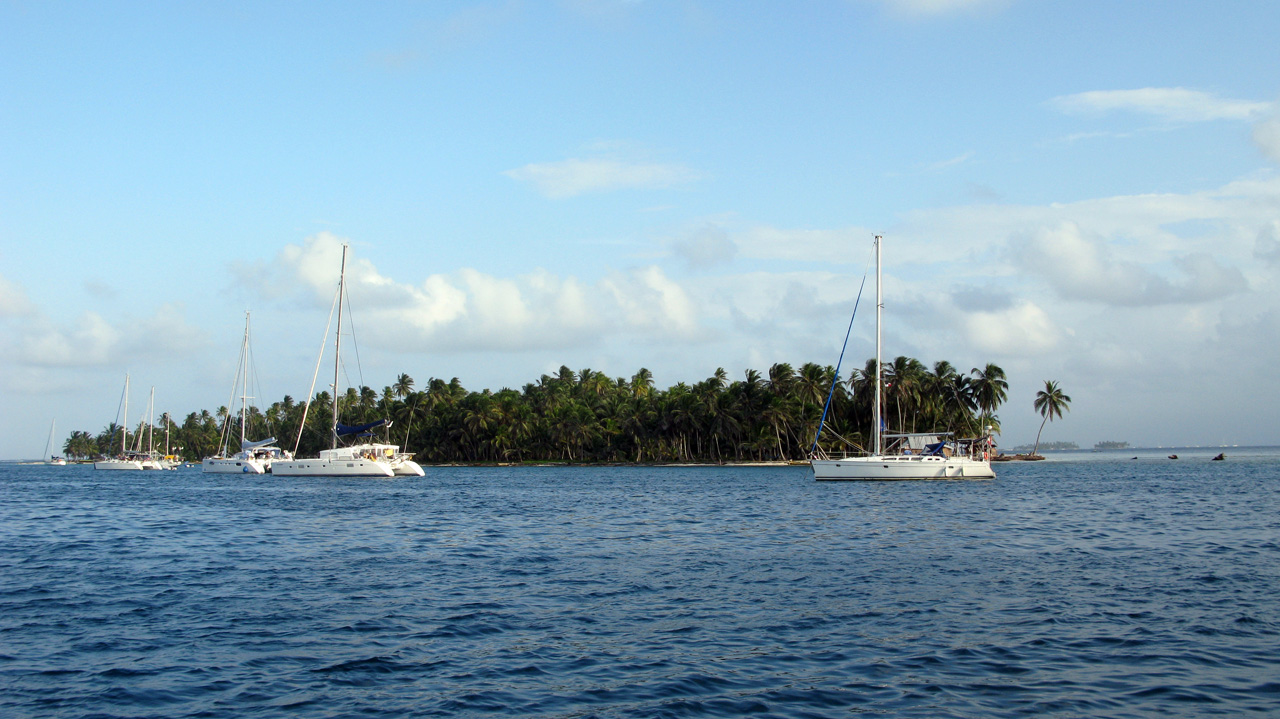
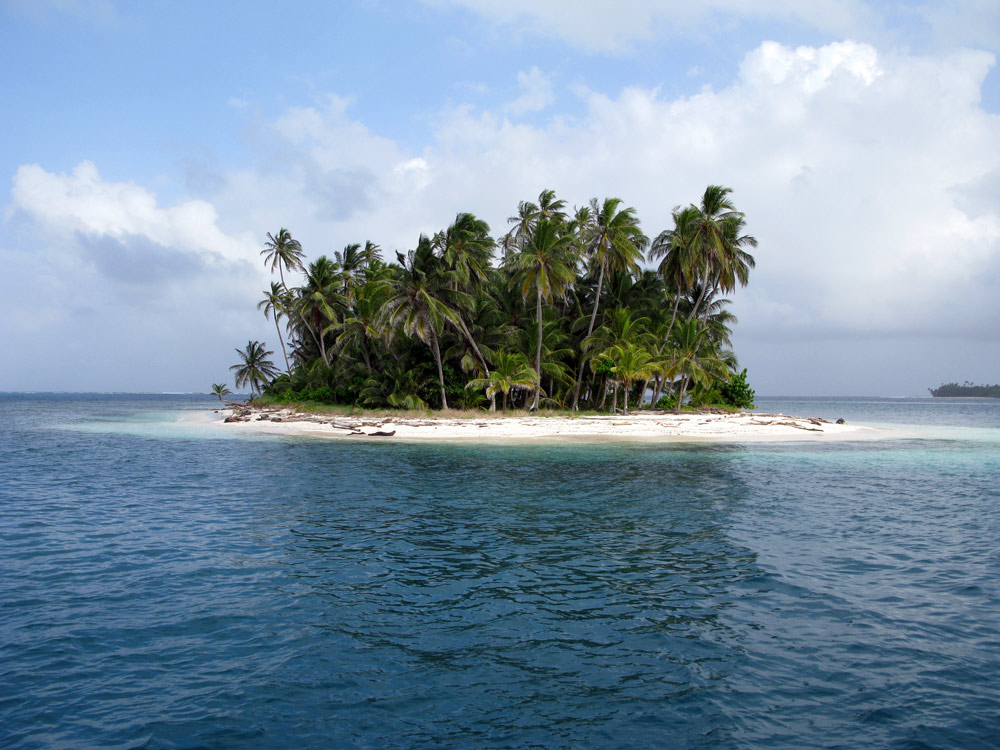
The San Blas Islands, a private paradise.

We woke before dawn in steamy Panama City on December 10th to begin our journey to South America.  Caroline and I squeezed ourselves and all of our belongings into the back of a Land Cruiser for what would start the longest, most expensive way you could possibly travel from Panama to Colombia.  The pavement turned to gravel then turned to dirt in about an hour and then we came to a deep river cutting across the ‘road.’  There were a few other trucks stopped there at the bank, and I honestly thought this would be a major delay.  But seconds later the driver dropped it into low gear and plunged us and his brand spanking new ‘Crusier into the water.  Waves washed over the bumpers, steam hissed and shot up as the cold water washed over the hot brakes.  We headed downstream to avoid sucking water up the intake. This guy knew what he was doing, no delay at all.  We spun our wheels up the muddy bank and continued down to the coast.  Pacific Ocean to Caribbean Sea in under three hours!

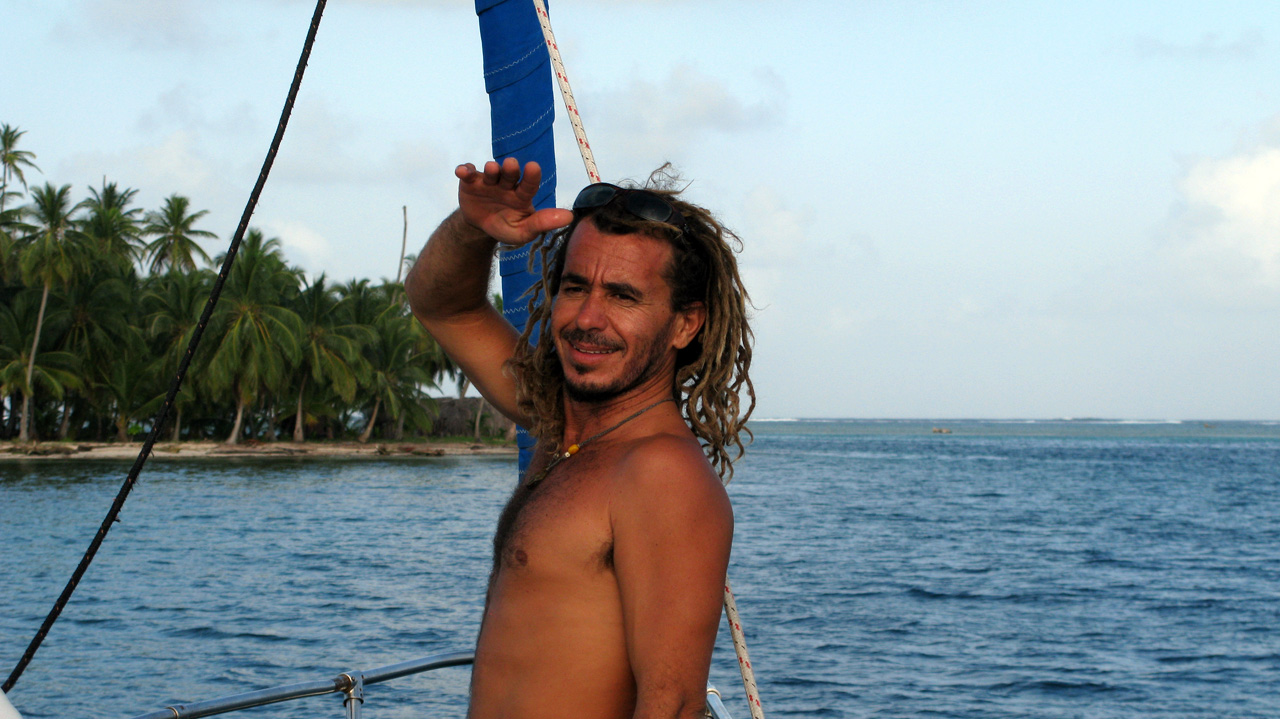
Captain Bruno in command.

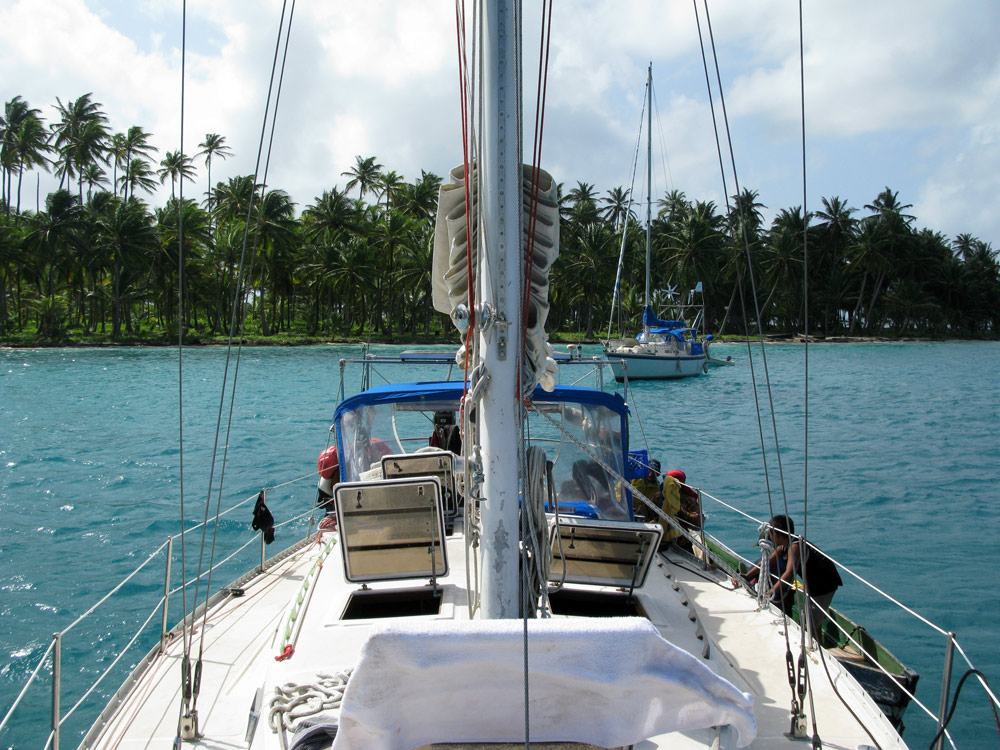
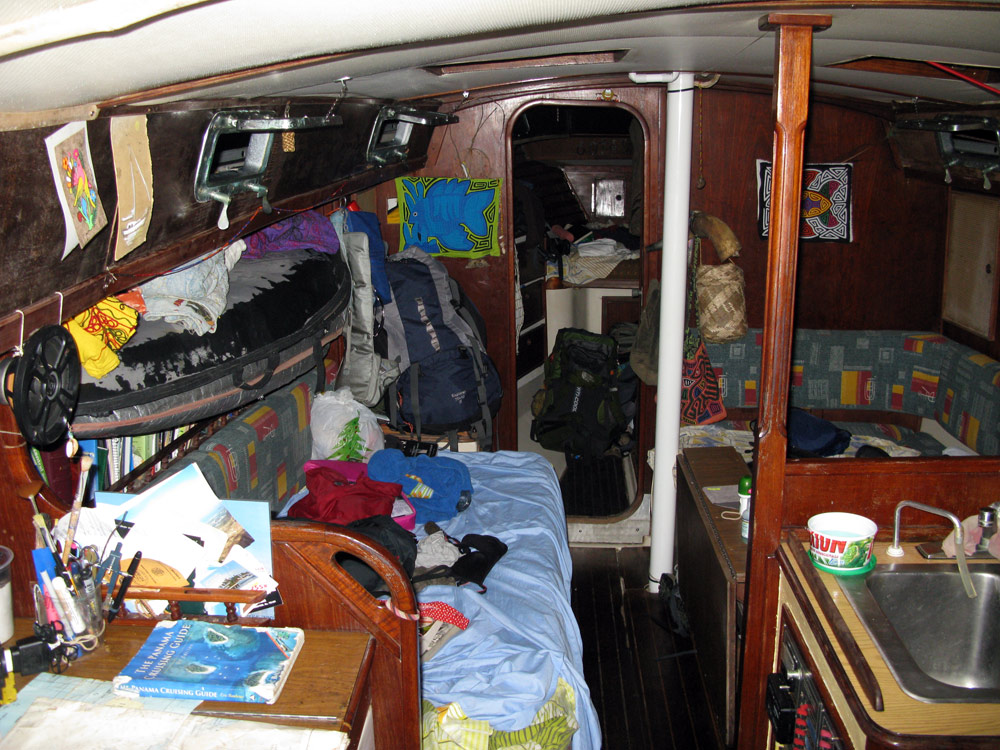
Soon we were on a long-boat with the other continent-crossing gringos we would get to know very well on board the Winfli.  We arrived as Captain Bruno was pulling her into harbor behind one of the more inhabited of the San Blas Islands.  Introductions were quick and we got a very brief tour of the vessel.  Winfli is a 39 foot sailboat, there were now 10 people on board, space was tight.  On board with us was Kirsty and Jim (UK), Craig and Caren (NZ), Marcos and Stefan (Austria).  We all shared one head (toilet) with a sea-water hand pump to flush it.  One sink in the kitchen with a sea water foot pedal and a fresh water tap when absolutely necessary (or when Bruno wasn’t looking) for rinsing the salt off hands, faces, teeth and silverware only.  Electricity and fresh water are ‘gold’ on board, so we had to keep consumption of both to a minimum.  Bruno had a six liter garden sprayer to rinse the salt water off us in lieu of a shower.

Coming into our first harbor at Coco Bandero.

White sand was just a quick swim away.

The scene from on deck looking aft.

There were always some impressive ships parked nearby, we got a little envious of the big ones after a while...

And the scene below deck. Everyone's bedroom, living room, kitchen, bathroom and office. Our bed is behind on the left by the maps.

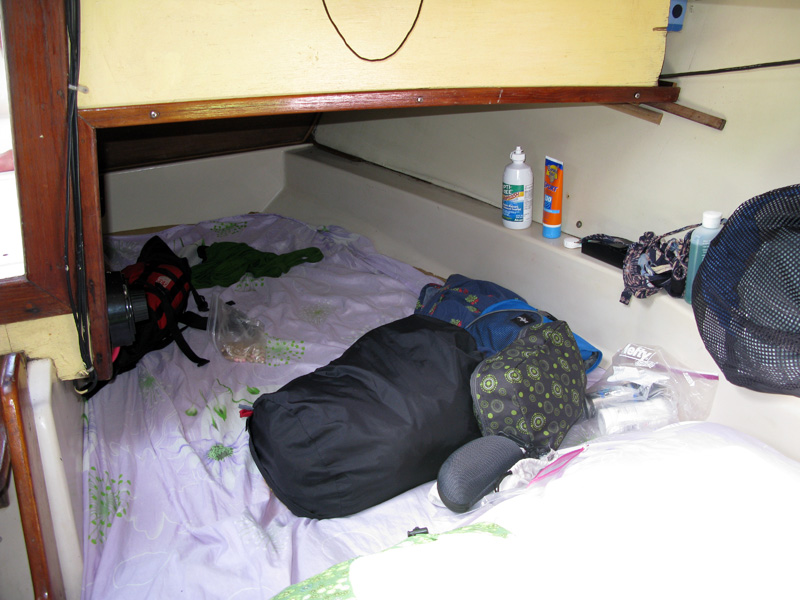
Our bed. Right up in there with all the extra tanks of diesel. Mmm that's good sleepin'! Caro couldn't take the fumes after the first night and opted for her Thermarest above deck.

The first three days were spent sailing from island to island in mostly protected water.  It was excellent!  Everyone on board was super friendly as we swam, snorkelled, read, relaxed, and enjoyed the beautiful San Blas and life on the sea.  Literally stepping on everyone’s toes the whole time, we still got along really well.  We were also really lucky that both the Captain and his girlfriend Ingrid (the first mate/chef) were great cooks.  We ate well and enjoyed learning the ropes (lines) from them.  They’re both from the Canary Islands (Spanish territory off the coast of Morroco) and have done extensive sailing around the world.  Bruno was always answering our questions with his favorite saying: ‘little by little.’  Sort of his theme.  Everyone had a laugh when his English was less than subtle: ‘I now go to deserted island to spend alone time with my girlfriend.’  They loved music and had a decent stereo with an extensive CD collection on board.  Sadly though, sand and salt water have taken their toll on the CDs and only a few albums other than Bob Marley’s Legend worked at all.  I think we all still have ‘No woman no cry’ stuck in our heads. Kirsty and Jim brought along an iPod dock which saved us all after 4 or 5 days of non-stop Bob…

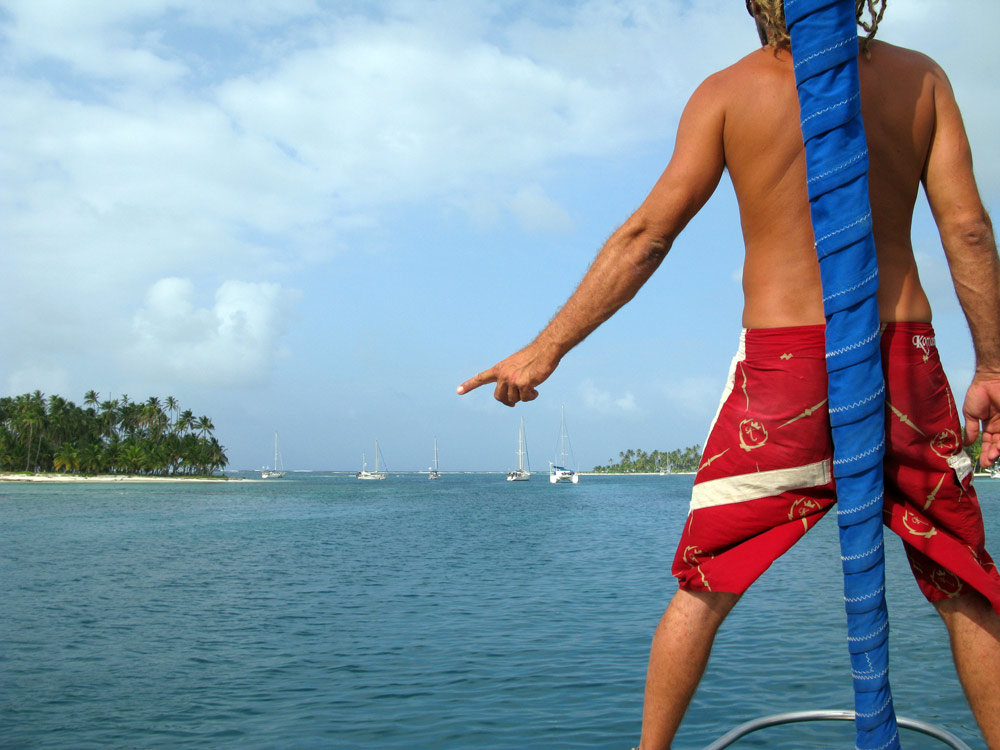
Bruno directs us into harbor as I captain the Winfli on day 2.

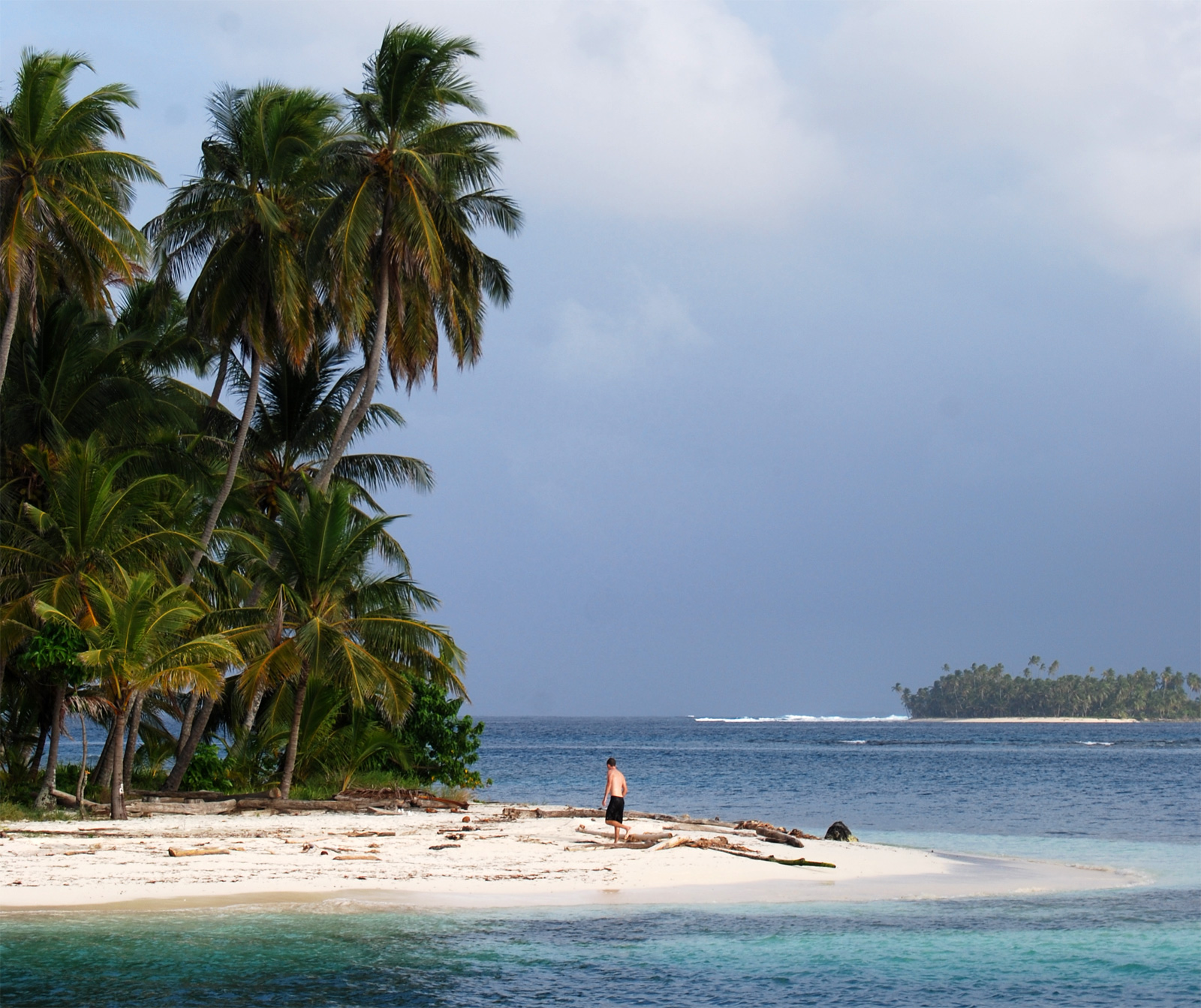
Swam out to our own little island. Photo by Marcos.

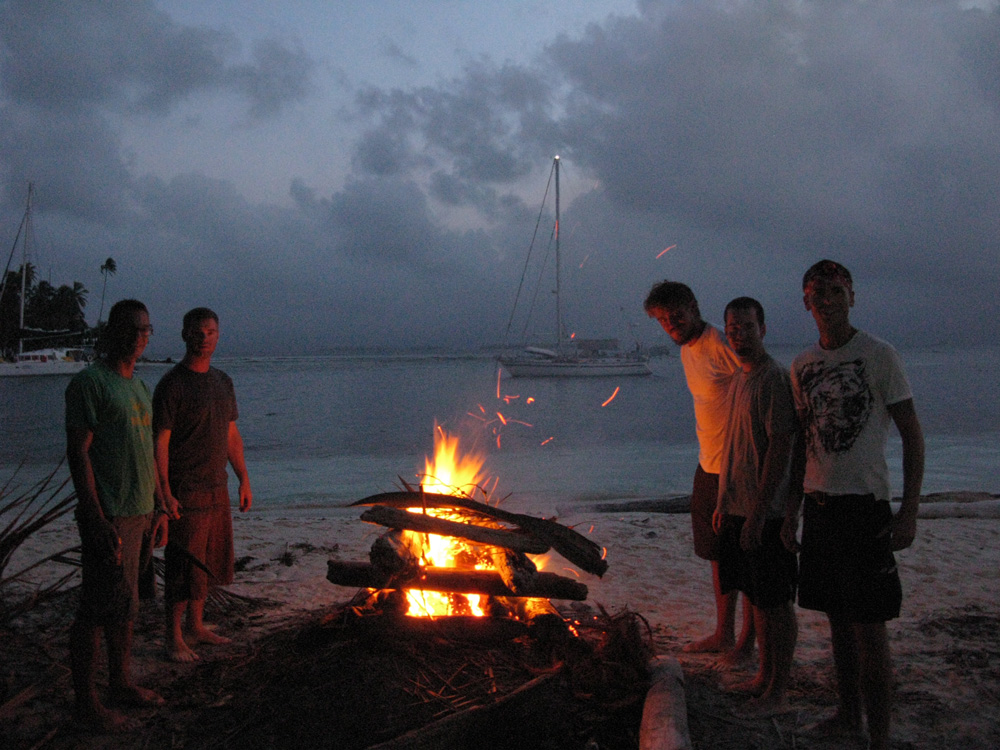
We built a nice bonfire with the driftwood and coconut husks on our little piece of paradise. Winfli in the background.

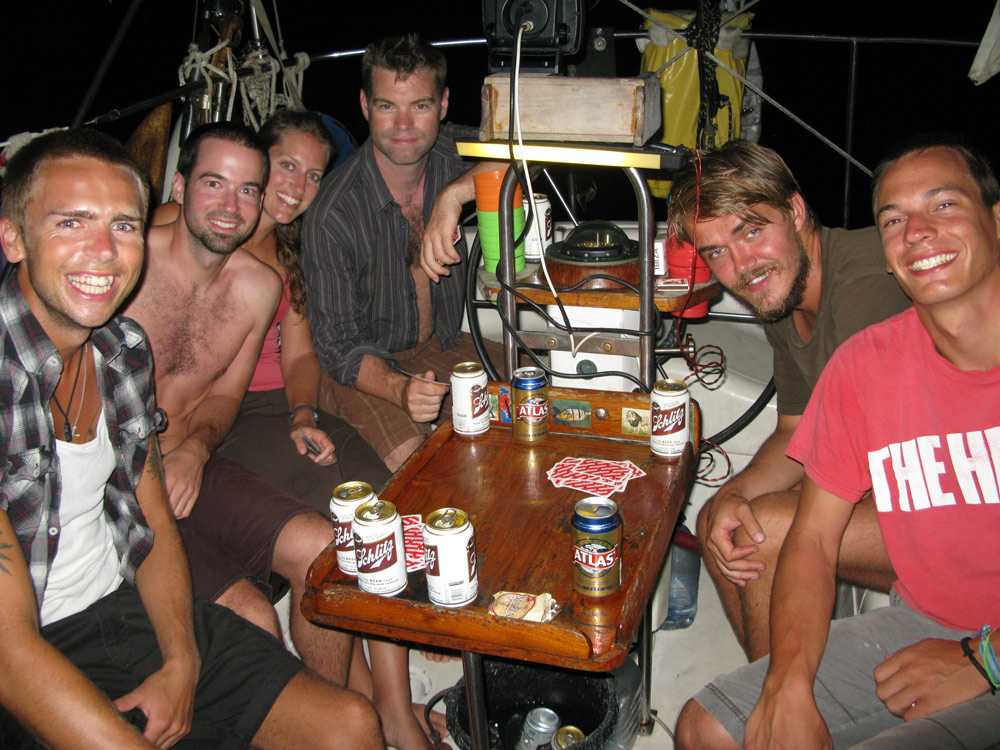
After our tasty dinners it was usually cards, but on this night beers too! We were able to secure libations from one of the islands. Jim, Pat, Caro, Craig, Marcos and Stefan.

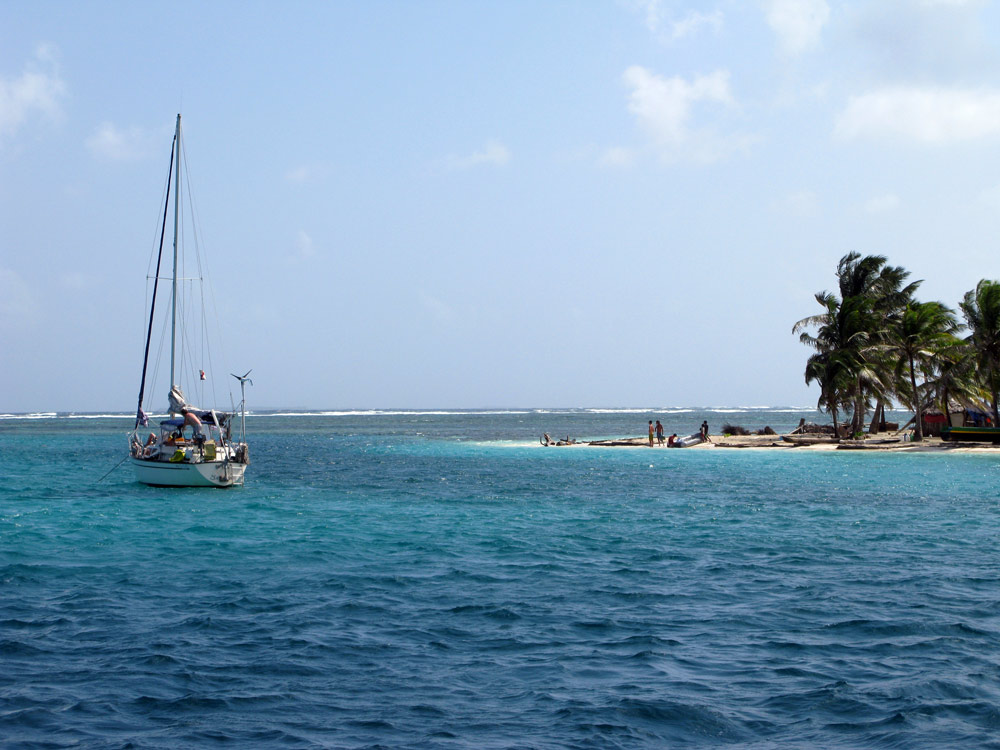
The 365 San Blas Islands stretch for miles along the Caribbean coast of Panama all the way to where the isthmus connects to the South American continent.  Covered in tall palms and coconuts, almost every island comes with its own white sandy beach around it.   The Kuna people are the native inhabitants on about 50 islands and most still live a very traditional life with few modern influences.  Panama barely governs the region so the Kuna are quite autonomous.  Whenever we arrived off an inhabited island a few Kuna would canoe over to check us out.  One evening they paddled out to deliver our order of fifty fresh bread rolls and a bunch of ice blocks!

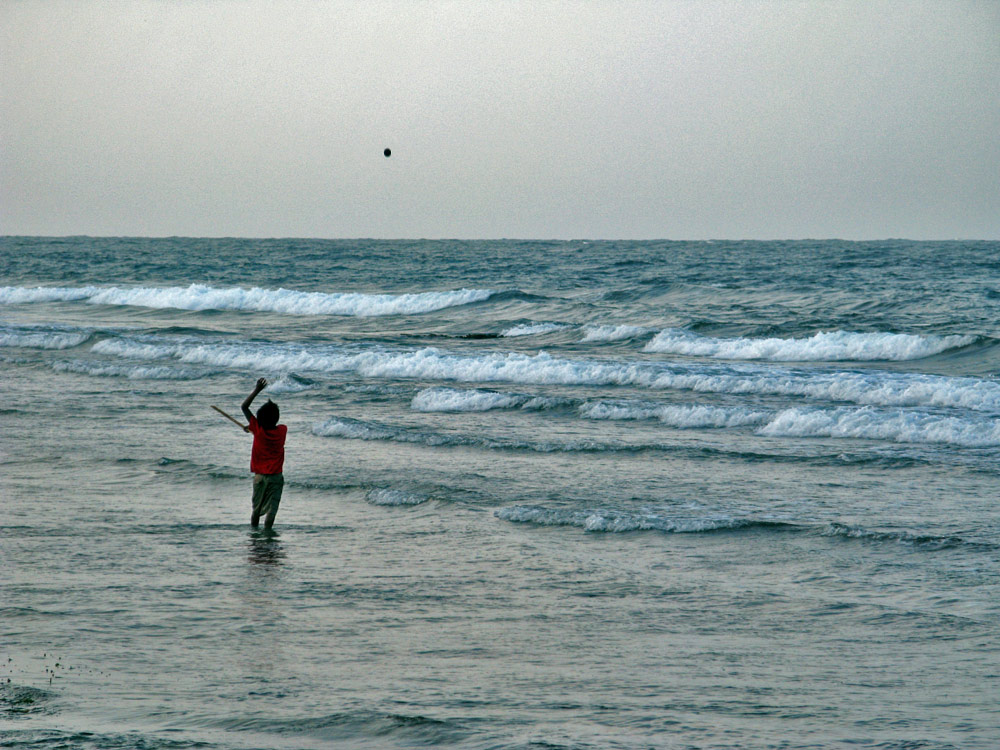
Home run derby.

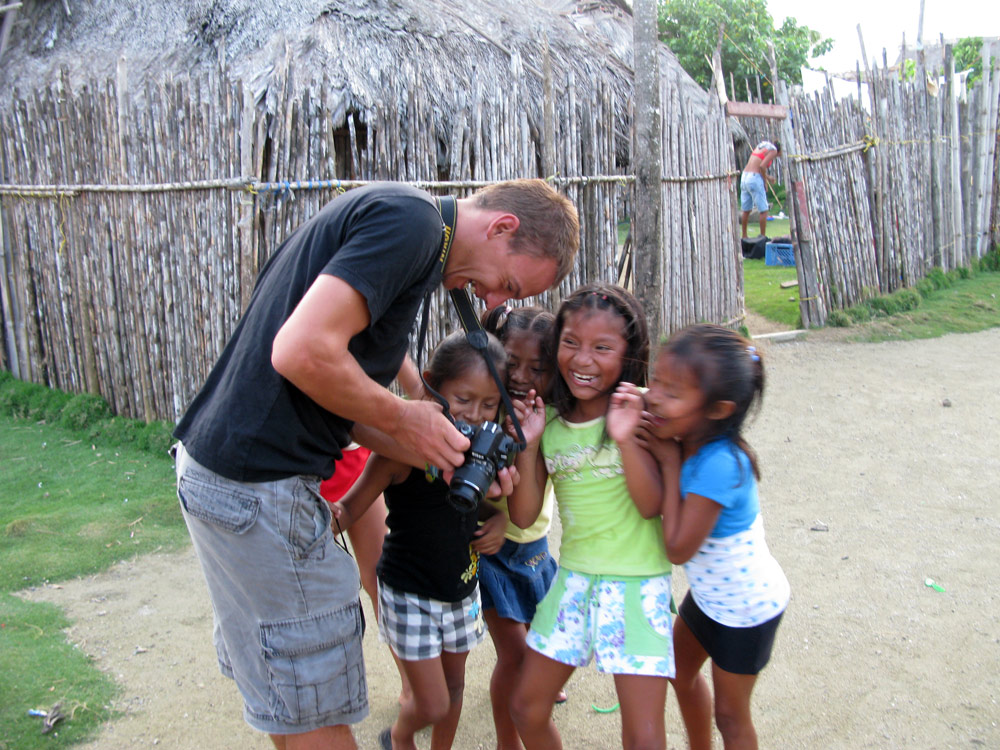
Stefan entertains the Kuna girls with their picture.

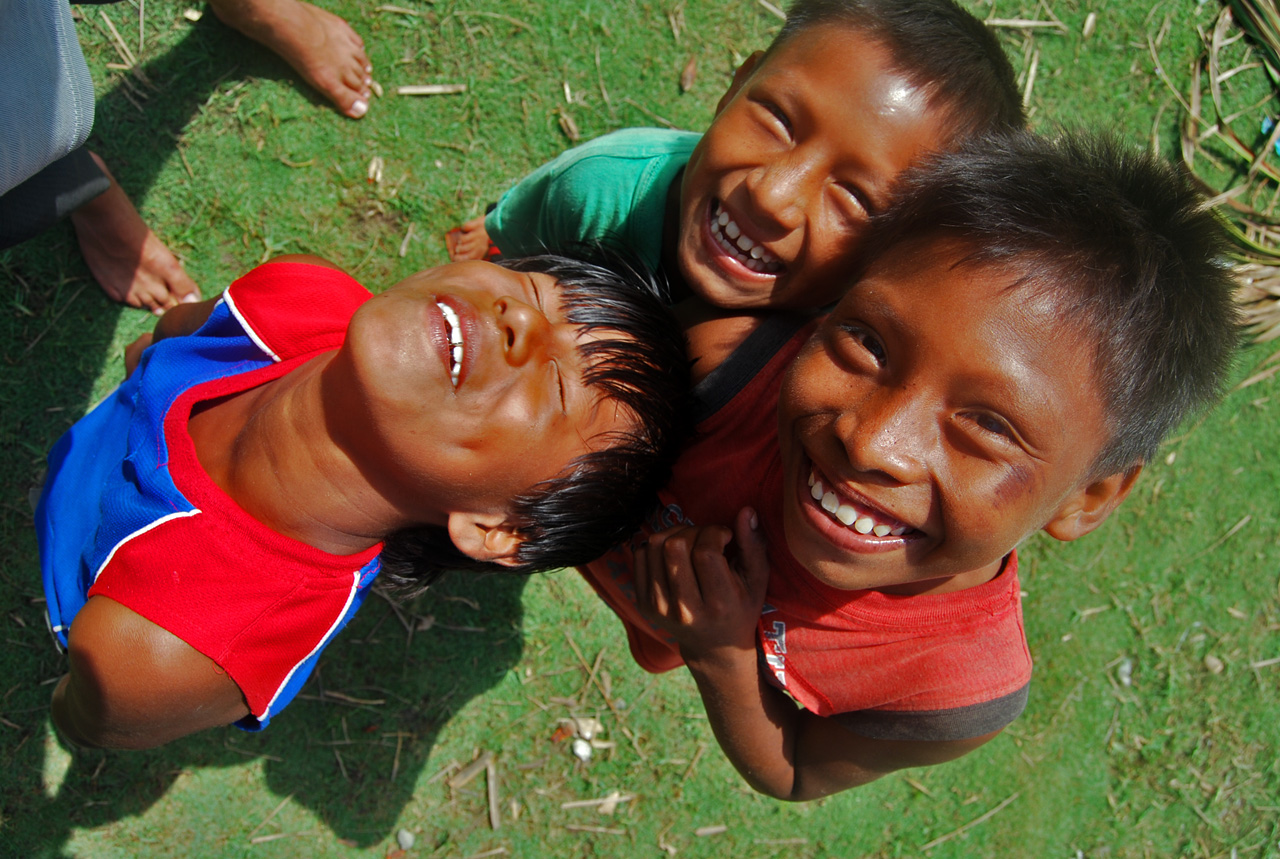
The children were happy to have some visitors. Photo by Marcos.

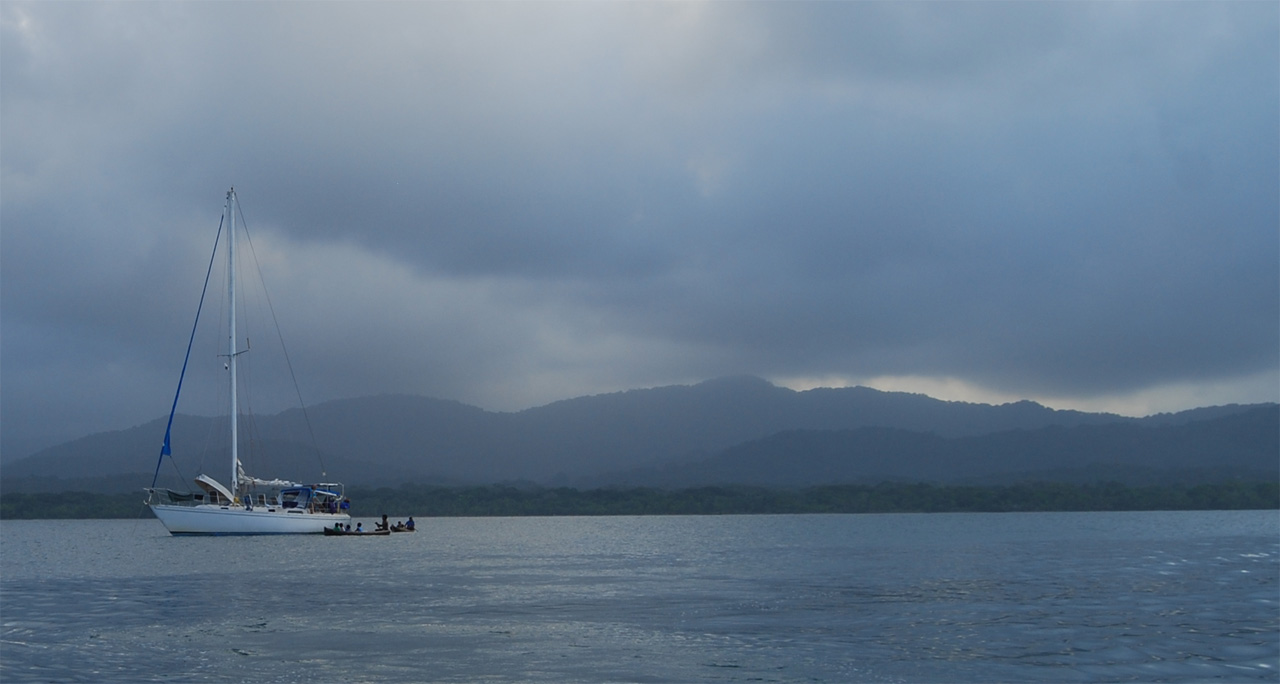
Our sailboat Winfli anchored at our last harbor in Panama.

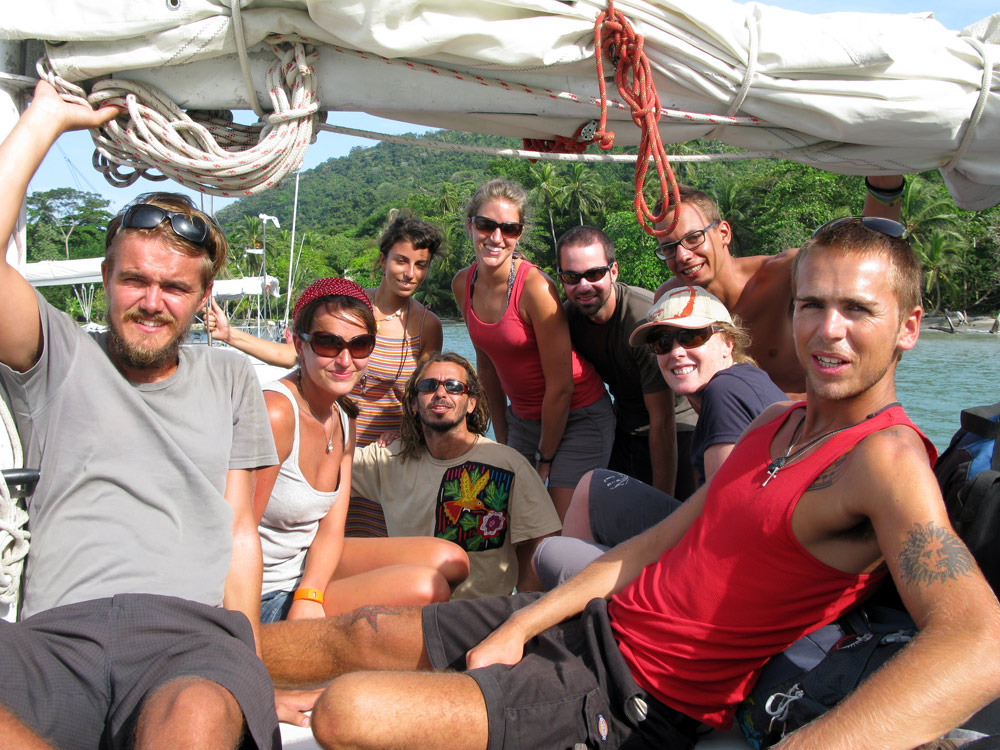
We finally made it to Colombia: (l-r) Marcos, Kirsty, Ingrid, Bruno, Caro, Pat, Caren, Stefan, and Jim.

Originally, we were sold on the idea of sailing directly from the Caribbean side of Panama to Cartagena, Colombia. However, if you take a look at the map, that route takes you over open ocean for two days and is no longer considered the best way to go.   We heard horror stories yesterday from folks who took that direct route and were miserable for those two days as everyone got sea-sick the entire time.  Not to mention they had an alcoholic captain who fancied bringing ‘women of the night’ on board…

Our route still had a few days of pounding over rough semi-protected waters and we ended up anchoring for two days to let the rough seas calm down.  We decided after that about three hours was an ideal amount of time to be swaying and crashing through the sea.  The two days we had eight-hour passages were a bit much, since with all those people on board you could do nothing but stare at the horizon to fight off nausea.  So glad that we didn’t do the direct route, it would have been very rough.

Our route, click for the full map.

Our route followed the coast of Panama down past the Darien Gap until we reached the north-western border of Colombia at a town called Capurgana. We disembarked there and got our passports stamped into Colombia with ease.  We spent the night there, then on the next day we had a wicked journey to get all the way up to Cartagena. I’ll describe it for you: three hours from Capurgana to Turbo on a 400 horsepower speed boat crashing through the waves.  That was quite fun for a while.  Once in seedy Turbo we got swarmed by touts until boarding a bus to Monteria, a four-hour journey over mostly dirt roads. Finally the last leg from Monteria to Cartagena is another four hours which we covered in a white knuckle minivan ride with either the best or worst driver in Colombia. I say that because we’ve never been more afraid as this driver overtook everyone on the road at break neck speeds, at night, while talking on his phone the entire time. But we did make it intact.  We were so glad to finally be in beautiful Cartagena just four hours before my birthday.

All told, it was eight days from Panama City to Cartagena on one taxi, one sailboat, three powerboats, one bus and a minivan. Was it a great time and an adventure? Absolutely, we had a blast and made some great friends. Would we do it again? Probably not, best to spend a few days exploring the San Blas on the sailboat then fly to Cartagena.

Cartagena:

The next day however was perfect! I got up early for a long run through Cartagena along the fortress walls of the old city and spent the rest of the day exploring this wonderful place with Caroline.  So far we love Colombia!  It’s beautiful, everyone has been awesome, there’s just so much to do and see.  Definitely worth the trip, and luckily we’ve got sixty day visas!

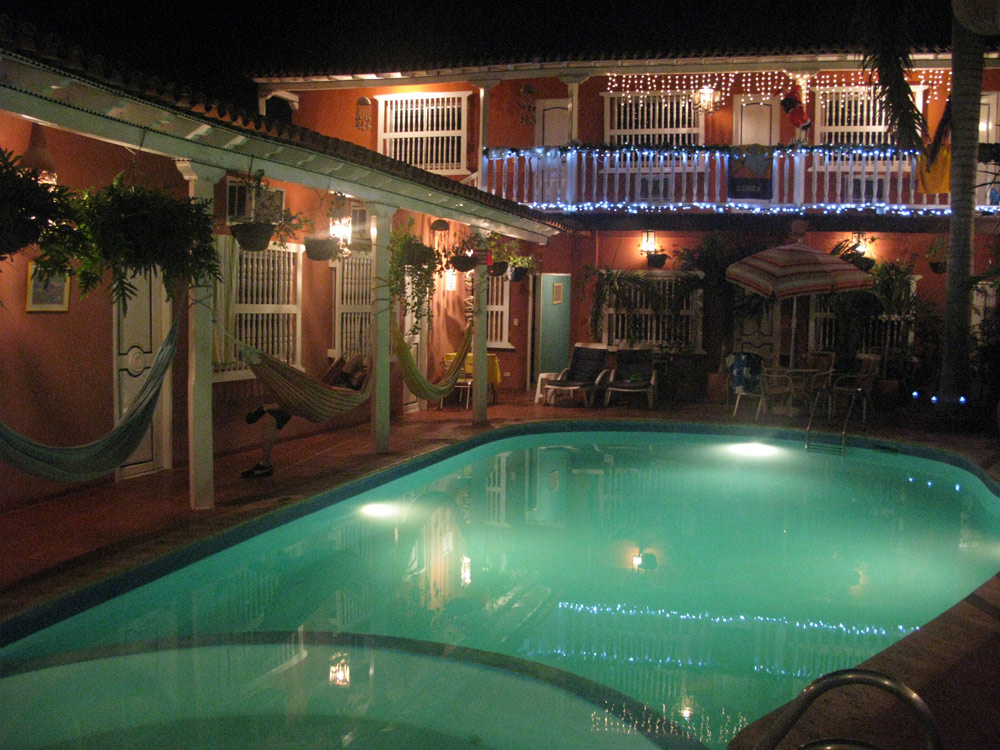
Casa Relax, our B&B in Cartagena Colombia where we spent my 29th birthday.

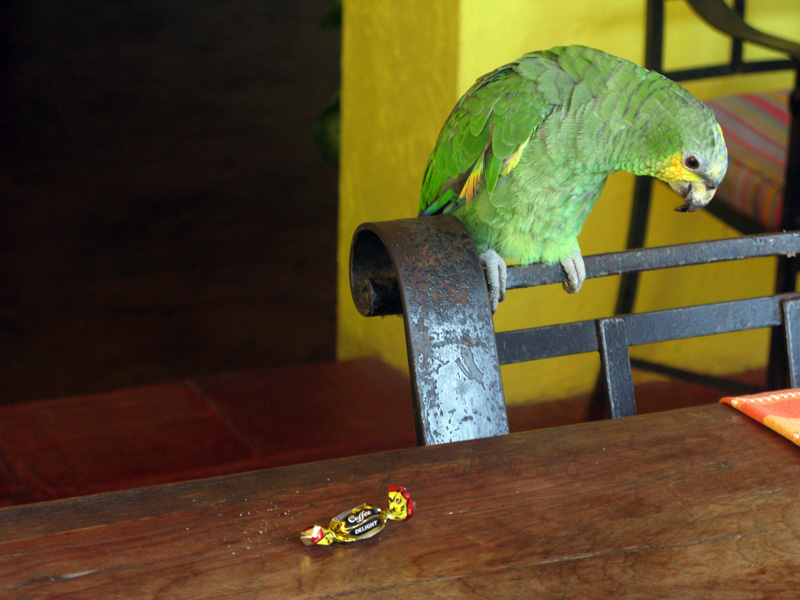
Tempting the B&B's parrot.

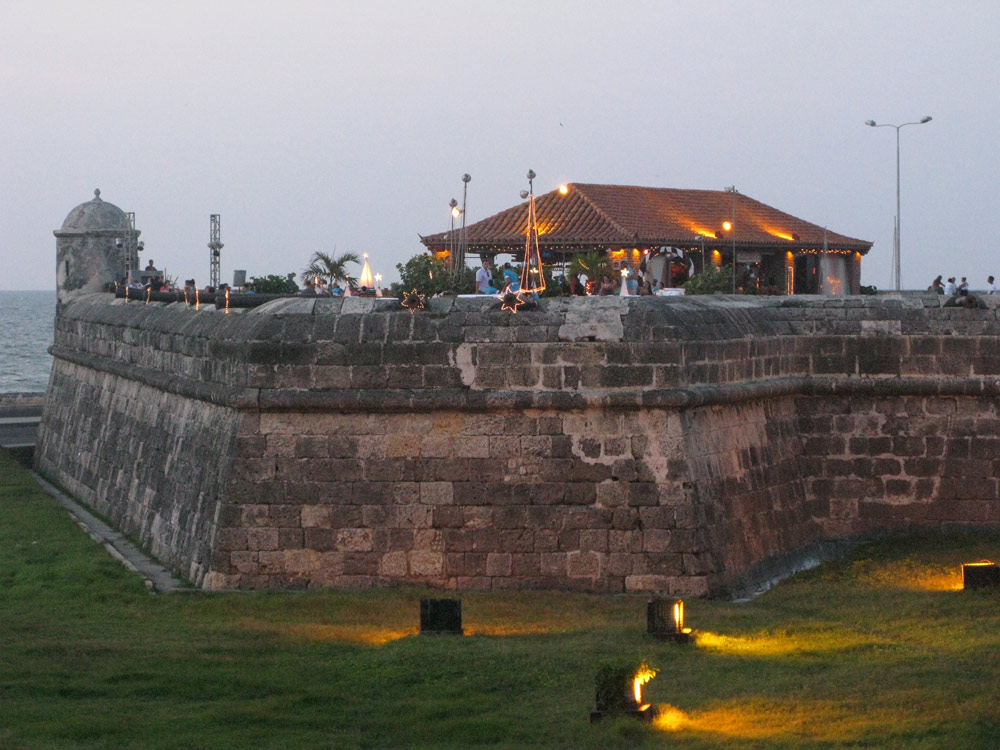
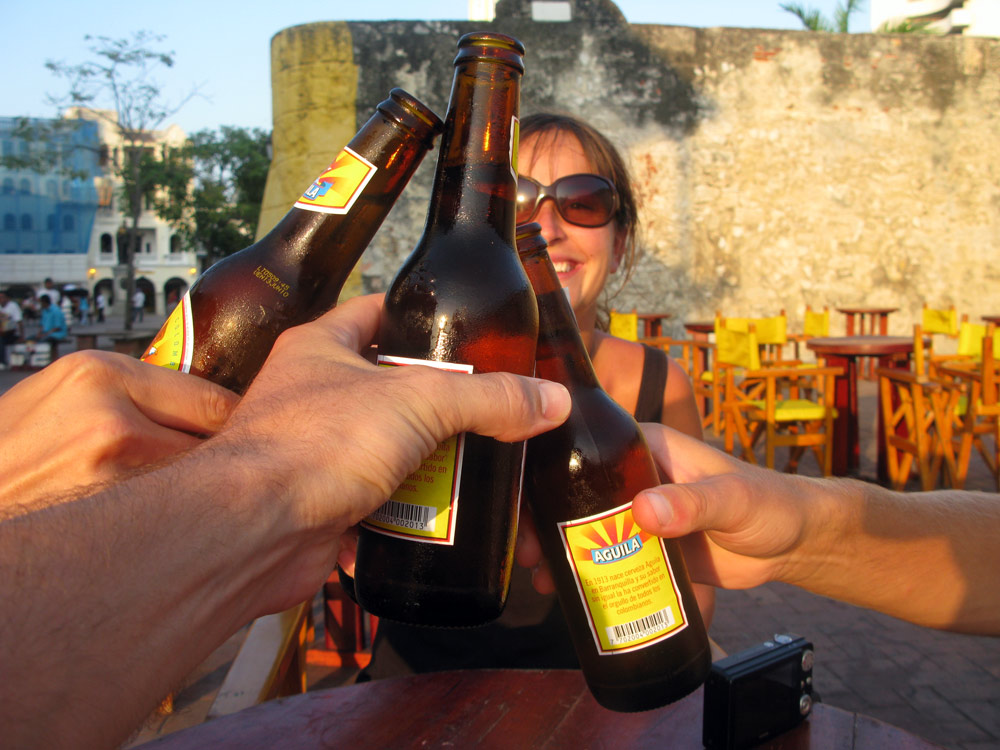
Happy Birthday! Drinks at this bar on the fortress wall of Cartagena's old city.

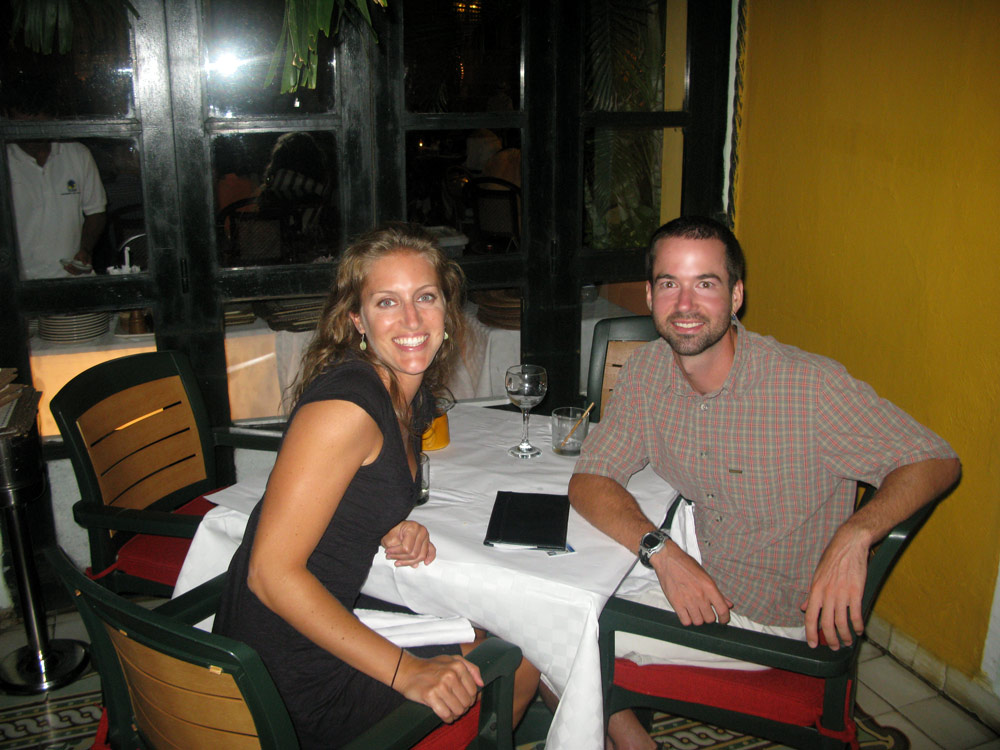
Followed by a fantastic dinner in one of the many restaurants around San Pedro plaza.

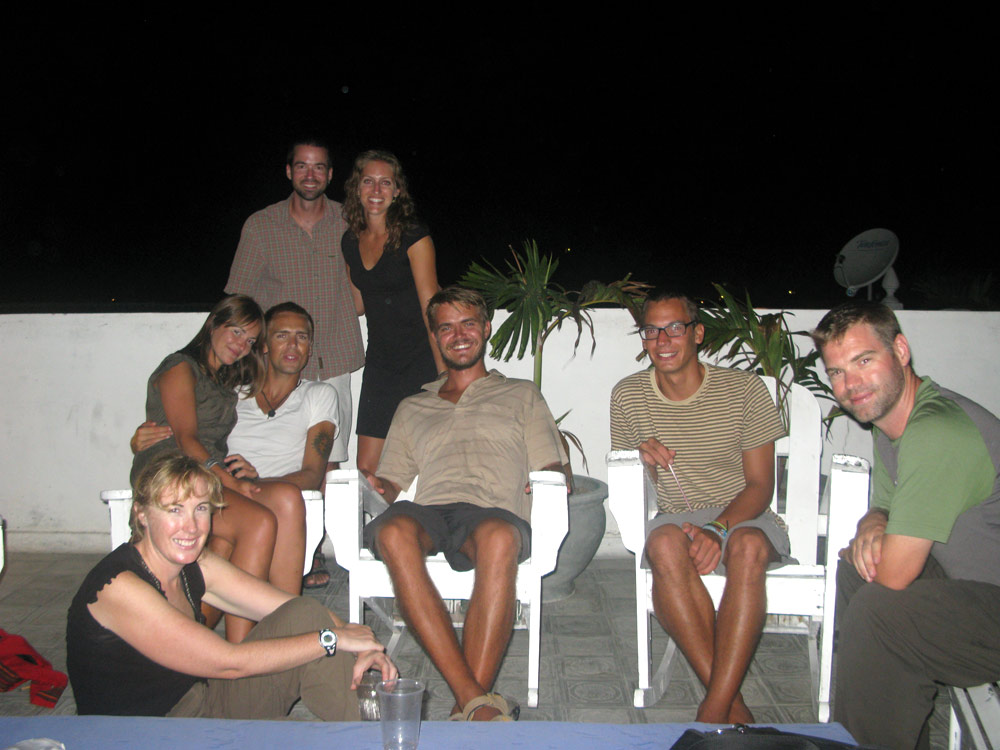
Followed by more drinks with our boat crew on a rooftop deck overlooking the city, an incredible birthday! We had lots of laughs about the trip, all glad to be back on dry land.

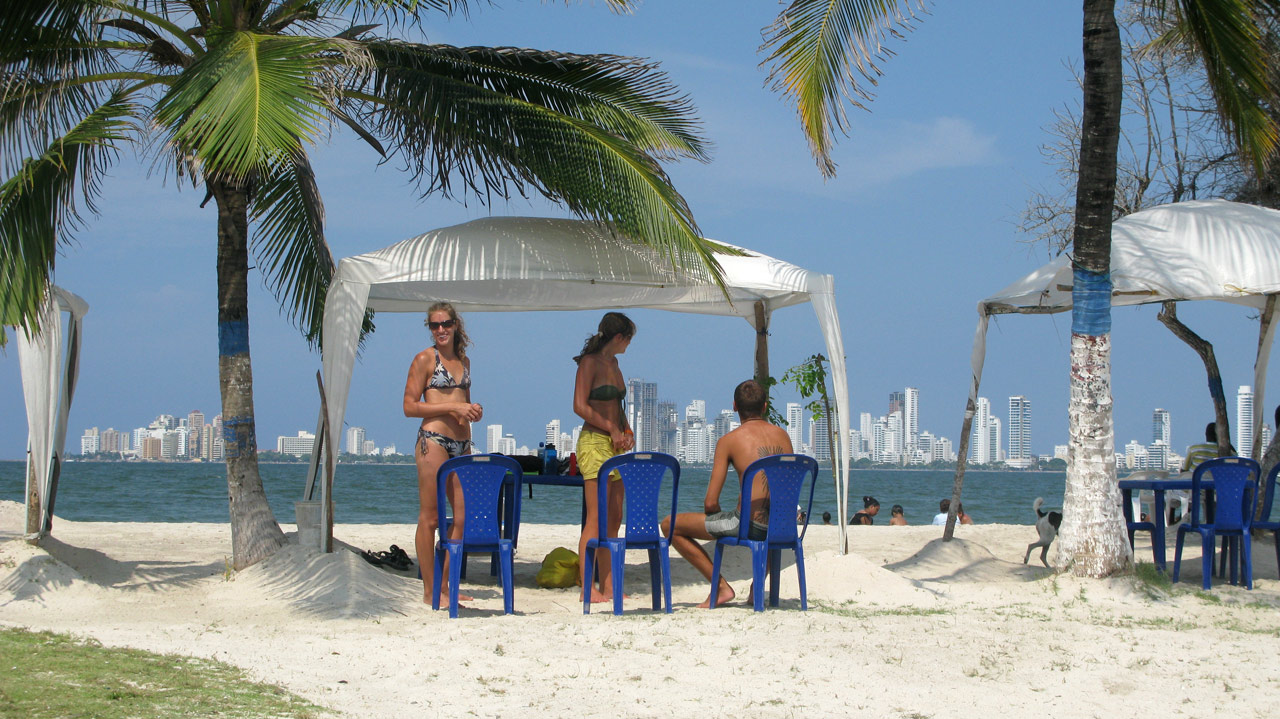
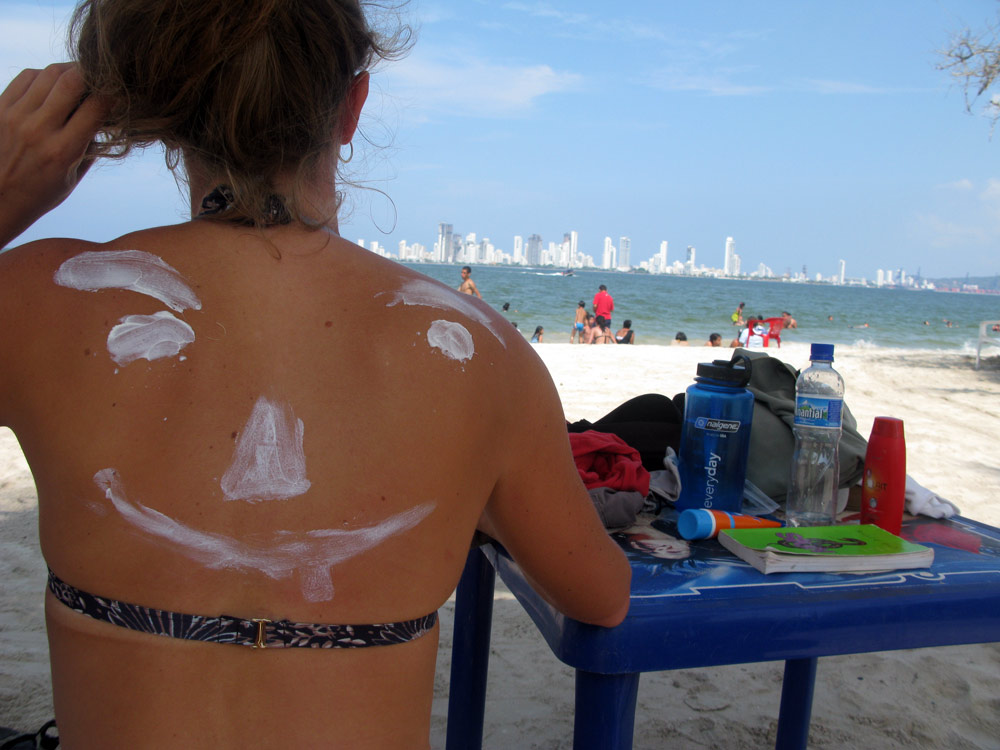
A couple days later we met back up with Kirsty and Jim for a day at the beach across from the city.

Fun with sunscreen.

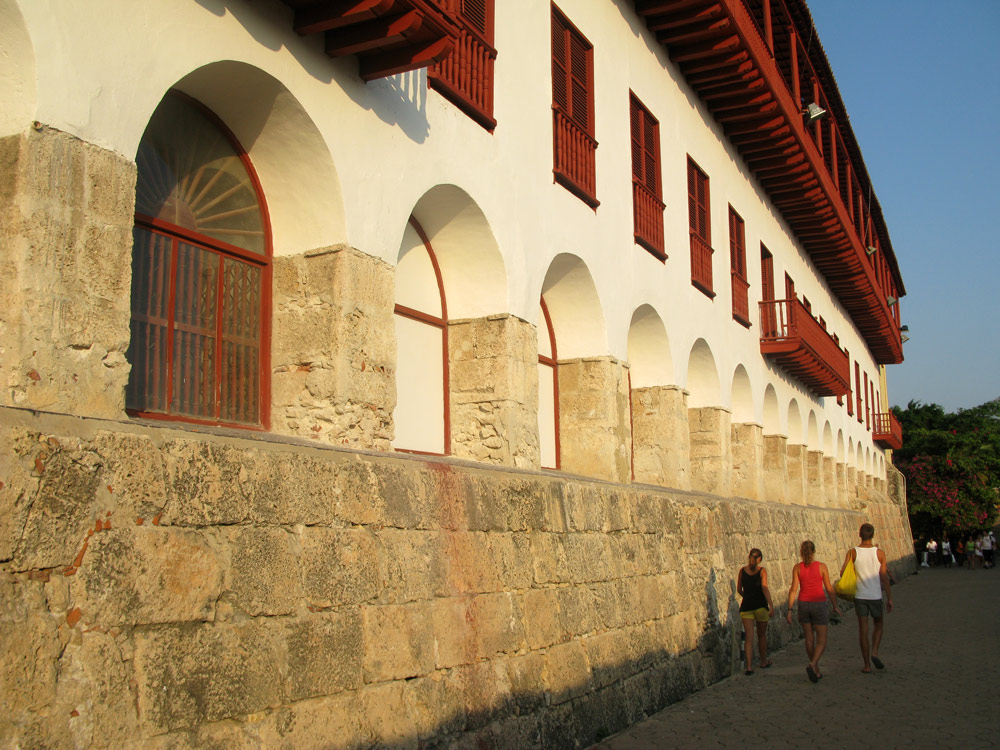
Walking home through the old city.

Good times in good places with good people.

Posted by: carogouin | December 9, 2009

the narrowest point of the Americas

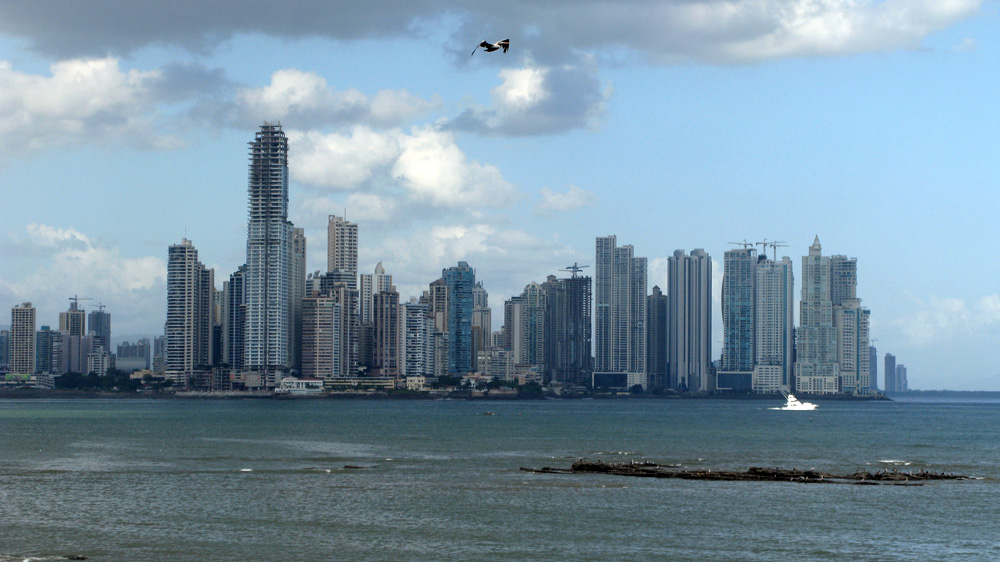
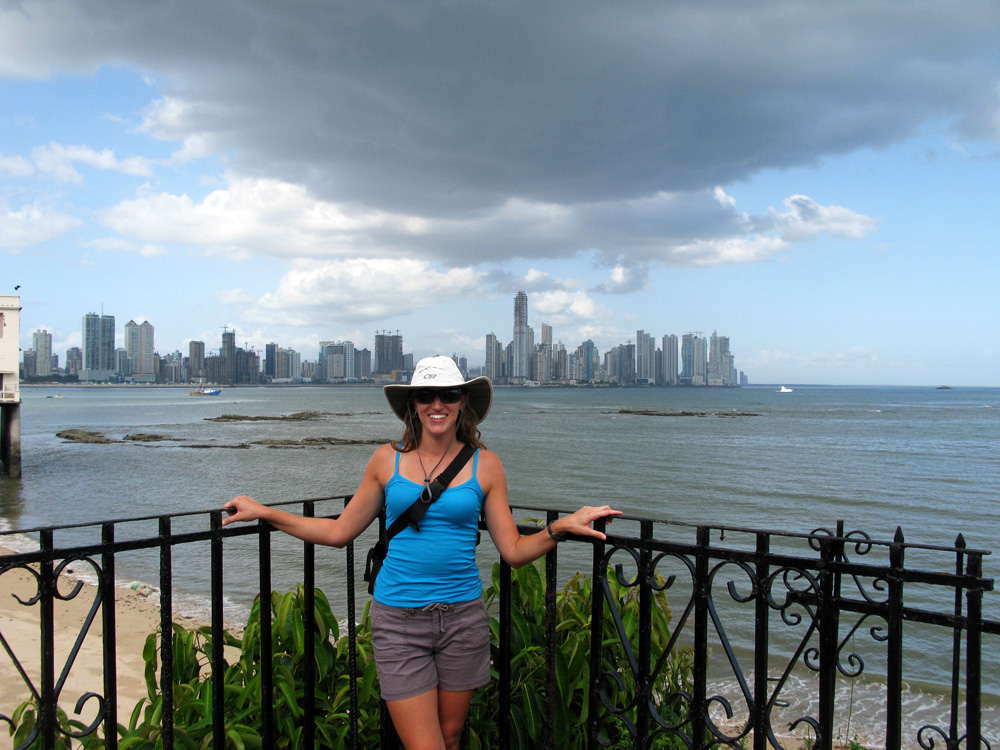
Panama City – the biggest capital city in Central America.

After 5 fun-filled days exploring the archipelago of Bocas del Toro, we grabbed a water taxi back to the mainland. We decided to start making our way directly to Panama City even though this meant skipping over some of the sites of Panama along the way. We’ve really enjoyed the cloud forests, tropical wildlife, topography, coast lines and gallo pinto (black beans and rice) of Central America, but we are getting eager to hop continents and continue our journey south. South America is huge!
On the drive from Bocas to David.

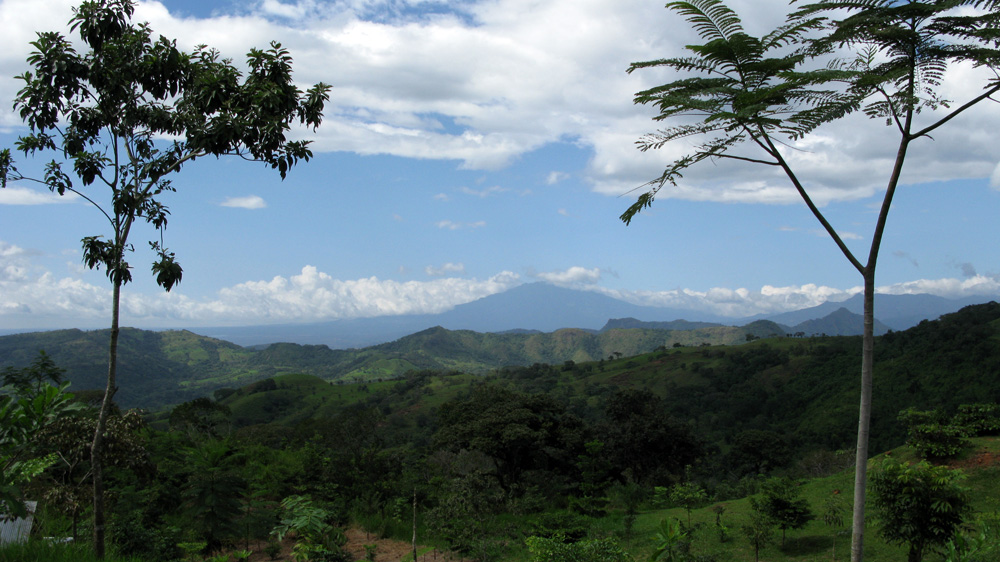
Our first stop was in David, the second largest city in Panama, just minutes from the Pan-American highway. We stayed one night in the Purple House where literally everything from the linens and dishes to the walls and wall hangings were purple. It was a bit much, but certainly a friendly atmosphere. The next morning we boarded a double-decker bus and sat right up front on the second floor. We had a panoramic view of the Panamanian countryside the entire 6 hours to the city.

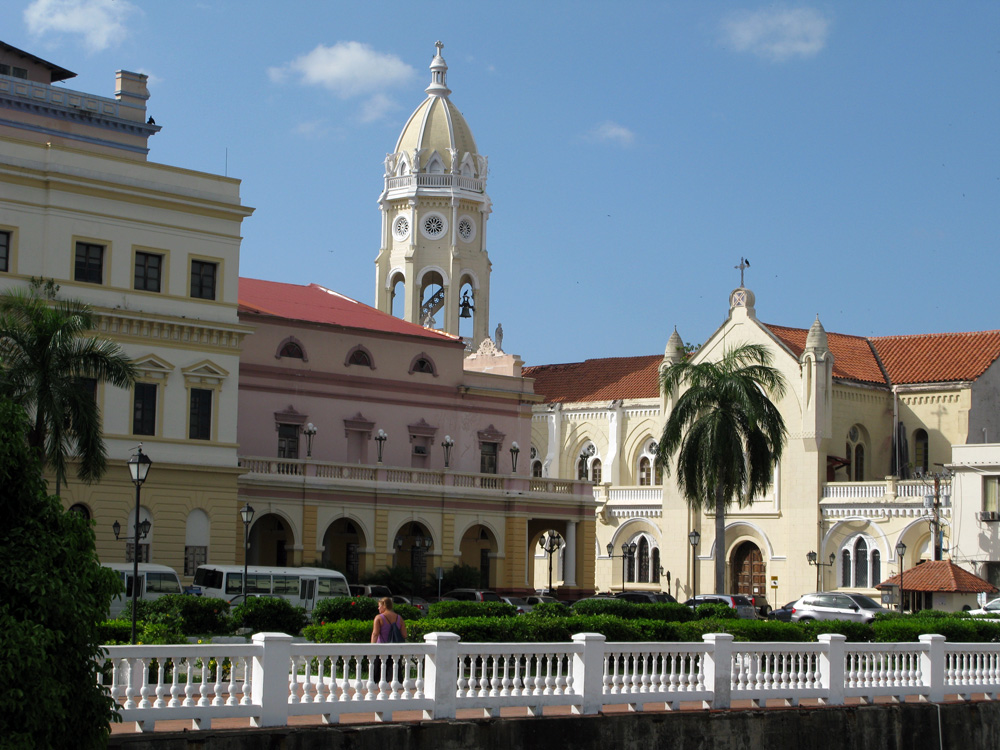
We arrived in the city at the largest bus terminal in the world. Probably not, but it definitely looked like it. Most of these are retired school buses from the US and Canada that have gone through a flashy paint job and pump an incredible amount of smoke in the air. We settled into our small hotel near the financial district and spent the next few days touring the city and exploring other neighborhoods, mostly because of the surprising lack of restaurants in ours. We visited the old part of town, Casco Viejo, which at one point was inhabited by the elite. They have since fled, but have left remnants of a charming colonial city.

The city from Casco Viejo.

The National Palace in Casco Viejo.

The old Panamanian Defense Forces Club – it was destroyed in 1989 during the US invasion.

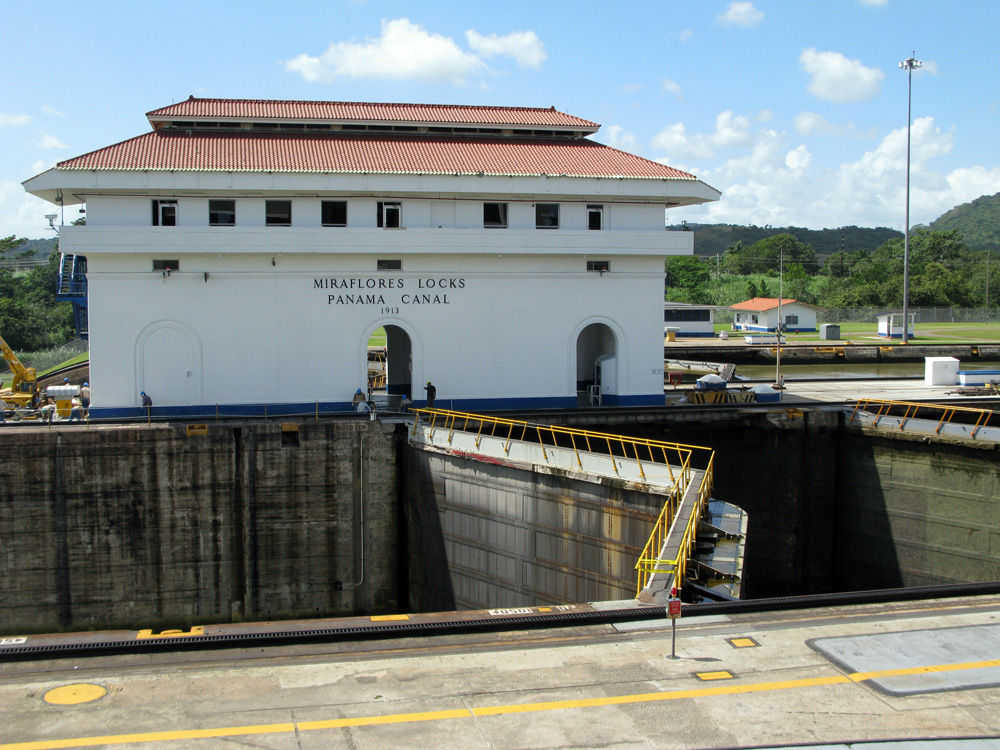
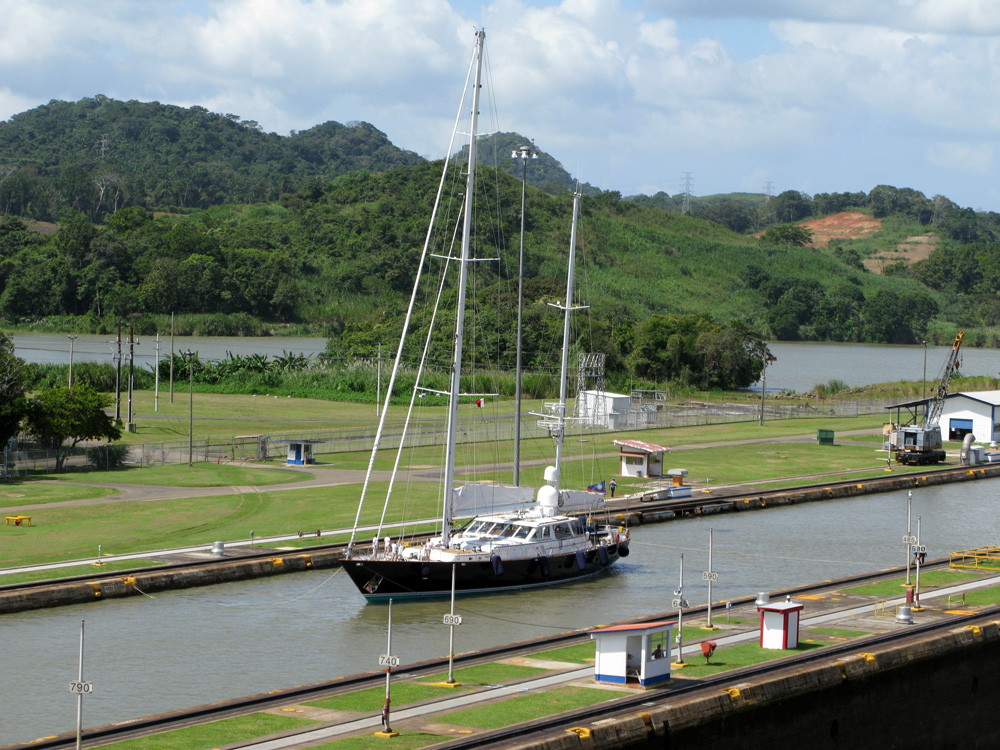
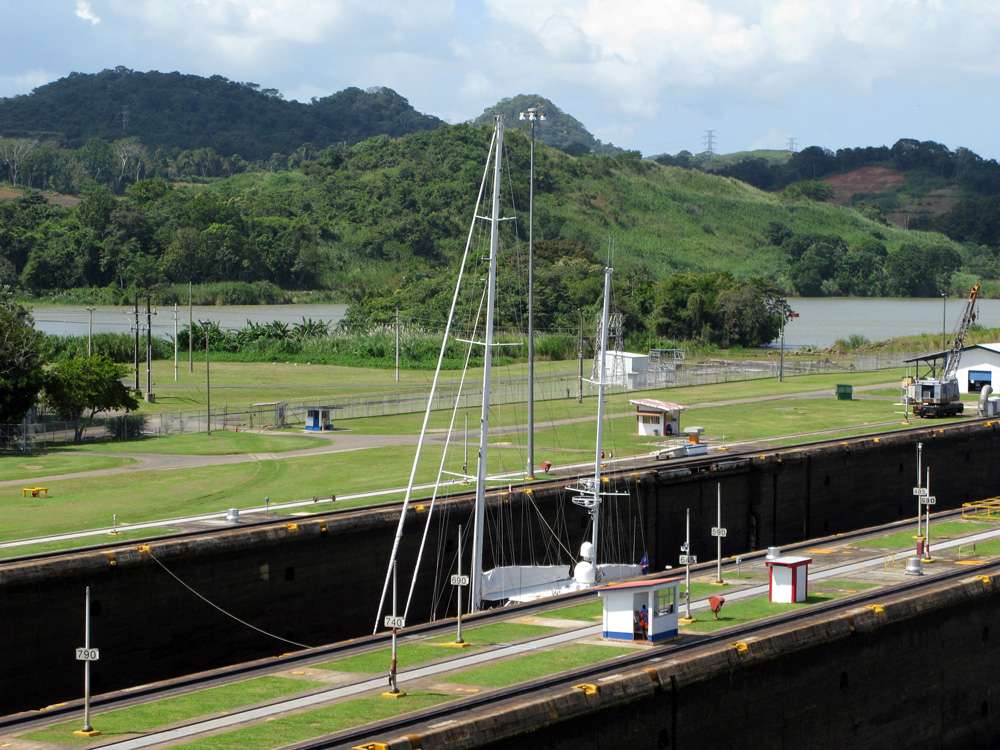
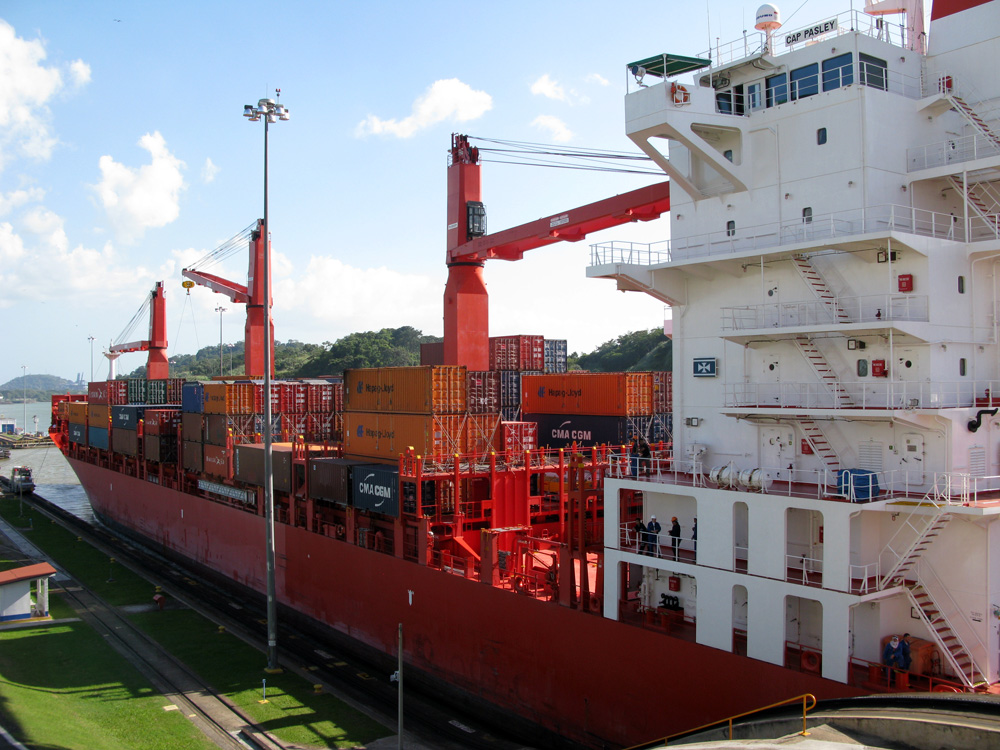
A visit to Panama City wouldn’t be complete without a trip to the Panama Canal, one of the world’s greatest engineering marvels. It was amazing to see first-hand how a system completed in 1914 can run so smoothly to this day and can manage a slew of massive ships on a daily basis. We watched as yachts, sailboats and container ships were guided into the Miraflores locks and lowered to the level of the Pacific Ocean. Some big ships must pay nearly $300,000 to cross the isthmus. It really puts the price of consumer goods into perspective.

The first set of locks on the Pacific side of the Panama Canal.

A 120-foot sailboat coming waits for passage to the Pacific in the first chamber.

Before it can pass, it must be lowered to sea level.

A container ship squeezes into the first chamber – it takes 10-12 hours to cross the isthmus.

A German container ship waits for its final descent to sea level.

While in Panama City, we were also very happy to reconnect with our friends Tamsin and Paul, who were here spending the last few days of their trip before heading home. We enjoyed several dinners together and reminisced over our time traveling through Central America. As they got ready to board a plane back home, we got ready to board a sailboat for a 5-day cruise along the Caribbean coast of Panama through the San Blas islands until we cross another threshold and set foot in Colombia, a new country on a new continent!
Posted by: Patrick | December 4, 2009

finca finale

To the trees!

To the trees!

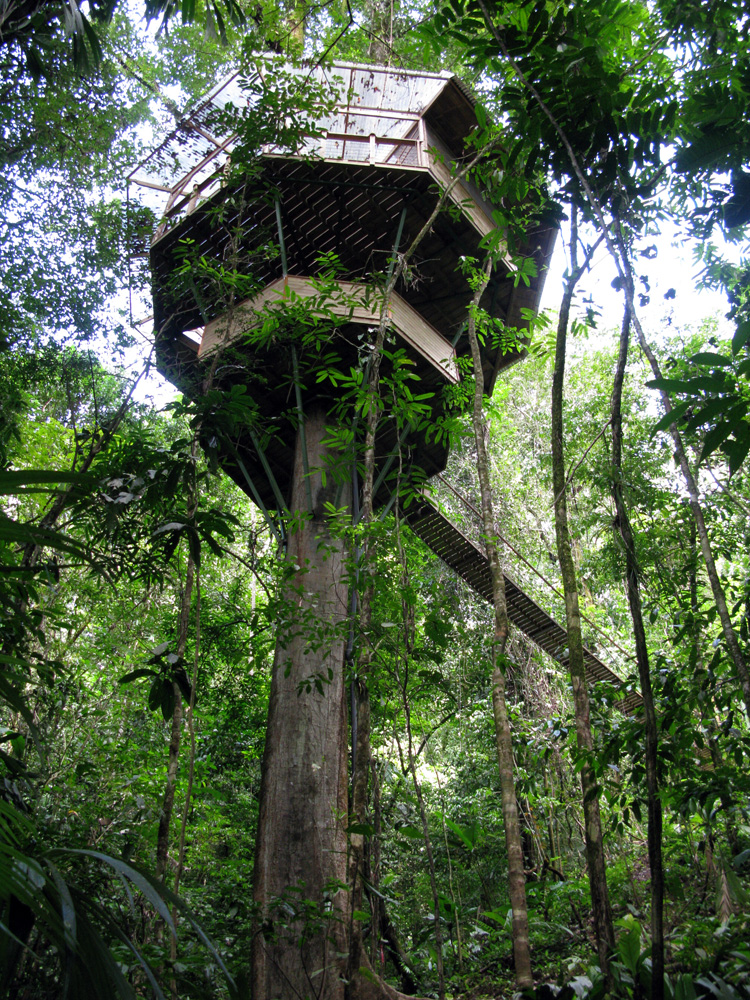
For a few years now we have both been looking forward to visiting Finca Bellavista, Matt & Erica Hogan’s tree house community in southern Costa Rica. We’ve followed along on their website as they’ve been building the infrastructure for what is now becoming an incredible neighborhood in the trees. So on our last week in Costa Rica we decided to rent a little 4×4 (the Finca is remote, not easily accessed by public transport) and head down to the southern zone to finally check the place out for ourselves.

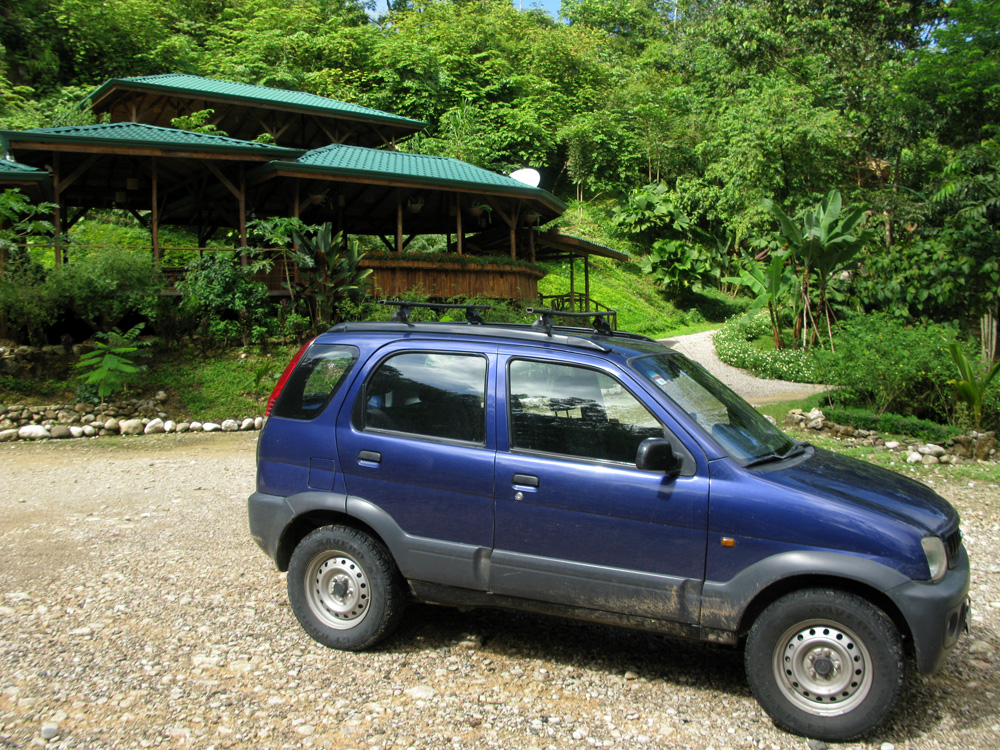
It was a tough drive from San Jose and we arrived at the Finca just after dark. Our lousy rental, a Dihatsu Terios with 184,000 KM, had seen better days. The battery died at our lunch stop in Jaco (left the lights on), but luckily a fellow American with a Jeep Cherokee gave us a tow until I could pop the clutch and get the tiny engine going again. We tried to roll start it unsuccessfully and probably flooded the engine after the first few attempts. Saved by a Cherokee! How fitting. Ahh we miss the Jeep!

All was forgotten of the long drive after we arrived at the marvelous Finca Bellavista. Matt & Erica made us feel right at home and must be thanked again for their warm hospitality. They had returned the day before from a deep-sea fishing trip with a couple hundred pounds of fresh Dorado, Amberjack, Snapper etc… And luckily for us no one else was staying at the Finca that week, so we had to help them eat it all! Awesome meals ensued and we were living fat and happy in our river side cabina for a few days.

Our Dihatsu brought us to the Finca base camp.

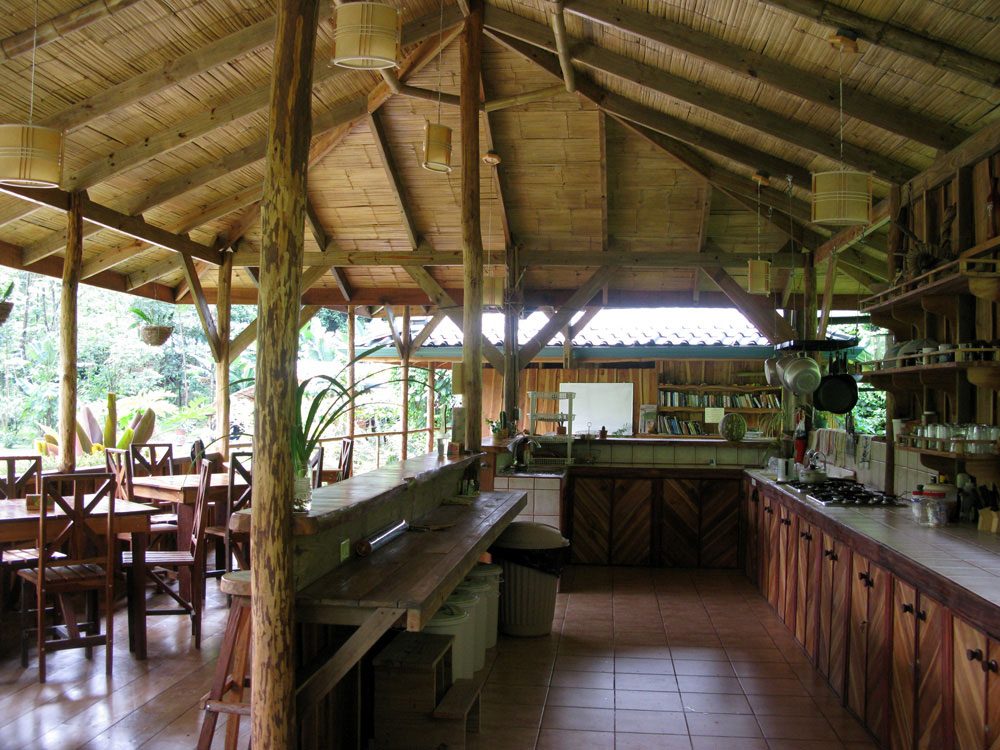
The comfy communal kitchen and dining pavilion at Finca Bellavista.

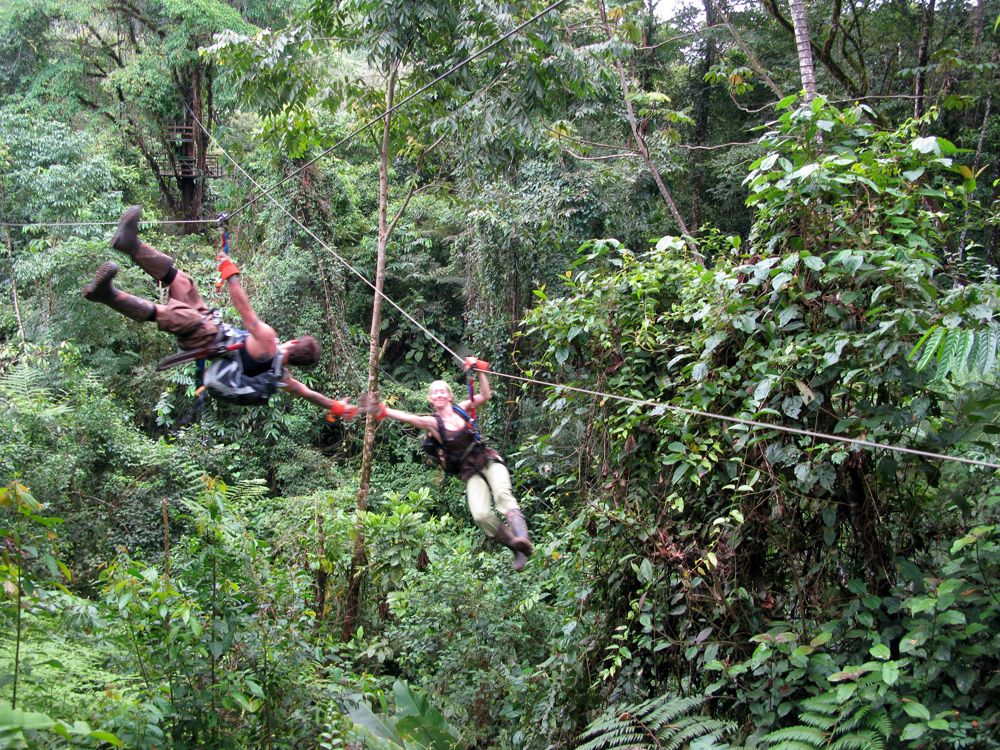
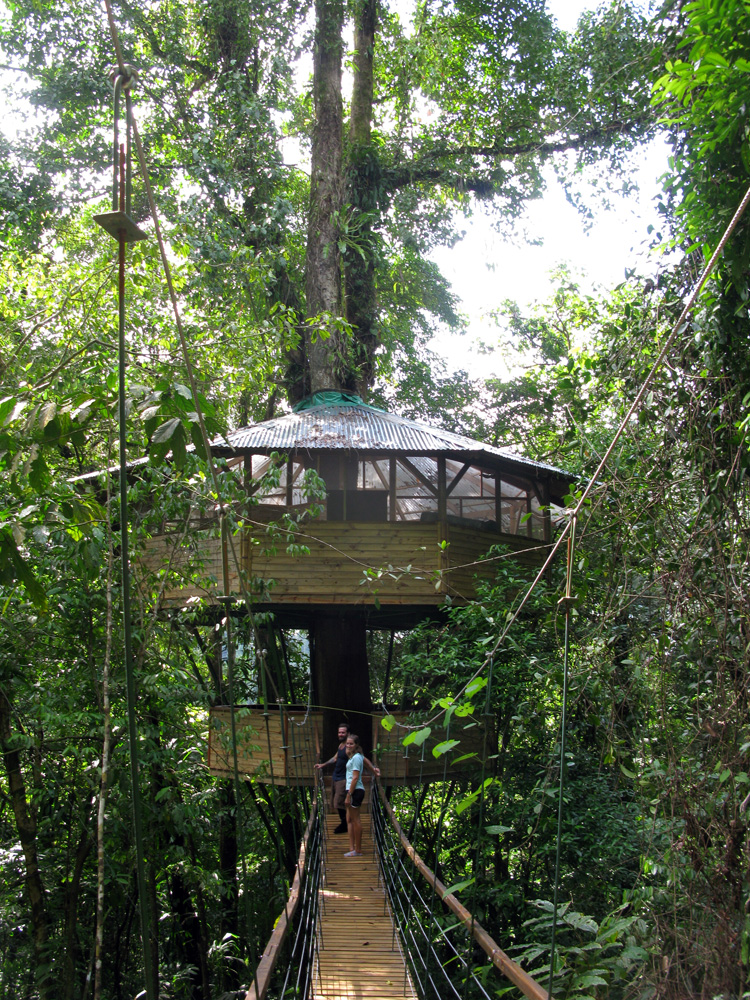
The next day they gave us the grand tour of the Finca via zip line and trail through the property. We were simply blown away. This place is spectacular in its natural beauty, vision and craftsmanship. A reflection of the years of hard work that the Hogan’s have dedicated to the place. With over fifteen zip lines throughout the property it was easy to get around to all of the awesome tree houses, swimming holes, and viewpoints. If you haven’t already checked out their website, do so now. We couldn’t help thinking about ending our travels here, buying a lot and building a tree house of our own. We’ll just have to figure out how to make a living down here, and then we’ll be back! I could see myself doing freelance web work via satellite and exploring the whole area by mountain bike… It’s a very compelling place.  Thanks again Matt & Erica!

High speed high five on the zip lines.

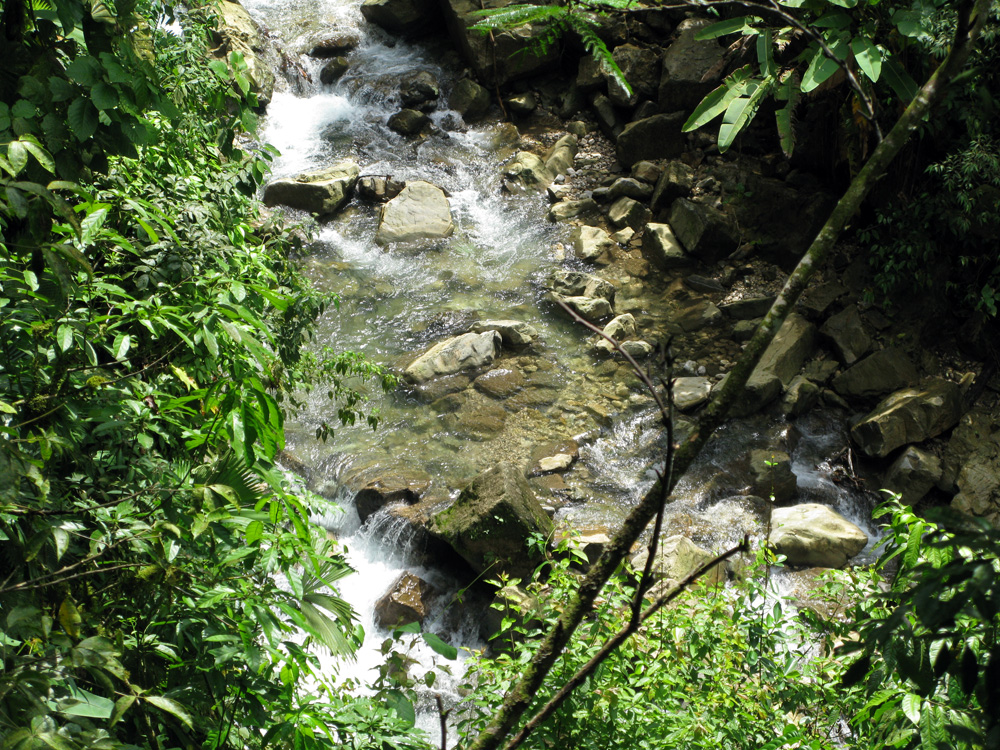
Looking down on one of the clear rivers running through the Finca.

An awesome example of tree house living, this one belongs to Finca resident.

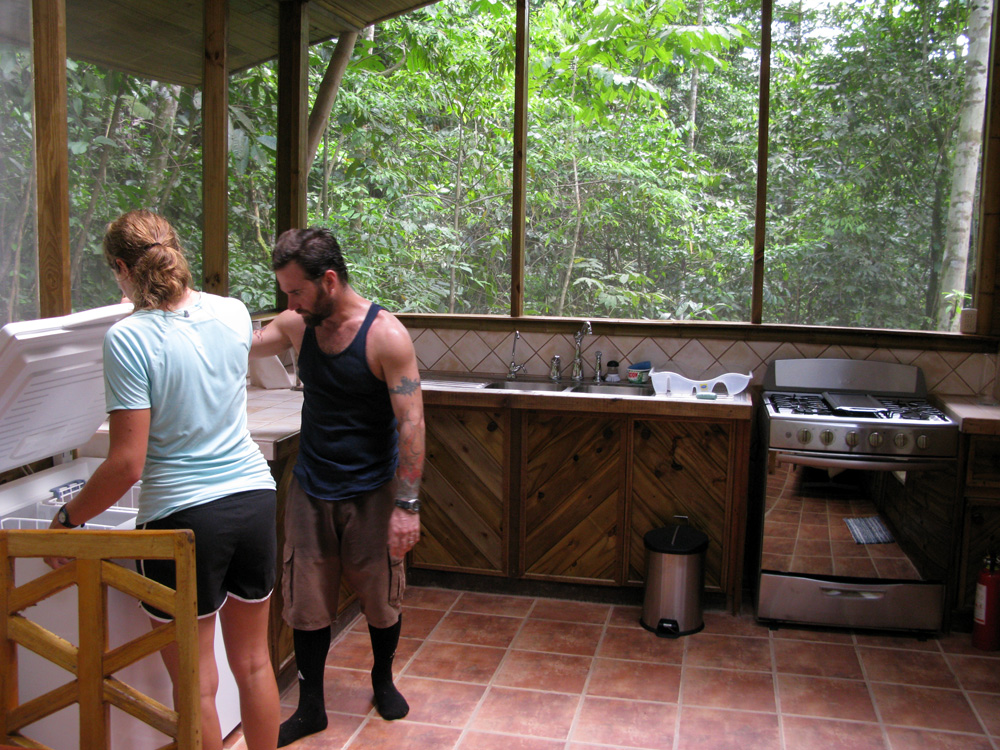
An impressive full kitchen in one of the newest tree houses on the property.

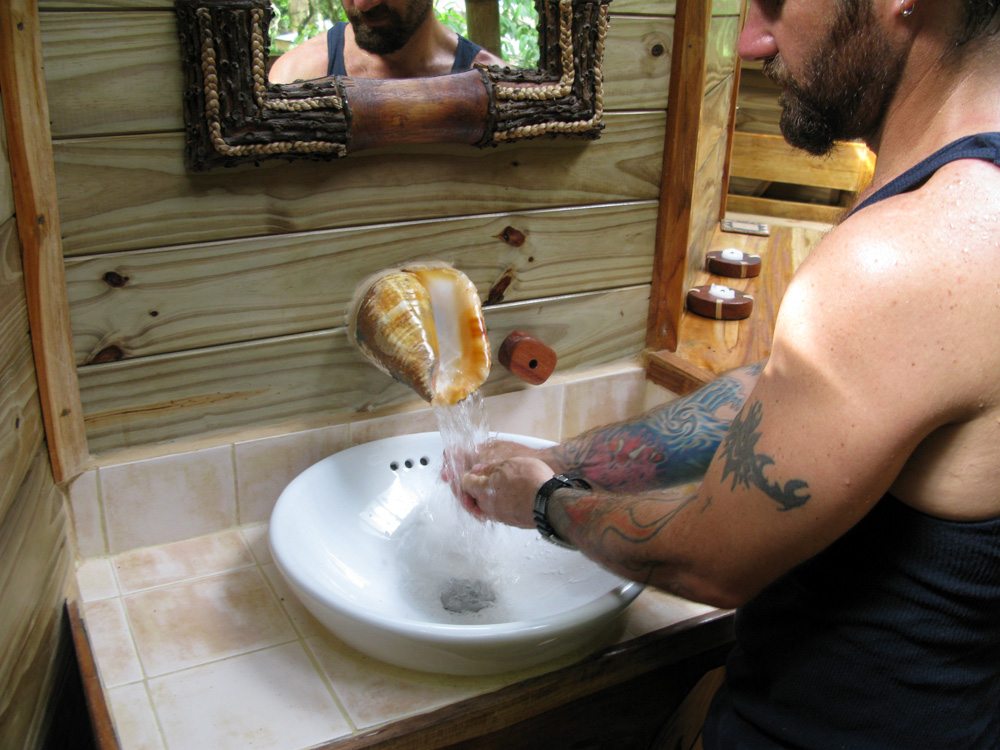
Lots of little creative features make every tree house unique.

On our hike out to The Point.

After three days of exploring the Finca, Thanksgiving was only a day away. Luckily for us Matt & Erica have a friend with a resort on the coast next to Corcovado National Park. They suggested that we all head out there to relax and celebrate the holiday. Poor Man’s Paradise was the name of the place and it was a fun hour long boat ride out to the coast through mangroves and then open ocean. For two days and nights we rode waves, walked the beaches, watched monkeys and scarlet macaws and played some vicious rounds of UNO (Dutch style). It was so nice to be with friends from the states for a while, and topped it off with a tasty Thanksgiving dinner of chicken and mashed potatoes. We missed being with our families for the holiday but enjoyed the company and had a great time at PMP.

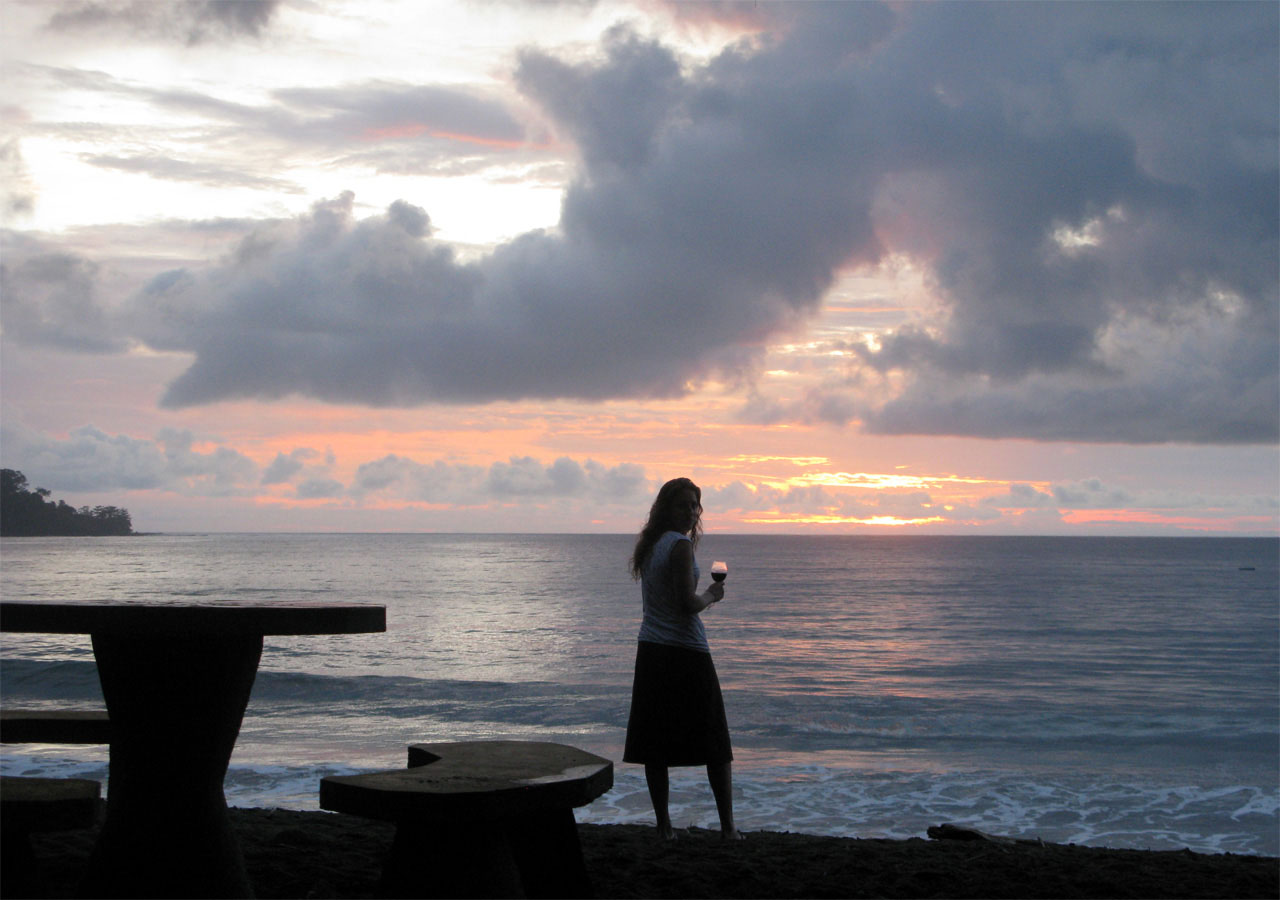
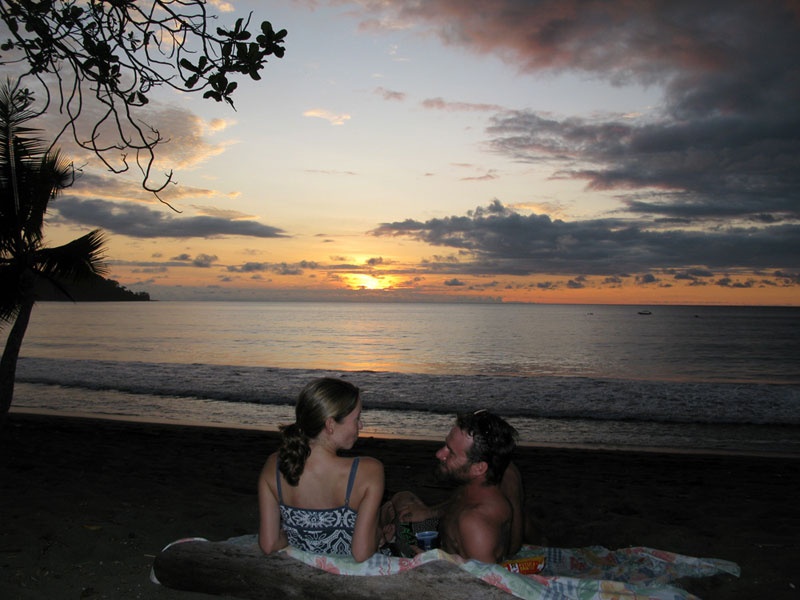
Sundowners at Poor Mans Paradise.

Matt & Erica enjoy Thanksgiving.

Instead of the usual black Friday shopping, we hit the road towards San Jose and spent the afternoon and evening on the coast at Playa Hermosa a world-class surf break. Then on Saturday we got up early to return the Dihatsu to San Jose. The capital of Costa Rica has been a comfortable base for us as we’ve explored the region, this was our third stop there and it started to feel like home. Costa Rica Guest House has been our base there; it’s just up the street from the Supreme Court in a nice neighborhood near the city center. We’ve enjoyed all of the excellent restaurants nearby and on our last night we went out to the movies, luckily for me the film was in English!

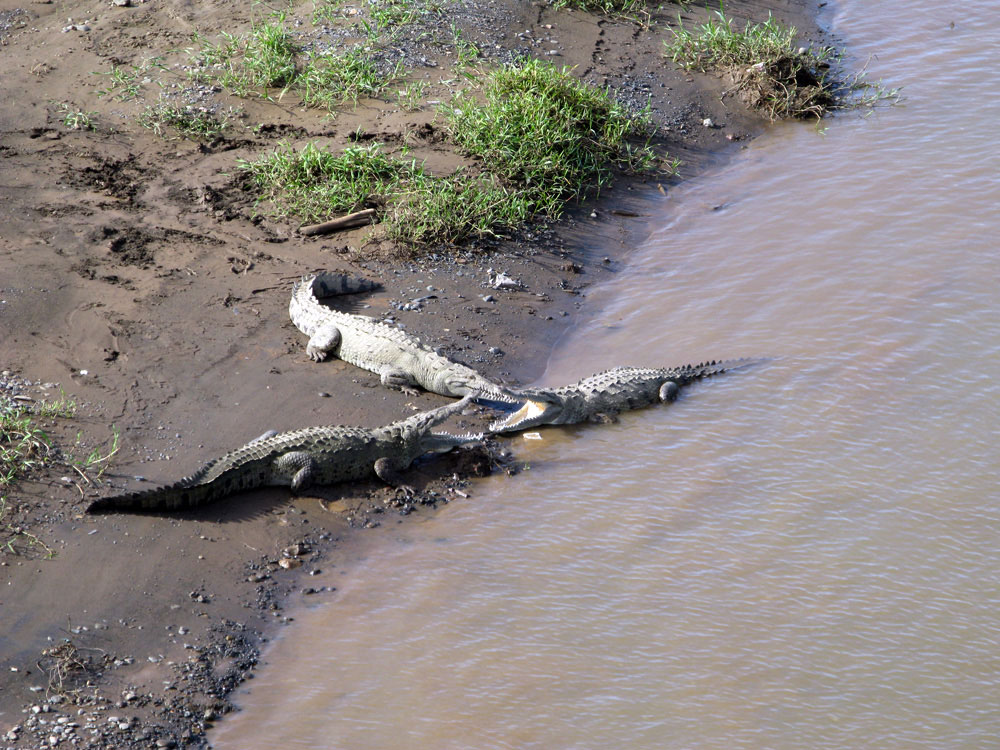
Some man-eater sized crocs on the drive back to San Jose.

We said our goodbyes to Costa Rica and continued our southern journey to Panama, eventually getting to the Caribbean island: Bocas del Toro. We’ve been here for four days now and have enjoyed the food, surf, beaches, SCUBA diving and snorkeling. On the bus ride down here we met Paul and Tamsin, a couple from England/New Zealand who are on a similar trip. We both stayed at the same hotel and had a great time dining and diving together. Tomorrow we plan to go back to mainland to David, Panama’s second largest city. We’ll then work our way towards Panama City and visit the great Panama Canal.

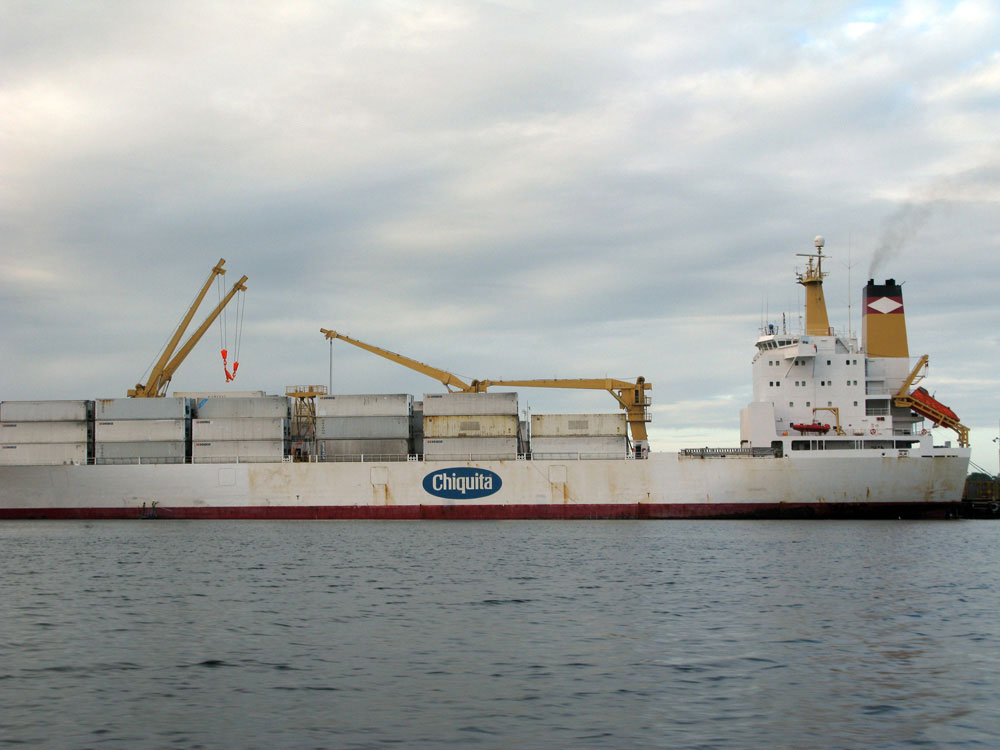
A real banana boat on the ride out Bocas del Toro.

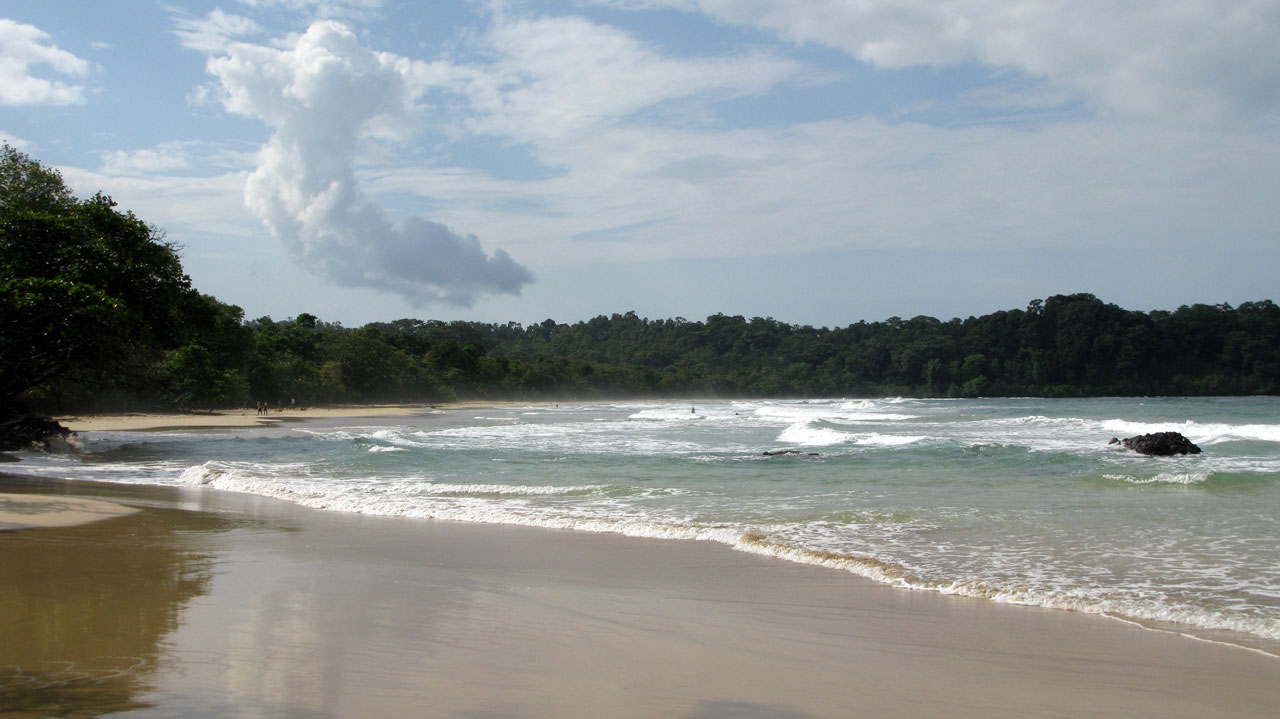
Wizard beach on Isla Bastimentos, Panama.

Going for a dive off of Bocas, there’s a surprisingly healthy reef with tons of marine life.

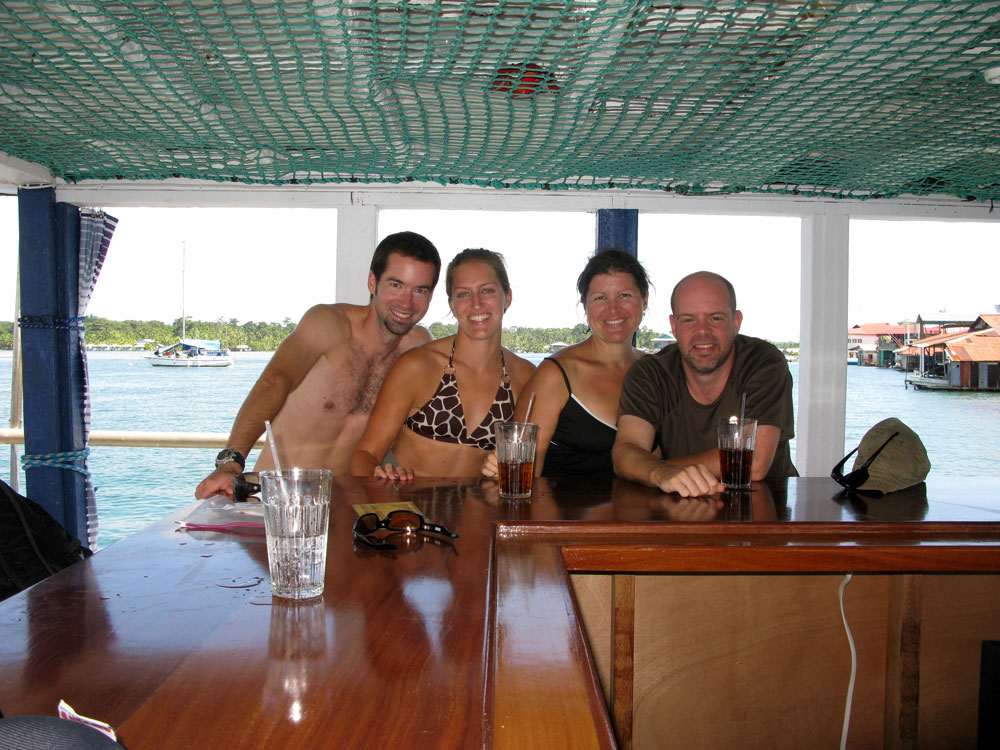
With our new friends Tamsin & Paul after diving.

PS: Happy Birthday Mom!!!  I hope your present arrives intact and on time!

« Newer Posts - Older Posts »

Categories